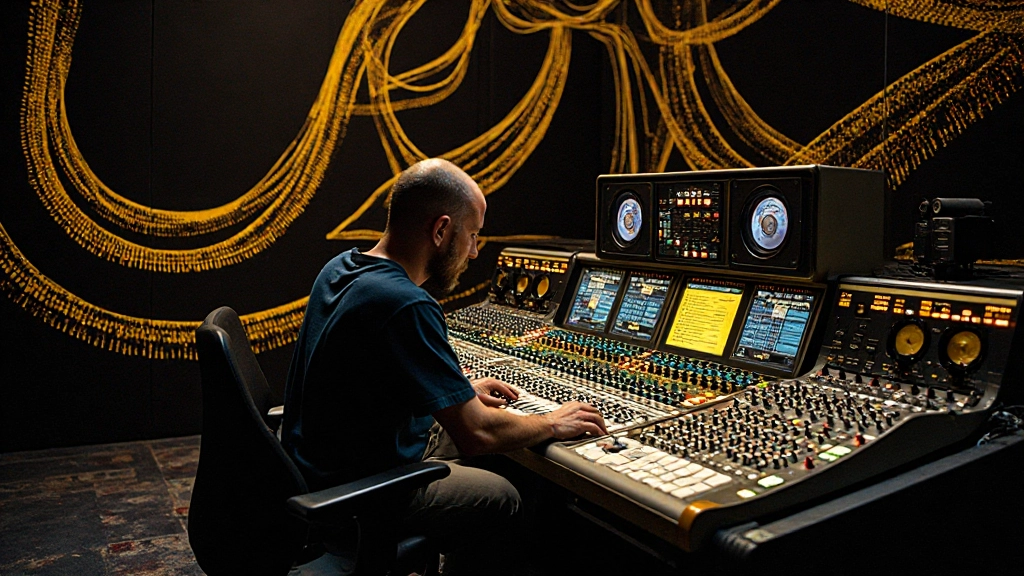
The vocal sounded perfect in isolation, but the moment Brandon hit play on the full mix, it disappeared into a wash of muddy ambience. Three hours of careful EQ work, vanished. The culprit wasn't his compression or his levels—it was the very reverb he thought was adding professional polish.
Every home studio engineer hits this wall eventually. You discover reverb, fall in love with its ability to add dimension and polish, then gradually watch your mixes turn into distant, unfocused soup. The problem isn't reverb itself—it's understanding when space helps and when it hurts.
After spending countless sessions pulling apart mixes drowning in their own reverb tails, I've learned that the most powerful reverb decision is often knowing when not to use it at all. Here's how to break through the reverb plateau and start using space as a precise mixing tool rather than a blanket effect.
When Reverb Becomes the Enemy
Trevor was three songs into his EP when he called, frustrated. "Everything sounds like it's underwater," he said. "But if I turn off the reverb, it sounds dry and amateur." He'd fallen into the classic trap—using reverb to mask problems instead of solving them.
The issue wasn't the quality of his reverb algorithms or the expense of his plugins. It was placement, proportion, and purpose. He was applying reverb like seasoning salt, sprinkling it on everything instead of treating it like the architectural element it actually is.
- Vocals sit behind the instruments instead of on top
- The mix sounds great in headphones but distant on speakers
- Individual elements lose their character and blend together
- Low-end becomes muddy and undefined
- The stereo image feels wide but lacks focus
The breakthrough came when Trevor started thinking of his mix as a physical space rather than a collection of separate tracks with individual reverb sends. Instead of asking "what reverb should I put on this?" he began asking "where does this live in my imaginary room?"
Mapping Your Mix Geography
Professional mixers don't just hear frequencies and dynamics—they hear depth. The kick drum lives up front, intimate and punchy. The lead vocal hovers just behind it, close enough to feel personal but with enough air to breathe. Background vocals and ambient instruments recede into the distance, creating layers that draw the ear through the mix.
This isn't accident. It's careful reverb architecture.
| Mix Position | Reverb Approach | Typical Elements | Processing Notes |
|---|---|---|---|
| Intimate (Dry) | None to minimal | Lead vocals, kick, snare | Preserve transients and clarity |
| Close (Subtle Room) | Short room, low mix | Guitars, bass, tom fills | Add body without distance |
| Mid-Distance (Hall/Plate) | Medium decay, moderate mix | Background vocals, keys | Create separation layers |
| Far (Long Hall) | Long decay, higher mix | Strings, ambient pads | Fill space, add atmosphere |
The Reverb Rescue Protocol
When Jessica brought me her folk album demos, every track suffered from the same problem—beautiful performances buried under reverb that had grown out of control. Rather than starting over, we developed a systematic approach to reverb rehabilitation that saved the project.
The first step wasn't adding different reverb. It was systematic removal.
Step 1: The Great Reverb Audit
Solo each track and bypass all reverb sends and inserts. Listen to the dry performance. If it doesn't sound good dry, reverb won't fix it—it'll just hide the problem. Make notes about what each element needs: clarity, warmth, space, or nothing at all.
Jessica discovered that her acoustic guitar sounded thin and harsh without reverb not because it needed space, but because it needed better EQ. Once we addressed the midrange buildup around 2kHz, the guitar sat perfectly in the mix with just a touch of short room ambience.
Step 2: Hierarchy Before Ambience
Establish your mix balance and EQ relationships before adding any reverb. The most important elements—typically lead vocals, kick, and snare—should work together dry. If they don't, space will only push them further apart.
This revelation transformed Jessica's vocal approach. Instead of using long hall reverb to make her voice sound "professional," we focused on compression and EQ to make it sit confidently in the mix. The subtle room reverb we added later enhanced the intimacy rather than creating artificial distance.
Step 3: Reverb by Subtraction
Start with more reverb than you need, then gradually reduce until you find the minimum effective dose. Most mix problems come from too much reverb, not too little. The goal is to feel the space without consciously hearing the effect.
For Jessica's background vocals, we started with a lush plate reverb at 30% wet. Sounds beautiful in solo. But in the mix context, we gradually reduced it to 12% wet—just enough to set them behind the lead vocal without washing out the lyrical clarity.
Frequency-Conscious Reverb Design
The most sophisticated reverb usage isn't about the reverb unit itself—it's about frequency management within the reverb signal. Danny learned this the hard way when his rock tracks consistently sounded muddy despite using high-end reverb algorithms.
The problem wasn't the reverb quality. It was reverb content.
Cleaning Your Reverb Signal
Before the reverb algorithm ever processes the signal, shape what you're sending to it. High-pass the reverb send around 120-200Hz to prevent low-end mud. Use a gentle low-pass around 8-10kHz to avoid harsh reflections that compete with vocal clarity.
Danny's breakthrough came when he started EQing his reverb returns rather than just the sends. A broad cut around 400-600Hz cleaned up boxy reflections that were muddying his guitar tones. A slight boost around 3kHz added air without harshness.
- High-pass reverb sends to remove unnecessary low-end
- EQ the source signal before sending to reverb
- Process the reverb return with additional EQ as needed
- Use compression on reverb returns for consistent tails
- Consider stereo width processing on ambient returns
The Wet/Dry Balance Sweet Spot
Professional reverb usage rarely exceeds 20% wet signal, and often sits much lower. The perception of space comes from subtle cues, not obvious effects. Train your ears to hear the difference between "impressive" reverb (too much) and "musical" reverb (just right).
Danny started using a simple test: if he could immediately identify the reverb type ("oh, that's a hall reverb"), it was probably too prominent. The best reverb decisions feel inevitable, like natural room acoustics rather than added effects.
Creative Space Without the Mud
Sometimes the solution isn't better reverb—it's alternative approaches to creating dimension and interest. Maria discovered this while working on electronic tracks that needed space but couldn't afford the frequency masking that traditional reverb created.
Delay-Based Dimension
Short delays (20-50ms) can create spatial interest without the diffuse reflections that muddy a mix. Maria found that a simple stereo delay with different left/right timing created width and movement without sacrificing clarity.
The key is avoiding obvious repetition. Set one side to 23ms and the other to 37ms, with minimal feedback. Filter the delays differently—perhaps a gentle high-pass on one side and a subtle low-pass on the other. The result feels spatial without sounding processed.
Modulated Space
Chorus, phasing, and subtle flanging can create the impression of movement and dimension without reverb's frequency masking. Maria used a slow, wide chorus on her pad sounds to fill the stereo field while keeping the reverb sends free for more selective use.
"The best reverb isn't heard—it's felt. If your listener notices your reverb choice, it's probably working too hard."
Reverb Automation That Serves the Song
Static reverb settings rarely serve dynamic music. Carlos learned to think of reverb as a performance element, not a set-and-forget effect. His pop tracks came alive when he started treating reverb sends like instrumental parts.
During the verse, the vocal reverb stayed minimal—intimate and present. As the chorus approached, gradual automation increased the send level, making the vocal bloom into the bigger sections. The effect wasn't obvious, but it supported the emotional arc of the song.
Reverb Ducking for Clarity
Side-chain compression on reverb returns can maintain ambience while preserving clarity during busy sections. Carlos set up a compressor on his vocal reverb return, keyed to the dry vocal signal. When he sang, the reverb ducked slightly, keeping the words clear. In the gaps between phrases, the reverb bloomed back to full level.
This technique works particularly well on drums. The snare reverb can be lush and dramatic, but ducking it slightly on each hit prevents the build-up that makes fills sound muddy.
Building Your Reverb Intuition
The difference between engineers who struggle with reverb and those who use it effortlessly isn't gear or theory—it's developed intuition about space. This comes from deliberate practice and careful listening.
- Mix the same 8-bar loop five different ways using only reverb changes
- Practice A/B comparisons between 10% and 15% reverb wet levels
- Listen to commercial tracks while mentally isolating the reverb components
- Record your voice in different rooms and analyze the natural reverb characteristics
- Practice recreating the spatial characteristics of reference tracks
The goal isn't to memorize reverb settings, but to develop an intuitive sense of how much space enhances versus how much space obscures. Like any musical skill, this comes through repetition and focused attention.
When Less Space Creates More Impact
The most counterintuitive reverb lesson is that restraint often creates more impressive results than excess. Kevin's indie tracks gained professional polish not by adding more sophisticated reverb, but by using dramatically less of it.
His sparse, intimate productions drew listeners in through proximity rather than pushing them away with artificial grandeur. The minimal reverb he did use—a short room on the snare, a subtle plate on background vocals—felt intentional and musical rather than applied by default.
This approach requires confidence in your dry sounds, but the payoff is mixes that feel immediate and engaging rather than distant and processed. Sometimes the most professional choice is the most restrained choice.
Breaking through reverb plateaus isn't about finding the perfect algorithm or learning complex automation tricks. It's about developing the discipline to use space purposefully, the ears to hear when enough is enough, and the confidence to let your dry sounds shine when they deserve to. Your mix will thank you for the clarity, and your listeners will thank you for the intimacy.
Hear what these choices do to your own song.
Upload stems or a finished track, choose a reference direction, and compare a private Moozix mix before you export anything.