Brandon Chen stared at his Spotify analytics dashboard, watching the play count crawl upward at a glacial pace. Three years of bedroom production, countless hours perfecting his indie-folk sound, and his biggest monthly audience was 47 listeners. The algorithm wasn't picking up his tracks, playlist curators weren't responding, and social media felt like shouting into a void. That's when he decided to unplug entirely and build his fanbase the old-fashioned way.
Six months later, Brandon was selling out 200-capacity venues across three states, with a mailing list of 1,500 genuine fans who bought every release on Bandcamp. His secret? He'd cracked the code of offline music promotion, building real connections that streaming platforms can't replicate.
The Coffee Shop Circuit Revolution
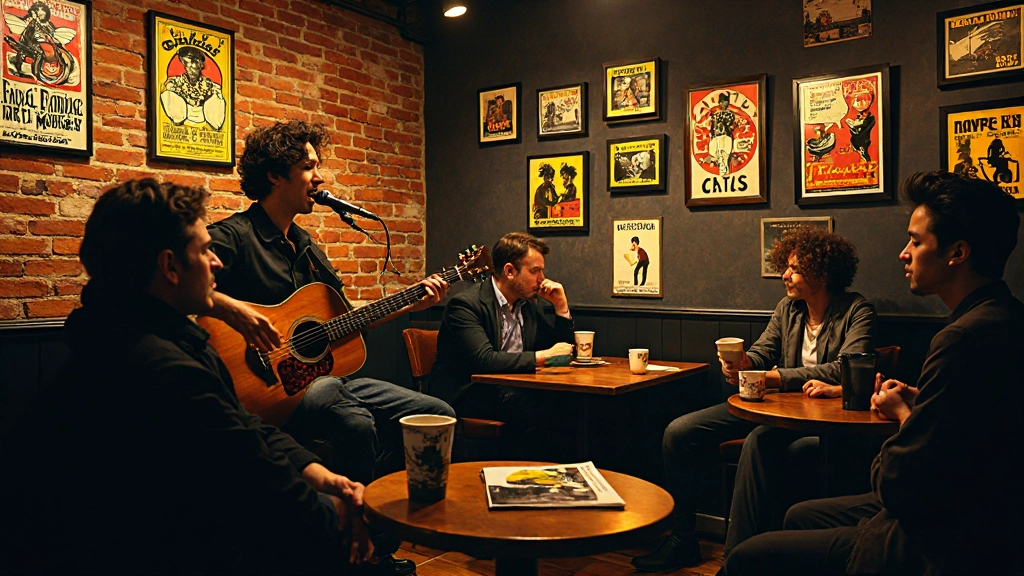
Brandon's breakthrough came at Grind Coffee on Fifth Street, where he noticed the owner, Margaret, played the same Spotify folk playlist every morning. Instead of pitching his music, he started conversations about the artists she featured. After three weeks of genuine coffee shop regulars' banter, Margaret asked if he knew any local musicians who might fit the vibe.
"I mentioned I played guitar," Brandon recalls, "but I didn't push. I let her discover that I made music the same way customers discover new coffee blends - through curiosity, not pressure."
The coffee shop circuit became Brandon's laboratory for understanding his audience. He'd arrive early, observe the crowd, note what songs made people look up from their laptops, and adjust his approach accordingly. This wasn't about playing background music - it was about creating moments where strangers became listeners.
Mapping Your Local Venue Ecosystem
Brandon developed a systematic approach to identifying the right venues for his sound. He created a spreadsheet tracking not just coffee shops, but bookstores, art galleries, wine bars, and even farmers markets. For each location, he noted:
- Peak hours and crowd demographics
- Existing music programming or lack thereof
- Acoustic properties and space limitations
- Owner/manager contact information and interests
- Potential partnership opportunities beyond just performing
The breakthrough insight was treating each venue as a unique audience rather than just another stop on a circuit. At the downtown bookstore, Brandon noticed customers browsing the local authors section. He partnered with three regional writers to create "soundtrack sessions" where he played instrumental versions of songs inspired by their work while they did readings.
The Physics of Live Discovery
Recording and mixing for live performance requires different technical considerations than studio work. Brandon learned this the hard way when his carefully crafted bedroom recordings fell flat in coffee shop acoustics. The reverb-drenched vocals that sounded ethereal through studio monitors became muddy in a space with hard surfaces and ambient noise.
He started premixing his songs for live playback, creating stems that could work both as backing tracks and standalone pieces. This meant EQing out frequencies that would clash with room acoustics, compressing dynamics to cut through conversation, and leaving space in the arrangement for his live vocal and guitar to sit naturally.
The technical preparation extended beyond just the audio. Brandon invested in a compact PA system that could deliver consistent sound across different venue sizes. He learned to do quick acoustic assessments, listening for problematic reflections and adjusting his mix on the fly using a simple EQ pedal.
Recording with Performance in Mind
Brandon's studio workflow evolved to prioritize songs that would translate to intimate live settings. During the recording process, he'd constantly reference how each element would work stripped down to just voice and guitar. This influenced everything from chord voicings to vocal delivery.
| Studio Element | Live Translation Strategy | Mix Consideration |
|---|---|---|
| Lush reverb tails | Shorter, brighter spaces | High-frequency rolloff to prevent mud |
| Layered harmonies | Single vocal with strategic doubling | Mono compatibility for small PA systems |
| Complex arrangements | Essential elements only | Clear frequency separation between parts |
| Subtle dynamics | Exaggerated dynamic range | Compression settings that maintain punch |
Building Your Analog Network
The most powerful aspect of Brandon's offline strategy wasn't the performances themselves, but the network effects they created. Each coffee shop show introduced him to other musicians, local business owners, and music fans who became ambassadors for his work.
At the art gallery opening where he provided background music, Brandon met Elena, a photographer who was working on a project about local musicians. Their collaboration led to a photo series that got featured in the city's alternative weekly, which caught the attention of a boutique festival programmer. None of this would have happened through streaming platform discovery.
"Digital platforms optimize for engagement metrics, but offline connections optimize for genuine affinity. When someone discovers your music in a physical space, they're experiencing it in context, with all their senses engaged."
Brandon Chen, reflecting on two years of offline promotion
The key was treating every interaction as a potential connection point. Brandon carried simple business cards with QR codes linking to Bandcamp rather than streaming platforms. This drove listeners to a place where they could directly support his work while getting higher-quality audio files.
Cross-Pollination Strategies
Brandon discovered that the most effective offline promotion happened when he became part of existing communities rather than trying to build his own from scratch. He volunteered at the local record store's listening parties, helped set up PA equipment for open mic nights, and even offered to mix live recordings for other artists performing at his regular venues.
This service-first approach created reciprocal relationships. When the record store needed someone to curate a monthly acoustic showcase, Brandon was their first call. When other musicians needed someone reliable to open shows, his name came up consistently. The network grew organically because he'd become genuinely useful to the community.
Measuring Success Beyond Metrics
Traditional music marketing focuses on plays, followers, and algorithm optimization. Brandon's offline approach required different success metrics. Instead of tracking streams, he monitored mailing list signups, Bandcamp sales, and venue re-bookings. The numbers were smaller but the engagement was dramatically higher.
- Conversion Rates: While his coffee shop audiences averaged 15-30 people, 60% would sign up for his mailing list compared to less than 1% from social media followers
- Revenue Per Fan: Offline-discovered fans spent an average of $23 annually on his music, compared to $0.12 from streaming-platform discoveries
- Geographic Concentration: Building regional density allowed for efficient touring and cross-promotion between venues
- Retention Rates: Fans discovered through live performance attended shows at 10x the rate of online followers
The qualitative metrics were equally important. Brandon started receiving emails from fans describing how specific songs had become part of their daily routines, requests for custom recordings for weddings and events, and invitations to house concerts in nearby cities.
The Ripple Effect Economics
Brandon's offline strategy created multiple revenue streams that streaming platforms couldn't replicate. Coffee shop regulars hired him for private events. Gallery connections led to commissioned work for local businesses. The photographer collaboration resulted in a small licensing deal for a local commercial.
More importantly, these connections were geographically concentrated, making touring economically viable. Instead of driving 500 miles between shows, Brandon could book a week of performances within a 50-mile radius, building on relationships he'd already established.
Scaling Without Losing Intimacy
As Brandon's offline network grew, he faced the challenge of maintaining personal connections while reaching new audiences. His solution was to train other musicians in his approach, creating a informal collective that could cross-promote effectively.
The collective developed a shared booking strategy where members would recommend each other for appropriate venues and events. When Brandon was too busy to take a coffee shop residency, he'd recommend Emma, whose jazz-influenced style fit certain venues better than his folk approach. This created goodwill with venue owners and ensured quality control across the network.
Brandon also started hosting songwriter workshops at venues where he'd built relationships. These weren't just educational events - they were discovery opportunities for venue owners to find new artists and for emerging musicians to understand the offline promotion approach.
Technology That Enhances Rather Than Replaces
While Brandon's strategy was fundamentally offline, he used technology strategically to enhance real-world connections. He created venue-specific playlists on Spotify that featured his music alongside artists his audiences were already discovering. Venue owners could use these playlists during regular business hours, creating familiarity before live performances.
He also used simple scheduling and CRM tools to maintain relationships across dozens of venues and contacts. The key was using technology to organize offline efforts rather than replace them.
The Long Game of Local Loyalty
Two years into his offline-focused approach, Brandon's career looked fundamentally different from streaming-dependent musicians. His fanbase was smaller in raw numbers but dramatically more engaged and supportive. He'd proven that in an attention-fragmented digital landscape, the scarcity of genuine in-person connection could be a competitive advantage.
The approach required patience and genuine interest in community building, but it created sustainable momentum that algorithm changes couldn't disrupt. Brandon's success demonstrated that music discovery didn't have to depend on platform gatekeepers - sometimes the most direct path to listeners was simply showing up where they already were.
For home studio musicians tired of digital marketing treadmills, Brandon's story offers a compelling alternative: build your fanbase one coffee shop, one conversation, and one genuine connection at a time. The offline world is still hungry for live music discovery, and the infrastructure for supporting local artists is already in place - it just requires musicians willing to step away from their screens and into their communities.
Hear what these choices do to your own song.
Upload stems or a finished track, choose a reference direction, and compare a private Moozix mix before you export anything.