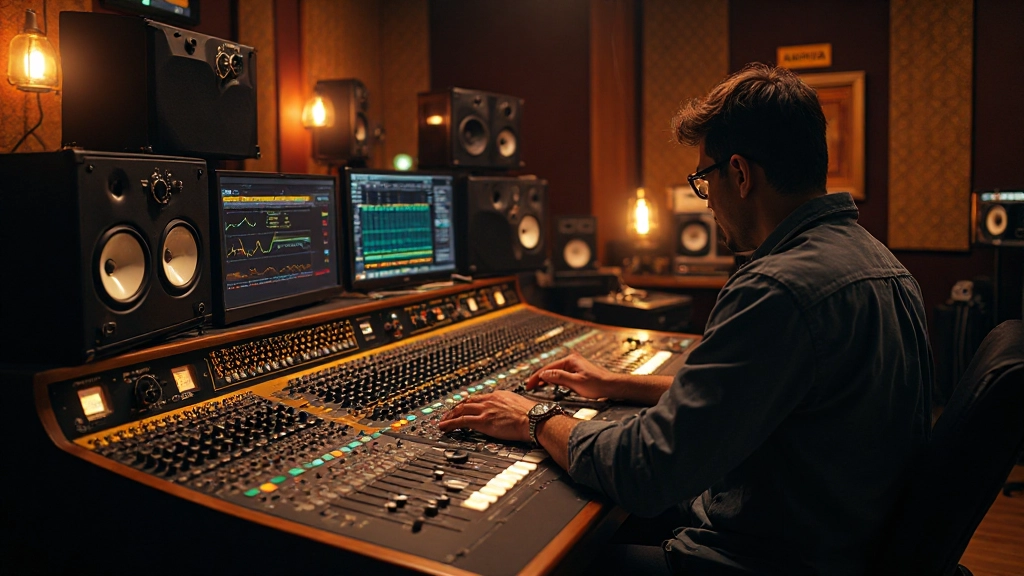
Three seasoned engineers share the subtractive mixing secrets that turned their cluttered productions into professional-sounding records, revealing why less processing often delivers more impact.
The Night Everything Clicked
Vincent DeLuca still remembers the mix that changed everything. It was 2 AM in his Nashville studio, and he'd been wrestling with an indie rock track for six hours straight. The guitars sounded woolly, the bass felt disconnected, and the vocals seemed to float somewhere behind the mix rather than cutting through it.
"I had every plugin loaded," Vincent recalls. "Multiband compressors, harmonic exciters, three different reverbs. The mix was technically impressive but emotionally dead. Then my mentor walked in, listened for thirty seconds, and said something that revolutionized how I approach every session: 'Stop adding. Start removing.'"
That conversation sparked a journey into subtractive mixing that would transform Vincent's career and the careers of countless engineers who've adopted similar philosophies. But he wasn't alone in this discovery.
The Minimalist Revolution
Across the country in Los Angeles, mix engineer Patricia Hayes was having her own revelation. After years of chasing the perfect plugin chain, she began stripping her mixes down to their essential elements.
"I started challenging myself to solve problems with cuts instead of boosts," Patricia explains. "The results were immediate and dramatic. Suddenly, my mixes had breathing room. Instruments sat in their own spaces without fighting each other."
Meanwhile, in a converted garage studio in Austin, producer Derek Chen was developing what he calls his "four-cut philosophy" - a systematic approach to subtractive EQ that consistently delivers professional results without over-processing.
Vincent's Low-Mid Excavation Technique
"The 200-400 Hz range is where most home studio mixes fall apart," Vincent explains as he demonstrates his signature technique on a dense arrangement. "Everything accumulates there - kick drum fundamentals, bass guitar body, guitar warmth, vocal chest resonance. It becomes this muddy soup that destroys your mix clarity."
Vincent's approach involves systematic frequency excavation across multiple instruments:
- Start with the bass guitar: Cut 3-6 dB between 250-300 Hz to remove woolliness while preserving fundamental tone
- Address rhythm guitars: Remove 2-4 dB around 200-250 Hz to prevent low-mid buildup
- Clean up the kick drum: Often needs a cut around 350-400 Hz to eliminate cardboard-like resonance
- Refine vocals last: Light cuts between 200-300 Hz can remove muddiness without affecting warmth
"The magic happens when you realize these cuts are working together," Vincent notes. "You're not just cleaning up individual tracks - you're creating a pocket of clarity that benefits the entire mix."
Patricia's High-End Hygiene Protocol
While Vincent focuses on the low-mids, Patricia has developed a systematic approach to taming harsh frequencies in the upper spectrum. Her method addresses the brittle, fatiguing quality that plagues many digital recordings.
"Modern recording chains can add unwanted edge," Patricia explains while working on a pop vocal. "Plugin processing, digital converters, even high-quality preamps can contribute to harshness that accumulates across your mix. The solution isn't always de-essing - sometimes it's strategic cuts."
| Frequency Range | Common Issues | Cut Approach |
|---|---|---|
| 3-5 kHz | Vocal harshness, guitar bite | Narrow Q, 2-3 dB reduction |
| 6-8 kHz | Cymbal splash, vocal sibilance | Wide Q, gentle 1-2 dB cut |
| 10-12 kHz | Digital artifacts, mixing fatigue | Shelf filter, subtle reduction |
"The key is recognizing that these cuts often solve problems you didn't know you had," Patricia adds. "Suddenly your mix feels more relaxed, less fatiguing. Listeners can engage with the music instead of fighting through harshness."
Derek's Fundamental Focus Method
Derek's garage studio might not look impressive, but his mixes compete with major-label productions. His secret lies in understanding how fundamental frequencies interact and conflict.
"Most people think about EQ in terms of individual instruments," Derek explains while working on a folk arrangement. "But fundamentals live in the same neighborhoods. When you have acoustic guitar, piano, and vocals all fighting for space around 100-200 Hz, something has to give."
Derek's fundamental focus method involves:
- Mapping fundamental frequencies for each instrument
- Identifying frequency conflicts before they become problems
- Assigning frequency priorities based on arrangement importance
- Making strategic cuts to create defined frequency lanes
"For example, if piano and acoustic guitar are both fighting around 150 Hz, I'll cut the guitar there and let the piano own that space," Derek demonstrates. "The guitar still sounds full, but now the piano can breathe. It's about creating frequency real estate."
The Four Universal Cuts
Through extensive collaboration and experimentation, Vincent, Patricia, and Derek have identified four frequency cuts that improve virtually any mix:
Cut One: The Mud Remover (250-350 Hz)
This cut addresses the most common problem in home studio mixes. Nearly every mix benefits from gentle reduction in this range across multiple instruments.
"Start with 2-3 dB using a medium Q," Vincent advises. "Listen for increased clarity and definition. You can often cut more aggressively than you think without losing warmth."
Cut Two: The Conflict Resolver (400-600 Hz)
This frequency range often contains competing fundamentals from multiple instruments. Strategic cuts here create space and reduce frequency masking.
"This is where snare drum body, vocal formants, and guitar midrange all collide," Patricia notes. "Small cuts on secondary instruments can dramatically improve primary element clarity."
Cut Three: The Fatigue Fighter (3-5 kHz)
This cut reduces listening fatigue and harshness without sacrificing presence or intelligibility.
"Use a narrow Q and listen carefully," Derek recommends. "A 2 dB cut here can make the difference between a mix that sounds professional and one that sounds amateur."
Cut Four: The Polish Pass (8-12 kHz)
This high-frequency cut removes digital artifacts and excessive brightness that can make mixes sound harsh or brittle.
"Think of this as a politeness filter," Patricia explains. "It takes the edge off without dulling the mix. Your ears will thank you during long mixing sessions."
The Science Behind Subtractive Success
The effectiveness of subtractive mixing isn't just artistic preference - it's based on psychoacoustic principles and the way our ears process overlapping frequencies.
"When frequencies compete, our brain works harder to separate the information," explains Derek. "By removing conflicts, you're actually making the mix easier to perceive and enjoy. It's not about removing content - it's about removing confusion."
This principle explains why professional mixes often sound effortless despite their complexity. The careful removal of competing frequencies creates the perception of space and clarity, even in dense arrangements.
Common Subtractive EQ Mistakes
Even with the best intentions, engineers often make crucial errors when implementing subtractive techniques:
Over-Cutting Individual Elements
"I see engineers make dramatic cuts to single tracks," Vincent observes. "But subtractive mixing works best with gentle cuts across multiple elements. It's cumulative."
Ignoring Context
"Always EQ in context," Patricia emphasizes. "That perfect solo'd vocal sound might completely disappear in the full mix if you've over-processed it."
Forgetting About Arrangement
"Some frequency conflicts are arrangement problems, not EQ problems," Derek adds. "No amount of cutting will fix a fundamental musical clash."
Building Your Subtractive Workflow
Implementing subtractive mixing requires a systematic approach that becomes second nature over time:
"The goal isn't to remove everything that might be problematic. The goal is to remove just enough to create clarity while preserving the natural character of your recordings." - Patricia Hayes
- Listen First: Identify actual problems rather than anticipated ones
- Start Gentle: Begin with 1-2 dB cuts and increase only if necessary
- Work in Context: Make EQ decisions with the full mix playing
- Trust Your Ears: Bypass your EQ frequently to confirm improvements
- Document Success: Note which cuts work for future reference
Advanced Subtractive Strategies
Once you've mastered basic subtractive techniques, more advanced applications become possible:
Dynamic Frequency Management
"I use multiband compressors for frequency-specific ducking," Vincent explains. "When the kick hits, it automatically reduces low-mid content in other elements. It's subtractive mixing that responds to the music."
Parallel Subtractive Processing
Patricia's technique involves creating heavily cut parallel tracks that blend with the original signal. "You get the clarity of aggressive cutting with the body of the original recording," she notes.
Arrangement-Aware EQ
Derek takes subtractive mixing to the arrangement level, making different cuts during verses versus choruses. "The frequency needs change as elements enter and exit," he explains. "Your EQ should adapt accordingly."
The Long-Term Impact
Engineers who embrace subtractive mixing often report fundamental changes in their approach to audio production:
"I stopped trying to make every element sound huge in isolation," Vincent reflects. "Now I focus on making each element fit perfectly in the whole. The results speak for themselves."
Patricia has noticed improved translation across different playback systems: "When you solve problems with cuts instead of boosts, your mixes translate better. There's less frequency buildup to cause problems on different speakers."
Derek's clients have started requesting his specific approach: "They can't always articulate what's different, but they know the mixes feel more professional, more cohesive."
The subtractive mixing philosophy represents more than just a technical approach - it's a mindset that prioritizes musical coherence over individual element aggrandizement. As these engineers have discovered, sometimes the most powerful thing you can do for your mix is remove what doesn't belong, creating space for what truly matters to shine through with natural clarity and emotional impact.
Hear what these choices do to your own song.
Upload stems or a finished track, choose a reference direction, and compare a private Moozix mix before you export anything.