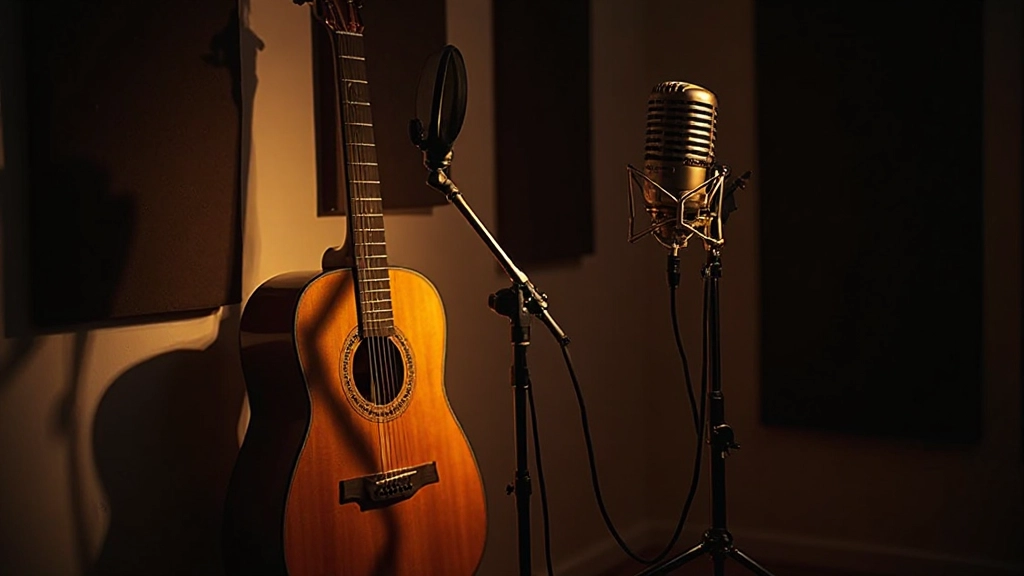
The vocal booth that Trevor Hawkins built in his basement should have been a disaster. Squeezed into a corner between his furnace and water heater, measuring barely 4x4 feet, it violated every acoustic principle he'd read about online. But six months later, that same booth produced vocals for three indie albums that landed sync placements in major TV shows.
What Trevor discovered during those first 90 minutes of construction wasn't just how to treat a space for vocal recording. He learned why the shape of your vocal environment matters more than its size, and how strategic acoustic choices can transform even the most compromised corner of your home into a professional vocal capture zone.
Let's walk through Trevor's process and extract the principles that apply whether you're building a full isolation booth or just trying to get cleaner vocal recordings in your existing space.
Reading the Room: When Small Becomes an Advantage
Trevor's basement corner looked hopeless at first glance. The concrete walls created harsh reflections, the low ceiling trapped standing waves, and the mechanical noise from nearby equipment created a constant hum. But when he started measuring with a simple SPL meter app, he discovered something unexpected.
"The small dimensions actually killed a lot of the problematic frequencies," Trevor explains. "Instead of fighting room modes in a larger space, I had a more controlled acoustic environment to work with. The challenge wasn't eliminating reflections entirely - it was managing which ones I kept."
During his initial assessment, Trevor identified three critical factors that would determine his booth's success: reflection control at the vocalist's position, bass buildup in corners, and isolation from external noise sources. Rather than treating these as separate problems, he developed an integrated approach that addressed all three simultaneously.
The first measurement revealed that his untreated corner had a 300ms decay time - far too long for clean vocal recording. But the frequency response showed something interesting: the small space naturally attenuated frequencies above 8kHz, which meant he could focus his treatment on the midrange frequencies where vocal intelligibility lives.
The 15-Minute Frame Decision That Changed Everything
Most vocal booth guides recommend starting with framing, but Trevor's approach began with a crucial 15-minute listening test. He positioned his microphone in three different locations within the corner space, recording the same vocal line while walking the room's boundaries.
"I discovered that moving the mic position just 18 inches closer to the corner completely changed the character of the reflections," he notes. "Instead of building a booth and hoping for the best, I let the natural acoustics tell me where the sweet spot actually was."
"The room was teaching me what it wanted to do naturally. My job was to enhance that, not fight it."
Trevor Hawkins on discovering his booth's optimal positioning
This listening phase revealed that his corner had a natural null around 400Hz when the vocalist stood 2.5 feet from the back wall. Rather than trying to eliminate this characteristic, Trevor decided to use it as a foundation for his booth design. The frame dimensions followed the acoustics, not the other way around.
He constructed a simple 2x4 frame that positioned the vocalist in that sweet spot, with the microphone capturing the natural focus of the space. The frame doubled as mounting points for acoustic treatment, creating a system where structure and sound worked together rather than competing.
Strategic Treatment: Why Every Surface Tells a Story
Trevor's treatment strategy broke conventional wisdom by leaving one wall partially reflective. While most booth designs aim for maximum absorption, he recognized that some controlled reflectivity could actually enhance vocal presence rather than muddy it.
"I treated the surfaces behind and to the sides of the vocalist heavily, but left the front wall with just light treatment," he explains. "This created a subtle ambience that kept the vocals from sounding completely dead, while still controlling the problematic reflections."
- Rear wall treatment: 4-inch acoustic foam with additional bass trapping in corners
- Side walls: 2-inch foam panels with strategic gaps for controlled diffusion
- Ceiling treatment: Hanging baffles that could be adjusted based on vocalist height
- Front wall: Minimal treatment to preserve subtle ambient character
The treatment installation followed a specific sequence designed to let Trevor hear the cumulative effect of each addition. He started with the rear wall, recorded test vocals, then added side treatment and tested again. This iterative approach prevented over-treatment while ensuring each surface contributed positively to the final sound.
Corner bass traps proved essential despite the small space. The concrete walls created significant low-end buildup that muddied vocal recordings and created an uncomfortable working environment. Trevor used a combination of commercial bass traps and DIY absorption using dense fiberglass panels wrapped in acoustically transparent fabric.
The Microphone Placement Protocol That Delivers Consistency
With his booth acoustically dialed in, Trevor developed a placement protocol that ensured consistent results regardless of which vocalist used the space. The system accounted for height differences, vocal styles, and microphone types without requiring extensive re-adjustment.
The foundation of his system was a simple mounting arm that positioned the microphone at the acoustic center of his treated space. But rather than a fixed position, Trevor created multiple marked positions that corresponded to different vocal characteristics and recording goals.
| Position | Distance from Rear Wall | Character | Best For |
|---|---|---|---|
| Position A | 30 inches | Intimate, present | Lead vocals, podcasting |
| Position B | 24 inches | Balanced, natural | Background vocals, harmonies |
| Position C | 18 inches | Spacious, ambient | Vocal textures, experimental sounds |
Each position corresponded to different proximity effect characteristics and room interaction. Trevor found that vocalists could quickly identify their preferred position through A/B testing, then maintain consistent results by returning to the same marked setup.
The protocol also included height adjustments for the microphone based on vocalist stature, ensuring that the capsule remained in the optimal acoustic zone regardless of who was performing. These adjustments maintained consistent frequency response while accommodating natural performance postures.
Testing the Theory: Real Vocals, Real Results
Three weeks after completing his booth, Trevor faced his first real test: recording vocals for a folk duo whose previous attempts in other spaces had failed to capture the intimacy their songs required. The female vocalist had a particularly challenging voice - beautiful in live performance but difficult to record without harshness or muddiness.
"Within the first take, we knew something was different," Trevor recalls. "Her voice had presence and clarity without the digital harshness we'd been fighting in other spaces. The booth was doing exactly what I'd hoped - enhancing the natural character instead of imposing its own signature."
The recording session revealed several unexpected benefits of Trevor's approach. The controlled reflectivity created a subtle sense of space that complemented the duo's intimate musical style. The strategic bass trapping eliminated muddiness while preserving warmth. Most importantly, the predictable acoustic environment allowed both performers to sing with confidence, knowing their voices would translate consistently.
Subsequent sessions confirmed the booth's versatility. Rock vocalists found it controlled enough for aggressive performances without unwanted resonances. Singer-songwriter types appreciated the subtle ambience that complemented acoustic instruments. Even rap vocals, which Trevor had worried might sound too confined, benefited from the controlled environment.
Fine-Tuning Through Real-World Use
After six months of regular use, Trevor identified several refinements that improved his booth's performance. These adjustments came not from theoretical knowledge but from solving specific problems that arose during actual recording sessions.
The first major modification addressed air circulation. The small space became uncomfortable during longer vocal sessions, affecting performance quality. Trevor installed a quiet exhaust fan with acoustic treatment around the ductwork, maintaining the booth's isolation while improving working conditions.
- Added variable air circulation with noise isolation
- Installed adjustable lighting to prevent performance anxiety
- Created quick-change mounting system for different microphone types
- Added small shelf for lyrics and water bottle storage
- Implemented cable management to prevent noise contamination
The lighting adjustment proved particularly important. Trevor's initial overhead lighting created unflattering shadows that made vocalists self-conscious. He replaced it with warm, diffused lighting positioned to create a comfortable, professional atmosphere that encouraged confident performances.
Cable management became crucial as Trevor began recording with multiple microphone configurations. Poorly routed cables created handling noise that contaminated takes. He implemented a systematic approach to cable routing that maintained clean signal paths while allowing quick setup changes between sessions.
Lessons That Apply Beyond the Booth
Trevor's vocal booth success offers insights that extend far beyond small-space construction. The principles he discovered apply to any vocal recording environment, from untreated bedrooms to professional studios.
The most important lesson was the value of working with natural acoustics rather than against them. Every space has characteristics that can be enhanced rather than eliminated. Trevor's corner had natural midrange focus - instead of fighting it, he built his treatment strategy around it.
The iterative approach to treatment proved essential. Rather than implementing a complete acoustic plan all at once, Trevor added elements gradually while testing the cumulative effect. This prevented over-treatment and ensured that each modification contributed positively to the final result.
Consistency protocols matter more than perfect acoustics. Trevor's marked positioning system delivered reliable results even when different engineers used the space. Predictability trumped theoretical perfection, especially in project studio environments where multiple sessions might happen with varying personnel.
The Bigger Picture: When Constraints Become Creative Tools
Looking back on his booth construction experience, Trevor recognizes that the limitations of his basement corner actually drove better design decisions than an unlimited budget and perfect space might have allowed.
"Having constraints forced me to really understand what vocal recording needed versus what I thought it needed," he reflects. "I couldn't just throw expensive treatment at the problem - I had to solve it intelligently."
The small space taught him to prioritize ruthlessly. Every acoustic decision had to serve multiple functions. Treatment choices had to balance absorption, diffusion, and aesthetic concerns within tight physical and financial constraints. This discipline created a more thoughtful, effective design than unlimited resources might have produced.
The booth's success also demonstrated how proper acoustic treatment could transform even compromised spaces into professional-grade recording environments. Musicians who had struggled with vocal recordings in other contexts found they could achieve release-quality results in Trevor's modest basement setup.
Most importantly, the project proved that understanding acoustic principles mattered more than expensive equipment or perfect rooms. Trevor's investment in learning how sound behaved in his specific space, then working with those characteristics rather than against them, produced better results than simply copying someone else's booth design.
The vocal booth that started as a basement compromise became a model for intelligent acoustic design that prioritizes results over conventional wisdom. Whether you're building a dedicated vocal space or just trying to improve recordings in your existing room, the principles Trevor discovered during those first 90 minutes of construction offer a roadmap for turning acoustic challenges into creative solutions.
Hear what these choices do to your own song.
Upload stems or a finished track, choose a reference direction, and compare a private Moozix mix before you export anything.