The snare hit should have been the centerpiece of the chorus, but instead it sounded like it was recorded in a cathedral three blocks away. I stared at the reverb send, realizing I had made the same mistake that ruins more home studio mixes than any other processing choice.
Three hours into what should have been a quick vocal mix session, I found myself drowning in my own spatial effects. Every element felt disconnected, floating in some undefined sonic space that had no relationship to reality. The drums sounded like they were in a different building than the bass, and the vocals seemed to hover somewhere in the stratosphere.
This was my wake-up call about reverb addiction, and the beginning of a complete overhaul in how I approach spatial processing in home studio environments.
The Depth Trap That Catches Every Home Mixer
Working in smaller rooms, we compensate for acoustic limitations by reaching for reverb plugins like they are magic wands. The logic seems sound: if the room does not provide natural ambience, artificial reverb will create the missing dimension. But this approach ignores a fundamental truth about how professional mixes achieve their sense of space.
Great depth comes from careful balance between dry and wet signals, not from drowning everything in digital hall reverb. When every element gets its own reverb treatment, the mix loses focus and separation rather than gaining dimension.
The problem amplifies in home studios where monitoring environments already lack accuracy. We add reverb to compensate for what we think we are missing, but often we are solving the wrong problem entirely.
Watching a Mix Collapse Under Too Much Space
Last month, I was working with Garrett, a singer-songwriter who had tracked a beautiful fingerpicked arrangement in his basement studio. The dry recordings had perfect balance and natural dynamics, but by the time he finished processing, the song had lost all its intimate character.
He had applied different reverb settings to the vocal, the guitar, the subtle percussion, and even the bass. Each element lived in its own acoustic space, creating a disjointed soundscape that felt more like four separate performances than one cohesive song.
We spent an entire evening stripping away the spatial processing and rebuilding the mix from scratch, focusing on creating depth through volume relationships and EQ placement rather than artificial ambience.
"I thought more reverb meant more professional, but it actually made everything sound like a demo recorded in a bathroom," Garrett reflected after hearing the cleaned-up version.
The Hierarchy Method for Spatial Decision Making
Professional mixers work with spatial hierarchy rather than individual reverb treatments. This means establishing which elements exist in the foreground, midground, and background, then using reverb to support those relationships rather than create competing spaces.
- Identify your focal point - Usually the lead vocal or primary melodic instrument
- Place supporting elements - Drums and bass typically anchor the dry, upfront space
- Create background texture - Secondary instruments can carry more spatial processing
- Use one primary reverb - Send multiple elements to the same reverb bus for cohesion
This approach creates the illusion of a single acoustic space where different instruments occupy different positions, rather than multiple artificial spaces competing for attention.
Send Effects That Actually Serve the Song
The most effective reverb usage in home studio mixes comes from aux send buses rather than individual insert effects. This technique allows multiple instruments to share the same acoustic signature while maintaining different levels of spatial treatment.
| Element | Send Level | Purpose |
|---|---|---|
| Lead Vocal | 15-25% | Subtle enhancement without distance |
| Background Vocals | 30-40% | Place behind lead while maintaining clarity |
| Snare Drum | 10-20% | Add size without losing impact |
| Guitar Overdubs | 25-35% | Create width and texture |
| Bass Guitar | 0-5% | Maintain low-end definition |
These percentages vary based on the song and style, but the principle remains consistent: foreground elements receive minimal spatial treatment, while background textures can carry more reverb without harming the mix's focus.
Building Depth Without Distance
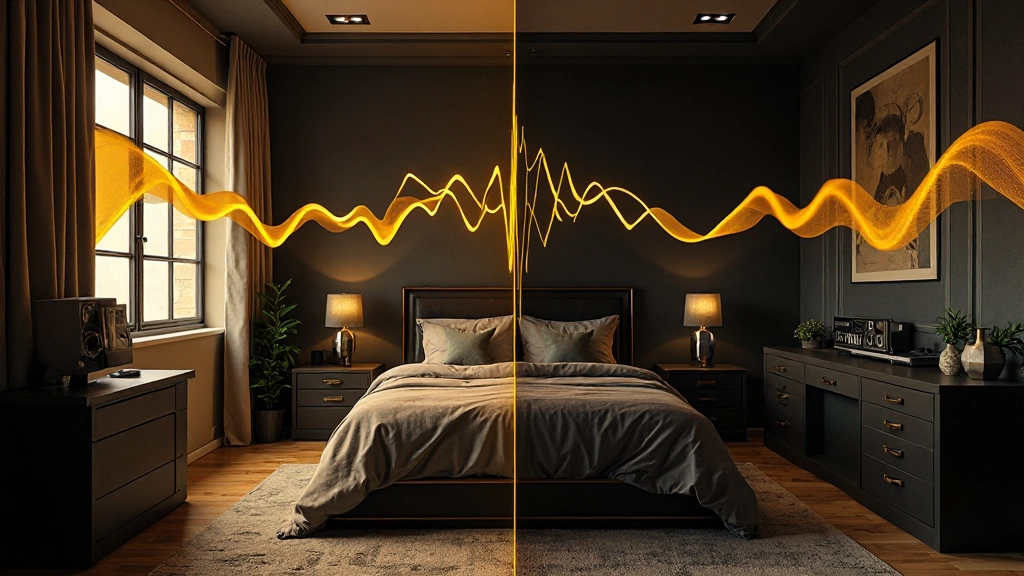
The key insight that transformed my spatial processing came from understanding the difference between depth and distance. Depth places instruments at different points in a three-dimensional space while maintaining their connection to the mix. Distance pushes instruments away from the listener entirely.
Professional mixers achieve depth through a combination of techniques that work together rather than relying solely on reverb:
- High-frequency content controls perceived distance
- Volume relationships establish front-to-back positioning
- Compression affects how forward or laid-back elements feel
- Reverb enhances these relationships rather than creating them
When reverb becomes the primary tool for creating space, it often works against these other positioning techniques rather than supporting them.
The Reference Track Reality Check
The most humbling moment in my spatial processing education came from A/B testing my reverb-heavy mixes against professional releases in the same genre. The commercial tracks had obvious depth and dimension, but achieved it with far less obvious reverb usage.
This comparison revealed how amateur mixers typically over-process spatial elements because we are listening for the effect rather than the result. Professional mixes use reverb as seasoning rather than the main ingredient, creating space that feels natural rather than artificial.
I started a practice of importing reference tracks into every mix session and checking my reverb decisions against them. This single habit eliminated most of my spatial processing mistakes before they became problems.
Fixing Reverb Problems After the Fact
When you realize a mix has too much spatial processing, the solution involves more than just turning down reverb levels. Over-processed mixes often require rebuilding the spatial relationships from the ground up.
This process reveals which instruments actually benefit from reverb treatment versus those that sound better positioned through volume and EQ alone. Often, fewer elements need spatial processing than originally assumed.
The goal is creating a mix where the reverb serves the song rather than advertising its presence. When spatial effects work correctly, listeners should feel the depth without consciously noticing the processing.
Small Adjustments That Rescue Entire Mixes
Sometimes the difference between a professional-sounding mix and an over-processed one comes down to surprisingly small adjustments in reverb pre-delay, decay time, and frequency content rather than dramatic changes in level.
Pre-delay settings between 20-50ms help maintain instrument definition while still providing spatial enhancement. Shorter decay times keep reverb from building up and muddying the mix during busy sections. High-frequency rolloff in the reverb return prevents the spatial processing from making the mix sound harsh or artificial.
These technical adjustments support the musical goal of creating depth without sacrificing clarity or impact. The reverb enhances the natural character of the recording rather than imposing an artificial acoustic signature that fights against the source material.
Learning to use spatial processing as a supporting tool rather than a primary effect transformed not just individual mixes, but my entire approach to creating professional-sounding recordings in home studio environments. The depth comes from understanding the music first, then using reverb to enhance what is already working rather than fixing what is missing.
Hear what these choices do to your own song.
Upload stems or a finished track, choose a reference direction, and compare a private Moozix mix before you export anything.