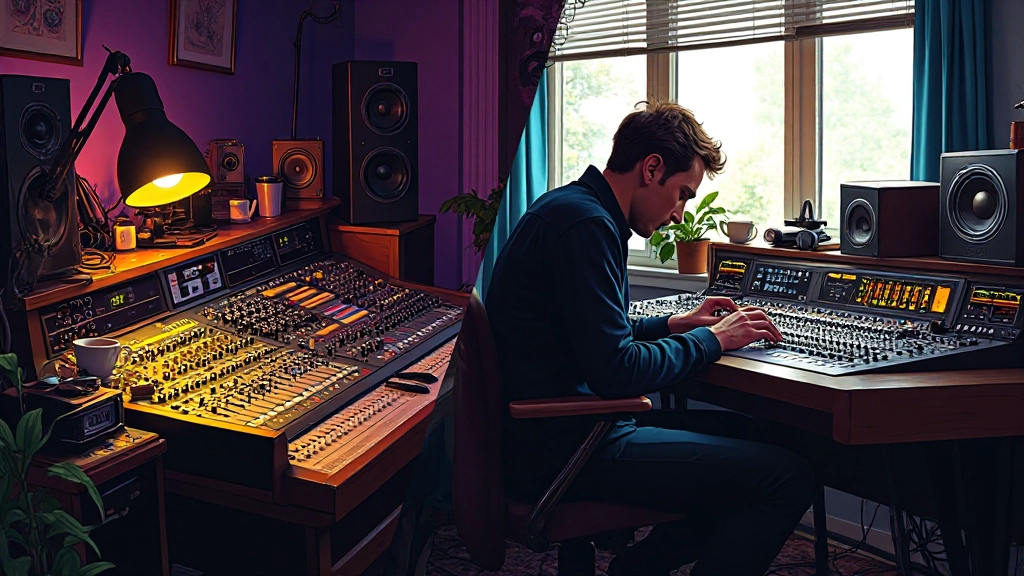
Clarence adjusted the high shelf for the fifteenth time, his forehead creased with frustration. The vocal needed more presence to cut through the dense arrangement, but every boost above 8kHz turned the singer's sibilants into ice picks. In the control room of Nashville's Blackbird Studio, he watched the client shift uncomfortably as another harsh frequency spike made everyone wince.
That moment taught me everything about the razor-thin line between presence and pain in the high frequencies. Adding air and brightness to a mix without creating harshness requires surgical precision, musical intuition, and a deep understanding of how our ears perceive different frequency ranges. The difference between a mix that sparkles and one that stings often comes down to just a few dB in very specific frequency ranges.
The Anatomy of Harsh vs Musical High Frequencies
Understanding why certain high-frequency boosts sound musical while others assault the listener starts with recognizing the critical frequency zones. The presence range (2kHz-5kHz) affects clarity and intelligibility, while the air band (10kHz-20kHz) provides openness and sparkle. But between these zones lies the danger area: 5kHz-8kHz, where even small boosts can create piercing, fatiguing sound.
When I analyze mixes that achieve beautiful brightness without harshness, they share common characteristics. The frequency response shows gentle, broad curves rather than sharp peaks. The boost amounts rarely exceed 2-3dB in the presence range, and any cuts in the harsh frequencies are subtle but strategically placed. Most importantly, these mixes maintain dynamic range in the high frequencies rather than compressing them into a flat, aggressive wall.
Frequency Mapping for Presence Without Pain
Each instrument occupies specific zones in the high-frequency spectrum, and understanding these relationships prevents conflicts that lead to harshness. Vocals typically need attention around 2.5kHz for clarity and 12kHz for air. Acoustic guitars benefit from gentle enhancement around 3kHz and 10kHz. Cymbals and percussion naturally occupy the highest frequencies but often need taming around 6kHz to prevent splash from becoming aggressive.
During a recent session with singer-songwriter Beth Rodriguez, we spent hours finding the sweet spot for her vocal presence. Her voice had natural clarity around 2.8kHz, but the microphone added an unwanted edge at 5.2kHz. A narrow 2dB cut at the harsh frequency combined with a broad 1.5dB boost at 11kHz gave us the presence we needed without the pain. The key was treating the problem frequency first, then enhancing the musical frequencies.
Surgical EQ Techniques for Clean Brightness
The most effective approach to adding presence without harshness involves a three-step process: identify and tame harsh frequencies, enhance musical frequencies, and verify the results in context. This methodical approach prevents the common mistake of boosting first and dealing with problems later.
- Sweep and destroy harsh frequencies: Use a narrow bell curve with significant boost (8-10dB) to sweep through the 4kHz-8kHz range. When you find frequencies that make you wince, cut them by 1-3dB with a moderate Q.
- Enhance musical content: Apply gentle broad boosts to frequencies that contain actual harmonic content. Use wide Q settings and modest amounts (1-2dB).
- Context verification: Always check your EQ moves within the full mix. Solo adjustments often don't translate to mix context.
The sweep-and-destroy technique saved countless mixes in my early engineering days. Producer Vincent Hayes taught me this method during sessions for an indie rock band whose guitars consistently sounded great in isolation but turned piercing in the mix. By identifying the specific frequency conflicts first, we could enhance presence without adding fatigue.
| Frequency Range | Typical Issues | Enhancement Strategy | Cut Strategy |
|---|---|---|---|
| 2-3kHz | Vocal clarity | Broad 1-2dB boost | N/A (rarely problematic) |
| 3-4kHz | Guitar presence | Gentle wide boost | Narrow cuts if boxy |
| 5-7kHz | Harshness zone | Avoid boosting | Narrow 1-3dB cuts |
| 8-12kHz | Air and openness | Shelf or broad boost | Only if overly bright |
| 12kHz+ | Sparkle and detail | High shelf boost | Roll-off if too bright |
Dynamic EQ: The Secret Weapon
Traditional static EQ treats frequencies the same way regardless of the input signal level. Dynamic EQ only applies processing when specific frequency ranges exceed a threshold, making it perfect for controlling harshness that only appears during loud passages while preserving presence during quieter moments.
I discovered dynamic EQ's power during a particularly challenging vocal session. The singer had incredible range, but her high notes triggered harsh resonances that didn't exist in her lower register. Static EQ cuts dulled her entire performance, but dynamic EQ at 5.8kHz only engaged during the problematic high notes, leaving her natural brightness intact throughout most of the song.
Strategic Harmonic Enhancement Techniques
Beyond traditional EQ, harmonic enhancement tools offer another path to presence without harshness. These processors add harmonics rather than simply boosting existing frequencies, creating musical brightness that feels natural rather than artificial.
Tape saturation emulation adds subtle second-order harmonics that enhance warmth and presence. Tube modeling creates odd-order harmonics that add character and edge. Exciter processors generate new harmonic content specifically in the high frequencies. The key with any harmonic enhancement is subtlety: the effect should be felt rather than heard.
Parallel Processing for Controlled Brightness
Parallel EQ processing allows you to blend heavily processed bright signals with the original, giving you control over the amount of enhancement without compromising the natural tone. This technique works particularly well for adding presence to drums and acoustic instruments.
Set up a send to a bus with aggressive high-frequency EQ: significant cuts in the harsh zones and substantial boosts in the musical frequencies. Then blend this processed signal back with the original using the bus fader. This approach lets you dial in exactly the right amount of brightness without the all-or-nothing nature of insert EQ.
Mix Context: The Ultimate Test
The most musical high-frequency decisions happen within the context of the full mix. Frequencies that sound harsh in isolation might provide essential clarity in a dense arrangement, while pleasant-sounding solo adjustments might disappear completely when other instruments are present.
During mixing sessions, I regularly cycle between solo, small group, and full mix listening. Each perspective reveals different aspects of the high-frequency balance. Solo listening helps identify specific problem frequencies. Small groups (like vocals with rhythm section) reveal interaction issues. Full mix listening provides the ultimate reality check for how the brightness serves the overall musical picture.
"The goal isn't to make every element sound amazing in solo, but to make the whole mix serve the song. Sometimes that means accepting a slightly duller solo sound for a more cohesive mix."
Grammy-winning engineer Rachel Martinez
Reference Tracks and Frequency Analysis
Comparing your mix to professional references reveals how commercial releases handle the balance between presence and comfort. Load your favorite tracks into a spectrum analyzer and study their high-frequency content. Notice how bright they actually are versus how bright they sound.
Many successful mixes have less high-frequency content than you might expect, but it's placed precisely where it enhances musicality. The perception of brightness often comes from contrast and clarity rather than raw frequency content. A mix with clean, uncluttered highs will sound brighter than one with more high-frequency energy spread across multiple conflicting elements.
Common Mistakes and How to Avoid Them
The most frequent error in high-frequency enhancement is boosting first and asking questions later. This approach inevitably leads to harsh, fatiguing mixes because it amplifies problems along with musical content. Always start by cleaning up problematic frequencies before adding enhancement.
Another common pitfall is making all EQ adjustments in solo. While solo listening helps identify specific issues, the musical value of high-frequency adjustments can only be judged in mix context. What sounds perfectly smooth in isolation might lack the edge needed to cut through a busy arrangement.
- Always cut harsh frequencies before boosting musical ones
- Use broad Q settings for musical enhancement
- Verify all adjustments in full mix context
- Reference your work against commercial releases
- Avoid boosting empty frequency ranges without harmonic content
- Don't apply the same high-frequency treatment to every element
The Listening Fatigue Test
The ultimate test of successful high-frequency enhancement is listener comfort over extended periods. If your mix sounds impressive for the first minute but becomes tiring after several songs, you've likely crossed the line into harshness territory.
Engineer Tommy Chen taught me the "dishwasher test" during our work on a folk album. We'd play the mix at moderate volume while doing mundane tasks around the studio. If we found ourselves unconsciously reaching for the volume knob or feeling tension after 15 minutes, the highs needed adjustment. Great mixes invite you to turn them up, not down.
Building Your High-Frequency Toolkit
Developing reliable techniques for adding presence without harshness requires building a systematic approach you can apply to any material. Start each mix with broad strokes: establish the overall tonal balance before making detailed adjustments. Use subtractive EQ to clean up problems, then additive EQ for enhancement.
Create templates for common scenarios: vocal presence chains, acoustic guitar air settings, drum overhead enhancement. Having starting points saves time and ensures consistency across projects. But remember that templates are starting points, not destinations. Every song requires individual attention to achieve optimal high-frequency balance.
The journey from harsh highs to musical presence is one of the most crucial skills in modern mixing. Master this balance, and your mixes will have the clarity and excitement that keeps listeners engaged without causing fatigue. The difference between amateur and professional sound often lives in these crucial frequency decisions, where technical precision meets musical intuition to create magic that serves the song.
Hear what these choices do to your own song.
Upload stems or a finished track, choose a reference direction, and compare a private Moozix mix before you export anything.