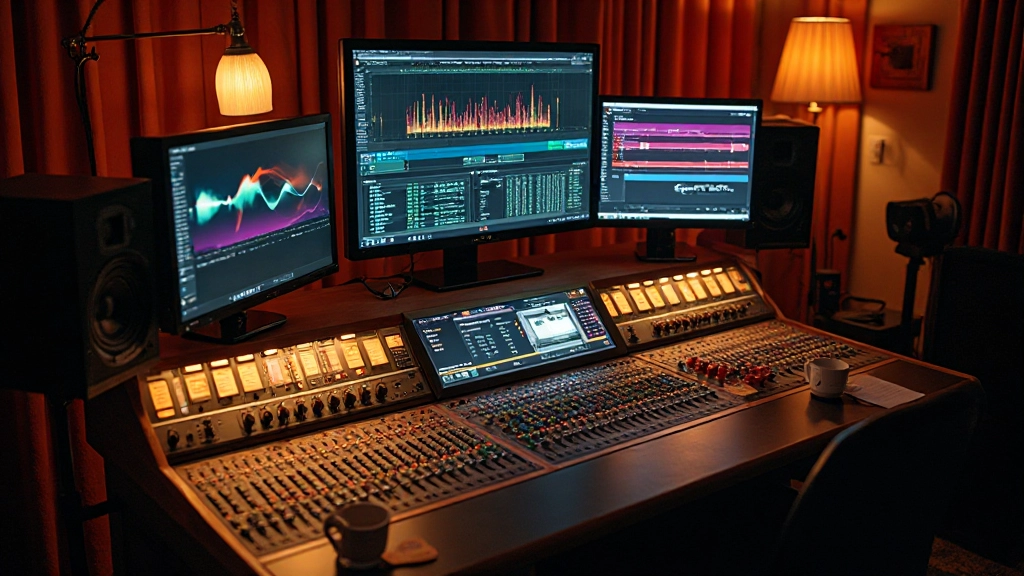
Marcus stared at the Pro Tools session that had grown into a hydra of 127 tracks, each labeled with cryptic names like "Vox_Lead_FINAL_v3_ACTUAL_FINAL." Three weeks into what should have been a five-day mix, he realized he'd been treating symptoms instead of the disease: his session organization was broken from the ground up.
That night, he rebuilt everything using what we call the Mix Session Pyramid—a three-tier structure that transforms chaotic projects into manageable, creative workflows. Six months later, Marcus was finishing complex mixes in half the time while maintaining the creative flow that makes mixing an art rather than a chore.
The Foundation Layer: Track Architecture That Actually Works
The pyramid starts with your foundation—track organization that serves the mix, not the recording process. Most engineers inherit sessions organized by recording date or instrument type, but mixing demands a different logic entirely.
Your foundation layer should mirror the frequency spectrum and stereo field of your final mix. This means grouping tracks not by what they are, but by where they live in the sonic landscape.
Foundation Principle: Organize tracks by their role in the final mix, not their recording origin. Your session should tell the story of the song's frequency and spatial relationships.
Here's how this works in practice. Instead of grouping "All Guitars," create sections like "Low End Foundation" (kick, bass, low toms), "Midrange Core" (snare, rhythm guitars, lead vocals), and "High End Detail" (hi-hats, cymbals, vocal air). This organization immediately shows you which elements compete for the same sonic space.
Sarah, a producer working out of her converted garage, discovered this approach while mixing a dense indie rock track. "When I reorganized the session by frequency zones instead of instruments, I could instantly see why the mix felt muddy," she explains. "Three different elements were fighting for the exact same midrange pocket."
Color-Coding for Instant Navigation
Within each frequency zone, implement a consistent color system that transcends individual projects. Assign warm colors (reds, oranges) to rhythmic elements, cool colors (blues, greens) to harmonic content, and neutral colors (grays, whites) to percussive transients.
This isn't about aesthetics—it's about reducing cognitive load. When you're deep in a creative flow, muscle memory should handle navigation while your brain focuses on musical decisions.
| Element Type | Color Family | Example Elements |
|---|---|---|
| Rhythmic Foundation | Warm (Red/Orange) | Kick, Bass, Rhythm Guitar |
| Harmonic Content | Cool (Blue/Green) | Pads, Lead Vocals, Melodic Lines |
| Percussive Transients | Neutral (Gray/White) | Snare, Hi-Hats, Percussion |
| Textural Elements | Purple/Violet | Reverb Returns, Ambient Sounds |
The Control Layer: Bus Strategy That Scales
Once your tracks are logically organized, the second tier focuses on signal flow—the buses, sends, and routing that give you macro control over your mix. Think of this as your mix's nervous system: well-designed routing lets you make broad musical gestures without getting lost in per-track minutiae.
The key insight here is that buses should serve musical functions, not just technical ones. Instead of generic "Drum Bus" and "Vocal Bus," create buses that reflect the song's emotional architecture.
Common Pitfall: Avoid creating buses just because you can. Each bus should serve a specific musical purpose and save you time during the mixing process.
For a moody ballad, you might create buses like "Intimate Core" (close-mic'd vocals and acoustic guitar), "Atmospheric Bed" (reverb-heavy elements that create space), and "Dynamic Punctuation" (elements that emphasize song structure). For an aggressive rock track, consider "Power Foundation" (drums and bass), "Wall of Sound" (layered guitars), and "Vocal Presence" (all vocal elements).
Jake, who mixes from a spare bedroom in his apartment, uses this approach religiously: "When I name my buses after the emotional role they play, I make better mixing decisions. My 'Dreamy Atmosphere' bus gets different treatment than a generic 'Reverb Bus' because the name reminds me of the musical goal."
Send Effects as Creative Tools
Your send effects should integrate seamlessly into this bus architecture. Rather than generic reverb and delay sends, create sends that serve specific spatial and temporal functions in your mix.
- Space Definition Send: A reverb that establishes the primary acoustic environment
- Depth Creation Send: A longer reverb or delay that pushes elements back in the mix
- Rhythmic Enhancement Send: Tempo-synced delays that reinforce the song's pulse
- Texture Generation Send: Creative processing that adds sonic interest without cluttering the mix
This approach transforms send effects from afterthoughts into integral parts of your mix architecture. You're not just adding reverb to vocals; you're placing them in the song's spatial landscape.
The Creative Layer: Automation That Tells Stories
The pyramid's peak is where technical organization serves pure creativity—automation that brings static mixes to life. But effective automation requires the solid foundation of the previous two layers. Without organized tracks and strategic bus routing, automation becomes a chaotic mess of conflicting moves.
Approach automation like a film score: every move should serve the song's narrative arc. This means thinking beyond basic level automation to consider how every parameter can enhance the emotional journey.
"Great automation feels invisible but sounds essential. The listener should feel the emotion, not notice the technique."
Grammy-winning engineer Tom Elmhirst
Start with what we call "structural automation"—broad moves that emphasize song sections. Before touching individual tracks, automate your buses to create dynamic contrast between verses, choruses, and bridges. This establishes the macro-level energy curve that listeners unconsciously follow.
Then layer in "conversational automation"—detailed moves that create dialogue between instruments. When the lead guitar enters, does the rhythm guitar step back slightly? When the vocal reaches its emotional peak, do the supporting elements create space or add energy?
The 80/20 Rule of Automation
Focus 80% of your automation effort on 20% of your tracks—usually lead vocals, key melodic elements, and rhythmic drivers. These elements carry the song's emotional weight and benefit most from detailed attention.
- Automate bus levels before individual tracks
- Write automation that serves the song's emotional arc
- Focus detailed work on the elements that carry melodic or rhythmic importance
- Use automation to create conversation between instruments
- Step back periodically to hear the big picture
Breaking It Down: When Sessions Go Wrong
Even with perfect organization, mix sessions can derail. The pyramid structure provides a diagnostic framework: when things go wrong, work backward through the layers to find the source.
If automation feels chaotic and ineffective, the problem might be in your control layer—poorly designed bus routing makes coherent automation impossible. If your bus processing sounds disjointed, look to your foundation layer—illogically organized tracks create mix decisions that fight each other.
Lisa, mixing in her home studio, discovered this during a particularly challenging folk-rock project: "I was struggling with vocal automation that sounded choppy and unnatural. When I stepped back, I realized my vocal bus included background vocals that needed completely different treatment. Fixing the bus architecture solved the automation problem instantly."
The Rebuild Process
When a session becomes unmanageable, resist the urge to push through. Instead, implement what experienced engineers call "the therapeutic rebuild"—systematically reconstructing your session architecture while preserving your creative progress.
Start by bouncing your current work-in-progress mix, then rebuild from the foundation layer up. This process typically takes 30-60 minutes but can save days of frustration. More importantly, the rebuild often reveals creative opportunities that were invisible in the chaotic original session.
Making It Muscle Memory
The Mix Session Pyramid becomes truly powerful when it moves from conscious technique to unconscious habit. This requires building template sessions that embody these organizational principles and using them consistently across projects.
Create templates for different musical styles that include your standard track organization, bus routing, and even basic automation moves. These templates shouldn't constrain creativity—they should eliminate organizational friction so creativity can flow freely.
Pro Tip: Build your templates gradually. Start with basic organization, then add routing and automation frameworks as they prove useful across multiple projects.
Remember that this pyramid structure adapts to any scale of production. A simple singer-songwriter track might have just a few elements in each layer, while a complex orchestral piece might require dozens of buses and hundreds of automation moves. The principles scale naturally because they're based on musical relationships, not technical complexity.
The Mix Session Pyramid isn't about rigid rules—it's about creating structure that serves creativity. When Marcus rebuilt that hydra session six months ago, he wasn't just organizing tracks. He was creating a framework that transformed mixing from a technical struggle into a musical conversation. That's the real power of thoughtful session architecture: it gets the technology out of the way so the music can breathe.
Hear what these choices do to your own song.
Upload stems or a finished track, choose a reference direction, and compare a private Moozix mix before you export anything.