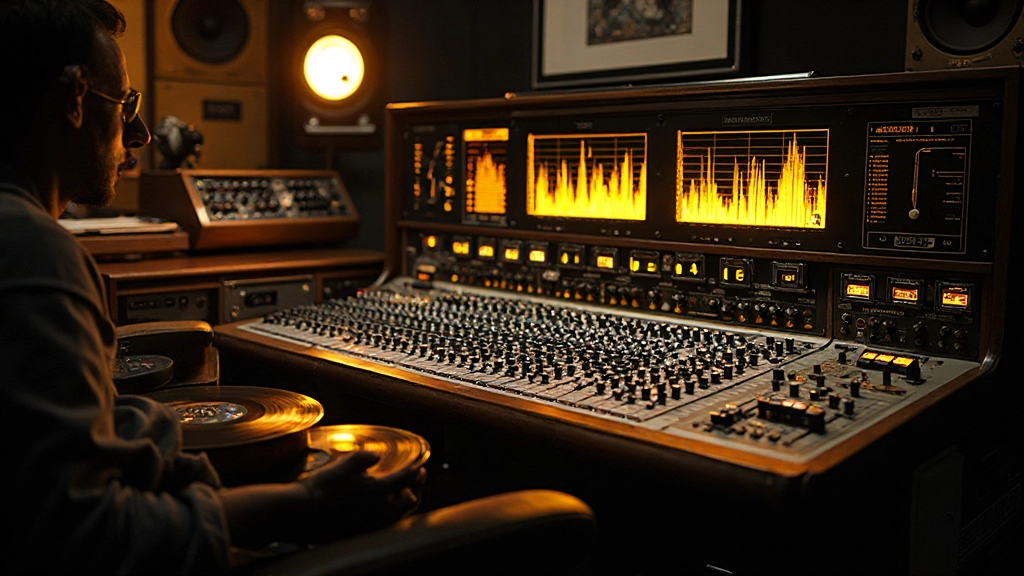
The crash cymbal cut through the control room monitors like a knife through butter, but something was wrong. Despite the pristine attack, the snare underneath sounded like it was being strangled by invisible hands.
Chester had been wrestling with this particular drum mix for three hours, applying every transient-shaping trick he'd learned from YouTube tutorials and forum posts. The harder he pushed, the more lifeless his percussion became. Sound familiar?
After twenty years behind the board, I've watched countless engineers fall victim to the same myths about managing transients in percussion. These misconceptions don't just waste time—they actively destroy the very punch and clarity we're trying to achieve.
Myth #1: More Attack Always Means More Punch
This might be the most destructive myth in modern mixing. Chester's mistake wasn't uncommon—he'd cranked the attack enhancement on every drum element, thinking more transient emphasis would translate to more impact.
The reality hits differently. Excessive attack enhancement creates a phenomenon I call "plastic percussion"—drums that sound hyper-present but lack the natural weight and body that makes them feel powerful. When everything has exaggerated attack, nothing stands out.
During a session with drummer Janet Kellerman last winter, we spent an entire afternoon comparing heavily processed transients against subtle, musical adjustments. The results were revealing: tracks with moderate transient shaping consistently felt more powerful and musical than their over-processed counterparts.
The human ear processes percussion attacks in context. A snare hit that sounds punchy in isolation might become harsh and fatiguing when fighting against other enhanced transients in a full mix. Professional engineers understand this balance.
The Musical Approach
Instead of automatic attack enhancement, try this workflow:
- Start with completely unprocessed drums
- Identify the primary rhythmic elements that need to cut through
- Apply transient enhancement selectively to 1-2 key pieces
- Use subtle transient reduction on supporting elements
- Test the entire kit in the context of the full mix
This approach creates natural hierarchy rather than transient chaos. Your drums will sound more like a cohesive instrument and less like individual samples fighting for attention.
Myth #2: Transient Processors Are Just Creative EQ
I've heard this comparison countless times in online forums, and it reveals a fundamental misunderstanding of how transient processing actually works. EQ affects specific frequency ranges across time, while transient processing targets temporal characteristics regardless of frequency content.
The distinction matters more than you might think. When engineer Rita Canning needed to tighten up some muddy tom recordings without losing their natural tone, EQ couldn't solve the problem. The issue wasn't frequency-based—it was timing-based.
"I spent hours trying to EQ away the flabbiness in those toms. It wasn't until I switched to transient processing that I realized I was using the wrong tool entirely."
Rita Canning, Nashville session engineer
Transient processors analyze the attack and sustain portions of incoming audio, allowing you to emphasize or reduce these characteristics independently. This temporal control operates across the entire frequency spectrum, making it possible to tighten percussion without altering tonal character.
When Each Tool Shines
| Issue | Best Tool | Why |
|---|---|---|
| Snare too bright | EQ | Frequency-specific problem |
| Kick too slow/saggy | Transient Processor | Timing-based issue |
| Cymbals harsh in highs | EQ + Compression | Frequency and dynamics combined |
| Toms lack definition | Transient Processor | Attack clarity needed |
Understanding when to reach for transient processing versus traditional EQ becomes intuitive once you recognize the difference between frequency problems and timing problems. Both tools can enhance percussion, but they solve fundamentally different issues.
Myth #3: Digital Transient Processing Sounds Too Artificial
This myth probably started during the early days of digital transient processing, when algorithms were indeed quite crude. But clinging to this belief in 2025 means missing out on some incredibly musical tools.
Last month, I blind-tested five different transient processors with mixing engineer Carlos Peterson. The results surprised both of us—two of the most "musical" and "natural" processors in our test were entirely digital. The artificial quality that plagued early processors has largely disappeared from modern implementations.
The key lies in understanding how different processors handle the crossover between attack and sustain phases. High-quality digital processors use sophisticated analysis algorithms that can detect transients with remarkable accuracy while preserving the natural feel of the performance.
Choosing the Right Processor
Rather than dismissing digital options entirely, focus on these characteristics:
- Clean transient detection without false triggers
- Smooth crossfade between processed and unprocessed signal
- Musical response to varying input levels
- Minimal latency for real-time monitoring
- Transparent operation at moderate settings
Modern processors excel at preserving the human feel of percussion while offering surgical control. The artificial sound typically results from poor parameter settings rather than inherent digital limitations.
Myth #4: Room Mics Don't Need Transient Control
This oversight has ruined more drum mixes than I can count. Engineers obsess over close-mic transient shaping while completely ignoring the room mics that often determine the overall feel and impact of the kit.
Room microphones capture not just the direct sound of drums, but also the acoustic interaction between the kit and the recording space. This interaction creates complex transient behavior that often conflicts with processed close mics.
During a recent session, engineer Beth Morrison discovered that her carefully crafted close-mic transients were being undermined by unprocessed room mics that arrived slightly delayed. The result was a confusing double-attack that destroyed the punch she'd worked so hard to create.
Room Mic Transient Strategy
Consider these approaches when processing room mics:
- Match the perspective: If close mics have enhanced attack, room mics might need similar treatment
- Time alignment: Ensure room mics aren't creating conflicting transient information
- Sustain emphasis: Sometimes reducing room mic attack while enhancing sustain creates better separation
- Frequency-dependent processing: High-frequency transients in room mics often benefit from different treatment than low-frequency elements
Room mics often respond better to gentle transient reduction than enhancement. This allows them to support the close mics without competing for attack attention, while still contributing to the overall sustain and ambiance of the kit.
Myth #5: Parallel Processing Doubles Your Transient Impact
Parallel compression gets all the attention, but parallel transient processing has become equally popular—and equally misunderstood. The assumption that blending heavily processed transients with the original signal automatically improves impact is dangerously oversimplified.
The math doesn't work the way most engineers expect. When you blend a heavily attack-enhanced signal with the original, you're not just adding punch—you're also introducing phase relationships that can actually reduce impact in certain frequency ranges.
"I was convinced parallel transient processing would give me the best of both worlds. Instead, I got a snare drum that sounded like it was hitting two different surfaces at once."
Danny Whittaker, home studio producer
The issue lies in the time-domain effects of transient processing. When you dramatically alter attack characteristics and then blend with the original, you create temporal artifacts that can actually reduce clarity rather than enhance it.
Making Parallel Transient Processing Work
For successful parallel processing:
- Keep the processed signal subtle—usually 20-30% of the total blend
- Focus on sustain enhancement rather than extreme attack modification
- Use complementary processing on each path rather than identical settings
- Monitor in mono periodically to check for phase issues
- Consider high-pass filtering the processed path to avoid low-frequency conflicts
When done correctly, parallel transient processing can add dimension and interest to percussion. But it requires the same careful approach as any other parallel processing technique.
Myth #6: Automation Doesn't Matter for Transient-Processed Drums
Perhaps the most overlooked aspect of transient processing is its interaction with musical dynamics. Static transient settings that sound perfect during the verse might become overwhelming during the chorus, or vice versa.
Professional mixes often include subtle automation of transient processing parameters throughout the song. This isn't about correcting problems—it's about serving the music's emotional arc.
Engineer Monica Russell showed me a technique where she automates transient enhancement to follow the song's energy curve. Quiet sections get minimal processing to maintain intimacy, while climactic moments receive enhanced attack to support the emotional intensity.
Dynamic Transient Control
Consider these automation opportunities:
- Verse to Chorus transitions: Gradual increase in attack enhancement
- Bridge sections: Reduced processing for contrast
- Final chorus: Maximum impact settings
- Breakdown sections: Extreme settings for creative effect
This approach treats transient processing as a musical tool rather than a corrective one, allowing the drums to support the song's narrative rather than simply sounding technically impressive.
Myth #7: More Expensive Processors Always Sound Better
The final myth might be the most expensive one. I've watched engineers chase boutique processors and vintage hardware while overlooking excellent results from stock DAW tools and affordable plugins.
The truth about transient processing is that the algorithm matters more than the price tag. Some of the most musical processors I've used came bundled with DAWs or cost under fifty dollars. Meanwhile, I've heard expensive hardware processors used poorly create lifeless, over-processed results.
Last year, during a shootout between a $2000 hardware processor and a stock DAW transient shaper, the expensive unit won—but only by a narrow margin, and only when operated by someone who understood its specific characteristics.
Evaluating Processor Quality
Focus on these factors instead of price:
| Factor | Good | Problematic |
|---|---|---|
| Transient Detection | Accurate, few false triggers | Misses subtle transients |
| Musical Response | Scales naturally with input | On/off behavior |
| Frequency Response | Consistent across spectrum | Frequency-dependent artifacts |
| CPU Efficiency | Stable performance | Dropouts under load |
The best transient processor is the one you understand thoroughly and can operate musically. Price doesn't guarantee musical results, and expensive processors often have learning curves that can initially hinder rather than help your mixes.
Building Your Transient Toolkit
Understanding these myths is just the beginning. Developing reliable transient processing skills requires systematic practice and careful listening development.
Start with simple material—a basic drum loop or single percussion elements. Learn how different processors respond to various input characteristics. Pay attention to how settings interact with the musical context rather than focusing on isolated technical parameters.
Modern mixing increasingly relies on subtle, musical transient control rather than obvious processing. The goal isn't to impress other engineers with your technique—it's to serve the song and create emotional impact.
As you develop your transient processing skills, remember that the most powerful tool remains your ears. Technical knowledge supports musical decisions, but it never replaces the need for careful, critical listening in the context of the complete mix.
Hear what these choices do to your own song.
Upload stems or a finished track, choose a reference direction, and compare a private Moozix mix before you export anything.