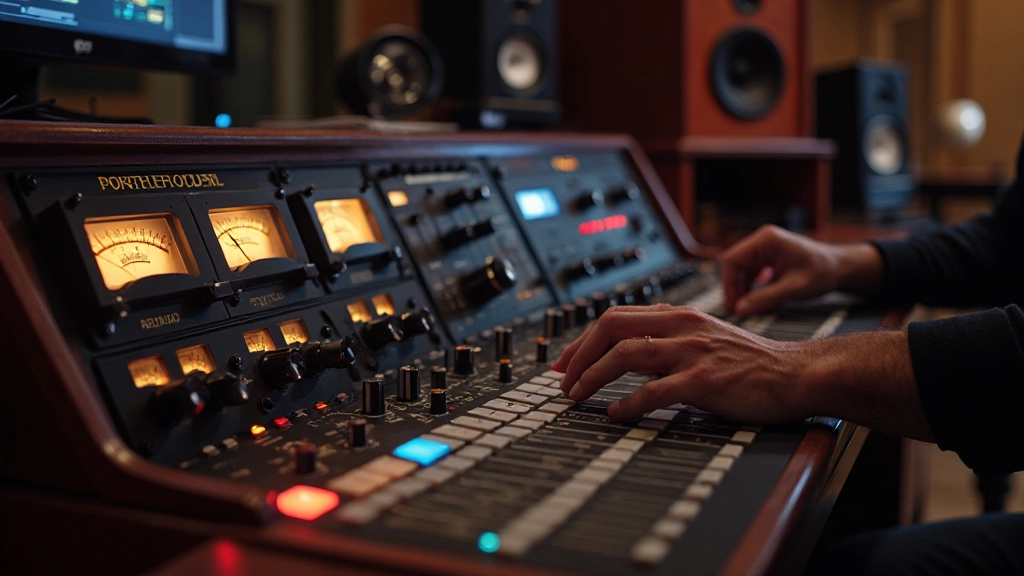
The kick drum vanished. Marcus stared at his mix, watching the meters slam red while the groove that had felt so solid during tracking now sounded like a deflated balloon. He'd been chasing that elusive "glue" with his bus compressor, tweaking ratios and thresholds for hours. But the real culprit was hiding in plain sight on two innocent-looking knobs he'd barely touched: attack and release.
When Milliseconds Make or Break the Groove
Three months later, that same kick drum became the foundation for a track that landed on Spotify's New Music Friday. The difference wasn't a new compressor or secret plugin. Marcus had learned to hear transients the way a watchmaker sees gears – every attack and release setting either preserved the music's natural energy or slowly bled it away.
Transient control through compression attack and release settings might be the most misunderstood aspect of mixing. We obsess over EQ curves and reverb sends while these two parameters quietly determine whether our tracks feel alive or lifeless. The attack knob controls how quickly compression engages when signal crosses the threshold, while release determines how long it takes to stop compressing once levels drop back down.
The Anatomy of Energy: Fast Attack Precision
Picture Sarah, a session drummer whose snare crack could cut through a wall of Marshall stacks. When she hit her Ludwig in Studio B, the transient peak lasted roughly 2 milliseconds before settling into the body of the sound. Set a compressor's attack to 0.5ms, and you'd catch that initial crack, taming it but potentially dulling the snap that made her playing special.
This is where surgical precision matters. Fast attacks (under 1ms) work beautifully for:
- Vocal dynamics control: Catching harsh consonants and sudden volume jumps without affecting the natural flow
- Bass consistency: Evening out finger plucking variations while maintaining note definition
- Overheads taming: Controlling cymbal crashes without losing the stick attack on snare and toms
But here's the catch: every source has a different transient signature. A finger-picked acoustic guitar's attack builds over 5-10ms. Slam it with a 0.1ms attack time, and you'll compress the wrong part of the sound, potentially creating a dull, lifeless tone that sits poorly in the mix.
Reading the Waveform Like Sheet Music
Open your DAW and zoom into a snare hit until you can see individual samples. That sharp vertical spike at the beginning? That's your transient – usually lasting 1-5ms depending on the drum, mic placement, and room acoustics. The body of the sound follows, with harmonics and resonance creating the tone and sustain.
Now look at a vocal phrase. The consonants create their own mini-transients, while vowel sounds show more gradual volume changes. Understanding these visual cues helps you choose attack times that work with the music rather than against it.
"The best compression is invisible until you bypass it. Then you realize it was doing everything."
Mixing engineer Dave Pensado
Release: The Art of Musical Breathing
If attack controls the "grab," release determines the "let go." This parameter shapes how compression follows the natural rhythm of your music. Too fast, and you get pumping artifacts. Too slow, and sustained compression muddies the mix, reducing clarity and impact.
Release times create three distinct behaviors:
| Release Range | Effect | Best For |
|---|---|---|
| Fast (10-100ms) | Follows individual notes and hits | Drums, percussive elements |
| Medium (100-500ms) | Smooths phrases and musical gestures | Vocals, bass lines, mix bus |
| Slow (500ms-2s) | Creates sustained leveling | Background elements, ambient sounds |
The magic happens when release times sync with musical timing. A 120 BPM song has quarter notes every 500ms. Set your drum bus compressor's release to 250ms (eighth note timing), and it will breathe with the beat, enhancing groove rather than fighting it.
Auto-Release: When Machines Get Musical
Modern compressors often include program-dependent or "auto" release modes that adjust timing based on incoming audio. These can be incredibly musical, especially on complex sources like full mixes or drum overheads where the release needs to adapt to constantly changing content.
The SSL bus compressor's auto mode, emulated in countless plugins, analyzes the audio and shortens release times for transient-rich material while extending them for sustained sounds. This creates the "glue" effect that makes individual tracks feel like parts of a cohesive whole.
Practical Attack and Release Combinations
Let's break down specific scenarios where attack and release settings can transform your mix:
Scenario 1: The Disappearing Kick Drum
Remember Marcus's vanishing kick? His bus compressor was set to a 1ms attack with a 50ms release. Every kick hit triggered compression that didn't fully release before the next transient arrived, creating a cumulative dulling effect. The solution: bump the attack to 10ms, allowing the kick's punch to pass through uncompressed, with a 200ms release that followed the track's groove timing.
- Identify the transient: Zoom into your kick drum waveform and measure the attack portion
- Set attack 2-5ms slower: This lets the punch through while controlling the body
- Match release to tempo: Use your DAW's tempo calculator to find musical timing intervals
- Listen in context: Solo the kick against the bass to ensure they're working together rhythmically
Scenario 2: Vocal Rides Without Automation
Singer-songwriter Emma recorded vocals with natural dynamics that ranged from whispered verses to belted choruses. Instead of drawing automation curves, her engineer used parallel compression: one compressor with a 0.5ms attack and 100ms release caught peaks, while another with a 10ms attack and 500ms release provided musical leveling.
Scenario 3: Drum Room That Breathes
The drum room mics captured beautiful ambience, but the natural dynamics made them difficult to blend consistently. A slow attack (30ms) preserved the initial drum hits while the compression engaged on the room's reverb tail. A medium-fast release (150ms) let the compression reset between hits, maintaining the sense of space while providing consistent blend levels.
Advanced Techniques: Program-Dependent Timing
Professional mixers often use multiple compressors in series, each handling different aspects of transient control. The first compressor might use a very fast attack (0.1ms) and fast release (50ms) for peak limiting, followed by a second compressor with slower attack (20ms) and musical release (300ms) for tonal shaping.
This technique, sometimes called "compressor chaining," allows for more natural-sounding dynamics control because each stage handles a smaller amount of gain reduction. The first stage catches peaks that would otherwise cause unwanted artifacts, while the second provides the musical compression that enhances the performance.
Sidechain Filtering for Frequency-Conscious Timing
Some compressors allow you to filter the sidechain – the signal that triggers compression. High-pass filtering the sidechain at 100-200Hz prevents low-frequency content from causing unnecessary compression of mid and high frequencies. This is particularly useful on mix buses where you want the compressor to respond primarily to snare and vocal content rather than constant bass energy.
Putting Theory Into Practice
Here's a systematic approach to setting attack and release times that work musically:
- Start with the source: Analyze the waveform to understand transient timing and sustain characteristics
- Consider the role: Peak control needs fast attack, musical shaping uses slower attack
- Match the tempo: Calculate musical timing intervals and use them as starting points for release
- Listen for artifacts: Pumping, dulling, or unnatural breathing indicates timing adjustments needed
- Test in context: Settings that work in solo might not work in the full mix
The goal isn't perfection – it's musical enhancement. Sometimes a slightly "wrong" setting creates exactly the character your track needs. Trust your ears, but understand the tools well enough to achieve your vision efficiently.
When Energy Flows Naturally
Marcus's kick drum story illustrates a fundamental truth about mixing: technical precision serves musical purpose. Those attack and release knobs aren't just processing controls – they're creative tools that shape how listeners experience rhythm, dynamics, and energy flow.
The best compressor settings disappear into the music, enhancing natural performance dynamics rather than imposing artificial control. When you nail the attack and release timing, tracks breathe with musical life. Drums punch when they should and settle when they should. Vocals ride the track naturally without drawing attention to the processing. The mix becomes greater than the sum of its parts.
Next time you reach for a compressor, think beyond ratios and thresholds. Start with attack and release settings that honor the musical timing and transient character of your sources. Your mixes will thank you with energy that feels alive, dynamics that enhance rather than constrain, and that elusive "glue" that turns good tracks into memorable ones.
Hear what these choices do to your own song.
Upload stems or a finished track, choose a reference direction, and compare a private Moozix mix before you export anything.