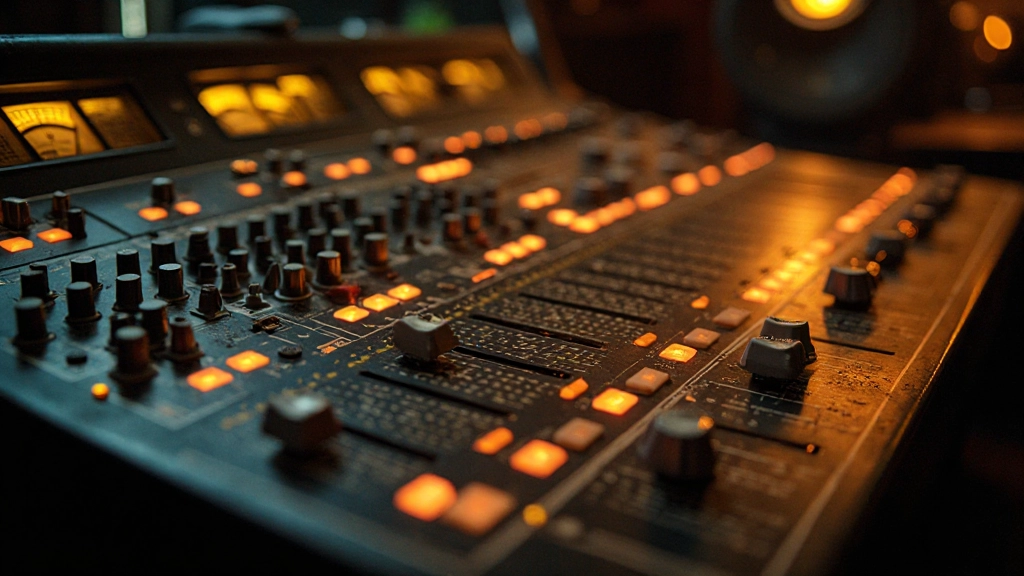
Garrett stared at his mix for three hours, moving pan knobs like a chess master contemplating checkmate. The song had everything: tight drums, melodic bass, soaring guitars, and a vocal that could stop traffic. Yet something felt fundamentally wrong. The mix sounded narrow when he wanted width, cluttered when he craved clarity, and unstable when he needed punch. He was following every panning rule he'd learned online, but his spatial balance remained a mess.
Sound familiar? Most home studio engineers fall victim to the same panning misconceptions that plagued Garrett's mix. These myths persist because they sound logical on the surface, but they ignore how our ears actually process stereo information and how different playback systems translate spatial decisions.
After fifteen years behind the console and countless mix revisions, I've identified five persistent panning myths that consistently sabotage otherwise solid mixes. More importantly, I've developed practical alternatives that create the width, clarity, and stability every mix deserves.
Myth 1: Wide Panning Always Creates More Space
The biggest lie in mixing circles is that pushing elements to the extreme left and right automatically generates spaciousness. Garrett had fallen into this trap completely. His rhythm guitar lived at hard left, lead guitar at hard right, with vocals and bass anchored dead center. On paper, this looked like textbook stereo separation.
In reality, his mix sounded like three disconnected mono recordings playing simultaneously. The guitars felt detached from the rhythm section, the vocal seemed to float above everything else, and the whole arrangement lacked cohesion. Wide panning had created space, but it was the wrong kind of space.
The solution involves strategic clustering rather than maximum separation. Instead of hard-panning his guitars, Garrett moved them to 30% left and 40% right. This maintained clear separation while keeping them connected to the center-anchored rhythm section. The vocals got a subtle double with one side panned 15% right, creating gentle width without isolation.
Professional mixers understand that effective panning creates zones of activity rather than isolated positions. Think of your stereo field as neighborhoods in a city rather than scattered houses on a prairie. Elements within each neighborhood support each other while maintaining distinct identities.
The Clustering Technique
Build your panning around three to five strategic zones across the stereo field. Place related instruments within each zone, varying their positions by 10-20% to avoid masking. This approach generates natural width while preserving musical relationships.
| Zone | Pan Range | Typical Elements | Purpose |
|---|---|---|---|
| Center Core | 0-15% L/R | Kick, snare, bass, lead vocal | Foundation and focus |
| Inner Sides | 25-40% L/R | Rhythm guitars, keys, backing vocals | Support and width |
| Outer Edges | 60-85% L/R | Percussion, effects, ambient sounds | Color and space |
Myth 2: Drums Must Be Panned Like a Real Kit
Walk into any recording forum and you'll find endless debates about "drummer's perspective" versus "audience perspective" for drum panning. Should the hi-hat go left or right? Where exactly should the floor tom sit? These discussions miss the fundamental point: your mix doesn't need to replicate a physical drum kit arrangement.
I learned this lesson during a particularly stubborn rock session. The drummer, Vincent, insisted we pan his kit exactly as he played it: hi-hat hard right, floor tom center-right, rack toms spreading left to right across the spectrum. The result was a lopsided mix where the entire right side felt heavy and the left side seemed empty.
After hours of fighting the imbalance, I finally asked Vincent to trust me for one experimental mix. I moved his hi-hat to center-left, placed the floor tom at moderate right, and tightened the tom spread to a 50% range rather than the full stereo width. Suddenly, the kit felt balanced and powerful rather than scattered and tilted.
Modern drum panning prioritizes balance and impact over realism. The kick and snare anchor the center, providing foundational power. Hi-hats typically work best slightly off-center (15-25%) rather than hard-panned, maintaining rhythmic clarity without creating imbalance. Toms can span a moderate range (40-60% total width) rather than stretching across the entire stereo field.
The Balanced Kit Approach
- Start with kick and snare centered for maximum impact
- Place hi-hats 15-25% to either side for clarity without imbalance
- Position toms within a 60% window, maintaining musical intervals
- Use overhead positioning to create natural ambience rather than extreme width
- Test your balance on multiple playback systems before committing
This approach creates drum sounds that translate consistently across different speakers and streaming platforms while maintaining the power and groove that drives modern music forward.
Myth 3: Bass Should Always Live in the Center
Every mixing tutorial starts with the same advice: "Put your bass in the center for maximum impact." This rule has become so ingrained that most engineers never question it, even when their low-end feels muddy, unfocused, or fights with other centered elements.
The truth is more nuanced. While bass frequencies below 80Hz should generally remain centered for optimal mono compatibility and subwoofer translation, the higher harmonics and character frequencies of your bass can benefit from subtle positioning.
During a jazz fusion project, I worked with bassist Claire whose instrument had beautiful harmonic content in the 200-800Hz range. With everything centered traditionally, her bass disappeared behind the piano and vocal during busy sections. A slight pan position of 12% left suddenly brought her instrument forward without sacrificing low-end power.
The key lies in understanding that bass instruments generate content across a wide frequency spectrum. The fundamental frequencies provide power and need center positioning, but the harmonic content that defines character and presence can work beautifully with subtle spatial placement.
"Bass panning isn't about moving the thump, it's about positioning the personality."
Mixing engineer Janet Wilson
Smart Bass Positioning Strategy
Use frequency-conscious panning to optimize bass placement. High-pass a duplicate bass track at 100Hz and pan it slightly off-center while keeping the full-frequency bass centered. This technique maintains low-end power while creating space for bass character frequencies to breathe.
- Keep fundamental frequencies (below 80Hz) centered for power
- Allow character frequencies (200-800Hz) subtle spatial positioning
- Test mono compatibility to ensure low-end translation
- Adjust based on arrangement density and competing elements
Myth 4: Identical Instruments Need Opposite Panning
The "opposite panning" rule suggests that similar instruments should be placed at mirror positions across the stereo field. Dual guitars go hard left and hard right, background vocals spread to opposite sides, and percussion elements get scattered for maximum separation.
This approach creates mechanical, unnatural soundscapes that lack the subtle asymmetry found in real acoustic spaces. More problematically, it often forces instruments into positions that don't serve the musical arrangement or emotional content of the song.
I discovered this during an indie folk session where twin acoustic guitars were fighting for space. Following conventional wisdom, I panned them hard left and right, but the result felt artificial and disconnected. The guitars seemed to exist in separate universes rather than supporting a single musical statement.
The breakthrough came when I moved both guitars to moderate positions on the same side (35% and 55% left) and used subtle EQ differences to create separation. Suddenly, they sounded like two musicians playing together in the same room rather than isolated performers in different studios.
Alternative Separation Techniques
Instead of relying solely on panning for instrument separation, combine multiple techniques for more natural results:
| Technique | Application | Effect |
|---|---|---|
| EQ Complementing | Boost 2-3kHz on one guitar, cut on the other | Frequency separation without spatial isolation |
| Timing Offset | Delay one part by 10-30ms | Creates space while maintaining cohesion |
| Amplitude Automation | Vary levels throughout the song | Dynamic interaction rather than static placement |
| Harmonic Content | Different amp settings or processing | Tonal distinction that supports panning |
Myth 5: Panning Decisions Are Set in Stone
Perhaps the most limiting myth is treating panning as a static decision made once during the initial mix setup. Too many engineers establish their spatial landscape early and never revisit it, missing opportunities for dynamic movement and musical emphasis.
Professional mixes use automation to shift spatial relationships throughout a song, creating movement, highlighting important moments, and maintaining listener engagement. A guitar that starts centered might gradually move outward during the chorus, or backing vocals might contract inward during verses and expand during the hook.
This became clear during a pop ballad mix where the verses felt static despite strong musical performances. By automating the backing vocals to gradually spread wider as each verse progressed, I created a sense of building emotional intensity that served the song's narrative arc perfectly.
Dynamic Panning Strategies
Consider how spatial movement can enhance your song's emotional journey:
- Verse-to-Chorus Expansion: Narrow panning during verses, wider during choruses for dynamic contrast
- Build Automation: Gradually spread elements wider as sections build energy
- Spotlight Moments: Temporarily center important instrumental solos or vocal phrases
- Rhythm Emphasis: Subtle panning movement that follows musical accents or groove patterns
Building Your Panning Instincts
Developing effective panning skills requires moving beyond rigid rules toward musical intuition. Start by listening critically to professional mixes in your genre, paying attention to how spatial decisions support the song rather than showcase stereo separation.
Practice the reference game: load a commercial mix you admire and try to match its spatial balance using different source material. This exercise trains your ears to hear how panning choices create emotional impact rather than just stereo width.
Most importantly, remember that panning serves the music, not the mixing engineer's technical agenda. Every spatial decision should have a musical justification, whether it's creating intimacy, building excitement, or supporting the song's narrative flow.
From Rules to Musicality
Six months after our initial conversation, Garrett sent me a new mix that demonstrated complete mastery of spatial balance. His guitars supported each other instead of competing, his drums felt powerful without overwhelming the arrangement, and his overall soundscape drew listeners into the music rather than impressing them with technical separation.
He'd moved beyond the restrictive myths that had trapped his earlier work, developing an intuitive understanding of how panning choices affect musical communication. Most importantly, he'd learned to trust his ears over online tutorials and to make spatial decisions based on what served each individual song.
Your mixing journey likely includes similar moments of breakthrough, where rigid technical rules give way to musical intuition. The panning myths we've explored today represent just one aspect of this larger transformation from technical execution toward artistic expression.
Start questioning every "always" and "never" rule in your mixing toolkit. The best spatial decisions often break conventional wisdom while serving the deeper purpose of musical connection and emotional impact.
Hear what these choices do to your own song.
Upload stems or a finished track, choose a reference direction, and compare a private Moozix mix before you export anything.