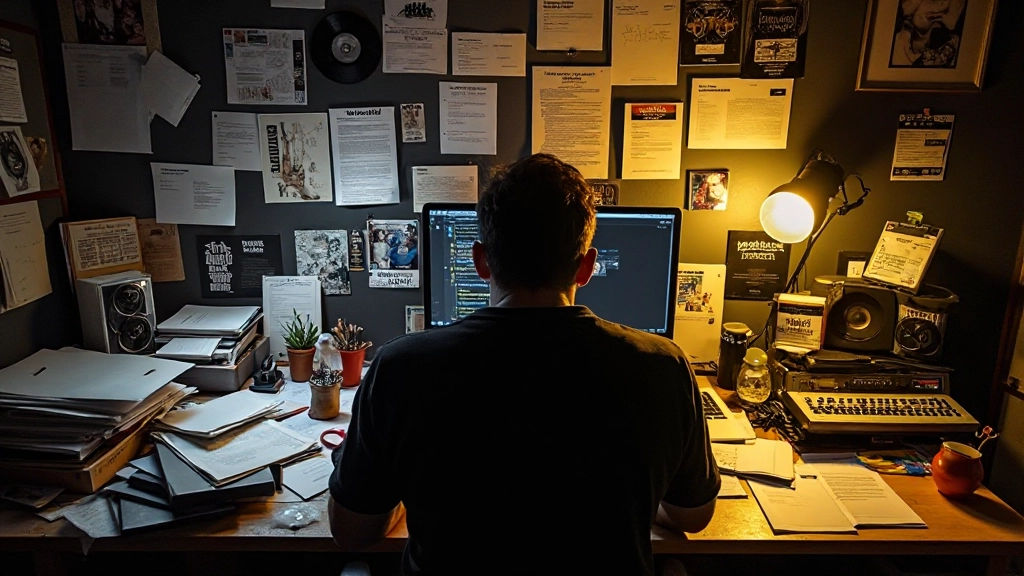
The email arrived at 2 AM on a Tuesday, just as producer Trevor Hawkins was wrapping up another late-night mix session. "Your track 'Midnight Frequencies' has been added to our underground electronic showcase next month." He stared at the message, confused. He hadn't submitted anything to anyone in weeks.
What Trevor didn't know was that his music had been traveling through a carefully constructed network of music discoverers, venue bookers, and fellow producers who had been quietly passing his work from one trusted contact to another. No algorithms involved. No social media campaigns. Just humans who knew good music when they heard it, sharing it with other humans who cared.
This wasn't luck. It was the result of a discovery network that Trevor had unknowingly become part of six months earlier, when he started focusing less on posting and more on connecting.
The Architecture of Real Music Discovery
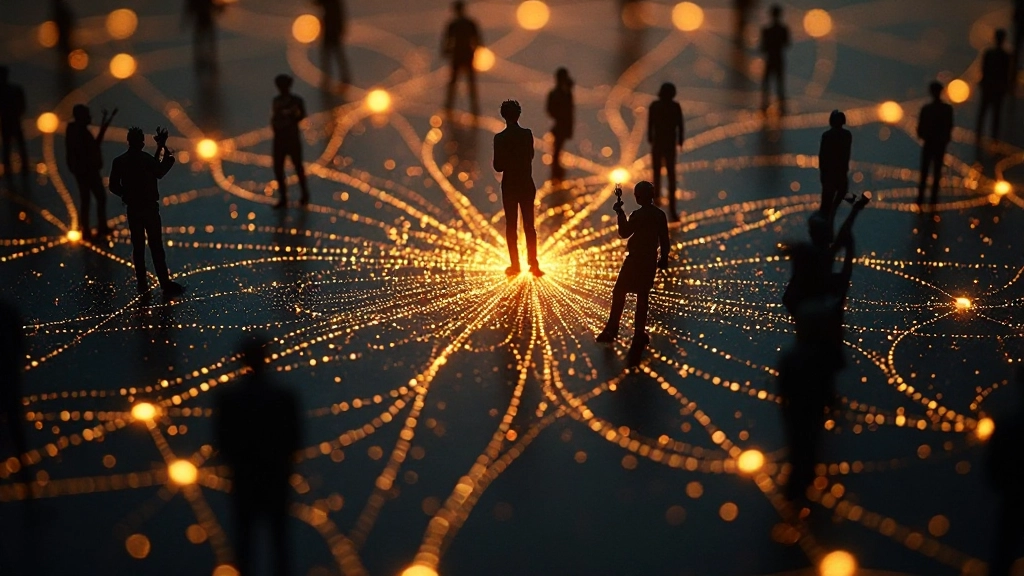
Most musicians approach promotion like they're shouting into a void, hoping someone with influence will hear them. But sustainable music discovery works more like a mycelial network underground: invisible connections that support and nourish the entire ecosystem.
Jennifer Walsh, a folk singer from Portland, learned this the hard way. After two years of grinding on social platforms with minimal results, she shifted her entire approach. "I stopped trying to get everyone to hear my music and started focusing on getting the right people to hear it," she explains.
Core Principle: Effective music discovery networks prioritize depth of connection over breadth of reach. One engaged venue booker who trusts your taste is worth more than a thousand passive followers.
Walsh's breakthrough came when she started mapping her local music ecosystem. She identified the key connectors: the record store owner who curated listening events, the radio DJ who featured local artists, the venue manager who booked emerging acts, and the music teacher who influenced young musicians' listening habits.
Instead of trying to reach everyone, she focused on building genuine relationships with these network nodes. The payoff was remarkable: within eight months, her music was being discovered through word-of-mouth recommendations rather than algorithmic chance.
Building Your Discovery Infrastructure
Creating a functional discovery network requires understanding how music actually moves through communities. It's rarely a straight line from artist to fan. More often, it follows a path through trusted intermediaries who act as filters and amplifiers.
| Network Node Type | Discovery Function | Engagement Strategy |
|---|---|---|
| Venue Curators | Live showcase opportunities | Attend their events, support their artists |
| Playlist Curators | Contextual music placement | Submit quality music that fits their aesthetic |
| Music Educators | Influence next generation | Offer workshops, share knowledge |
| Record Store Staff | Recommendation engine | Build relationships, provide physical media |
| Sound Engineers | Cross-pollinate between artists | Collaborate, refer other musicians |
The mistake most musicians make is approaching these relationships transactionally. "Hey, can you play my song?" rarely works. Instead, successful network builders focus on becoming valuable contributors to the ecosystem first.
Take drummer Carlos Mendez, who transformed his career by becoming known as the guy who could connect musicians with exactly what they needed. He maintained detailed notes about every artist he met: their sound, their needs, their goals. When a producer needed a guitarist with a specific style, Carlos knew who to call. When a venue needed an opening act for a touring band, Carlos had the perfect recommendation.
This wasn't altruism; it was strategic network building. By becoming a valuable connector, Carlos positioned himself at the center of his local music web. When his own band needed opportunities, the network reciprocated naturally.
The Geography of Musical Relationships
Physical location still matters more than most digital-native musicians realize. While online connections have their place, the strongest discovery networks often have geographic anchors: shared venues, studios, and community spaces where repeated interactions build trust over time.
Bassist Rachel Torres discovered this when she moved from Los Angeles to Nashville. In LA, she had been another musician in a sea of millions. In Nashville, she quickly became known as "the bass player who always shows up prepared and early." The concentrated music community meant that reputation traveled fast, both good and bad.
"In a smaller music ecosystem, your reputation is your currency. Everyone talks to everyone, so professionalism and talent get noticed quickly."
Rachel Torres, session bassist
Torres built her Nashville network by becoming indispensable to a few key people rather than trying to meet everyone. She focused on three studios where she wanted to work, learning the engineers' preferences, understanding their regular clients' needs, and consistently delivering excellent performances.
Within a year, those three studios were recommending her for sessions across town. Her network grew organically because she had proven her value repeatedly in focused contexts.
Digital Tools for Analog Relationships
While face-to-face interaction remains crucial, smart musicians leverage digital tools to maintain and nurture their discovery networks. The key is using technology to deepen existing relationships rather than replace human connection.
- Maintain a simple database of contacts with notes about their interests and needs
- Send personalized updates to network members about your projects
- Share opportunities that might benefit others in your network
- Use voice messages or video calls for important communications
- Remember personal details and follow up on them
Producer Amanda Chen uses a simple spreadsheet to track her network interactions. For each contact, she notes their musical preferences, current projects, upcoming needs, and personal interests. Before reaching out, she reviews these notes to make her communications relevant and valuable.
"I never send a mass email," Chen explains. "If I'm sharing new music, I explain specifically why I think that person would be interested. If I'm asking for something, I make sure I've recently provided value to them."
This personalized approach means Chen's network actually wants to hear from her. Her open rates are high because people know her messages contain something useful, not just self-promotion.
Timing and Patience in Network Development
Building a functional discovery network takes time, and the timeline rarely matches musicians' career urgency. The most common failure point is expecting immediate returns on relationship investments.
Songwriter Dylan Pierce spent three years attending local songwriter circles before anyone asked to collaborate with him. "I thought about quitting those meetups dozens of times," he admits. "It felt like nothing was happening. But I was building trust and demonstrating consistency."
The breakthrough came when Pierce least expected it. A songwriter he'd known casually for two years mentioned him to a publisher who was looking for someone with Pierce's specific style and work ethic. The recommendation carried weight because it came from someone the publisher trusted, and that trust had been built through years of casual interaction.
Reality Check: Most network relationships take 18-24 months to yield tangible opportunities. The musicians who succeed are those who can invest in relationships without immediate payoff expectations.
This extended timeline isn't a bug; it's a feature. The slow development process naturally filters out opportunistic connections, leaving relationships built on genuine mutual respect and shared musical values.
Quality Control and Network Hygiene
Not every connection deserves the same level of investment, and maintaining network health requires regular evaluation. Some relationships drain energy without providing value, while others consistently generate opportunities for everyone involved.
Guitarist Maria Santos learned to identify the difference between connectors and collectors. Connectors actively facilitate relationships between others and seek win-win opportunities. Collectors gather contacts for their own benefit without reciprocating value.
"I used to think any industry connection was good," Santos reflects. "But I wasted years trying to maintain relationships with people who only reached out when they needed something. Now I focus my energy on the people who actively help others succeed."
Santos developed a simple evaluation system for her network relationships:
- Does this person actively promote others' work?
- Do they follow through on commitments?
- Are they respected by other professionals I trust?
- Do our interactions feel mutually beneficial?
This filtering process allowed her to invest more deeply in high-value relationships while gracefully stepping back from energy drains.
Measuring Network Health
Unlike social media metrics, network effectiveness can't be measured in likes or follows. The indicators of a healthy discovery network are more subtle but more meaningful.
Producer Kevin Liu tracks different metrics for his network development:
| Network Health Indicator | How to Measure | Healthy Range |
|---|---|---|
| Referral Frequency | Opportunities received through contacts | 2-3 per month |
| Network Growth | New meaningful contacts per quarter | 3-5 quality connections |
| Reciprocal Value | Times you help others vs. ask for help | 3:1 ratio |
| Geographic Reach | Cities/regions where you have contacts | Expanding gradually |
| Industry Verticals | Different music industry sectors represented | 4-6 areas |
Liu discovered that tracking these metrics helped him identify gaps in his network and adjust his relationship-building strategy accordingly. When his referral frequency dropped, he knew he needed to reconnect with dormant contacts. When his geographic reach stagnated, he focused on meeting musicians from other cities.
The Multiplication Effect
The most powerful aspect of discovery networks is their exponential growth potential. Each trusted relationship can introduce you to their trusted relationships, creating expanding circles of opportunity.
Singer-songwriter Lisa Park experienced this multiplication effect when a local venue owner she'd befriended introduced her to a touring musician looking for opening acts. That touring musician later recommended Park to venues in three other cities. Those venues connected her with local musicians who became collaborators on her next album.
"One genuine relationship became a web of opportunities I never could have created through online promotion alone," Park explains. "The key was that each introduction came with built-in credibility because it came through someone the new contact already trusted."
Network Success Story: Park's album, created through network collaborations, was featured in music blogs in five cities before she'd even announced it publicly. The discovery happened organically through the relationships she'd built with the people who helped create it.
This organic promotion proved more effective than any marketing campaign because it came with authentic enthusiasm from people who had been part of the creative process.
Sustaining Long-Term Network Vitality
The most successful discovery networks require ongoing maintenance and evolution. As your career develops, your network needs will change, requiring strategic adjustments to your relationship portfolio.
Drummer Tommy Kim faced this challenge as his band graduated from local venues to regional touring. The network that had supported their early career development wasn't equipped to help with booking agent relationships and festival submissions.
Rather than abandoning his local network, Kim evolved it strategically. He maintained his foundational relationships while consciously building new connections at the next career level. His local venue contacts became valuable references when approaching booking agents, who trusted their judgment about Kim's professionalism and draw.
Kim also began mentoring younger musicians in his local scene, ensuring that his network would continue providing mutual value even as his career demands changed.
Network Resilience and Crisis Management
Strong discovery networks prove their worth during industry disruptions. When venues closed during the pandemic, musicians with robust networks found alternative opportunities through those same relationships: livestream collaborations, remote recording projects, and creative partnerships that sustained careers through uncertainty.
Producer Sarah Wright's network became a lifeline when traditional promotion channels disappeared. Her relationships with other producers led to virtual collaboration opportunities. Her connections with music educators created online workshop opportunities. Her venue relationships evolved into socially distanced recording sessions.
"The network I'd built for music discovery became my economic survival system," Wright reflects. "Because the relationships were real, they adapted to new circumstances instead of disappearing."
This resilience stems from the fundamental difference between networks and audiences. Audiences consume your content; networks participate in your success. When circumstances change, networks innovate together while audiences simply move on to other content.
Building a discovery network requires patience, authenticity, and strategic thinking, but the results speak for themselves. Musicians who invest in relationships rather than just promotion find themselves with sustainable career support systems that evolve and strengthen over time. In an industry obsessed with viral moments and algorithm hacks, the slow work of network building offers something more valuable: lasting professional relationships built on mutual respect and shared musical passion.
The next time you're tempted to boost a social media post or chase the latest platform trend, consider instead: who in your local music community could you help today? That investment in human connection might be the foundation of your next big opportunity, discovered not through an algorithm, but through the oldest technology of all: people who care about good music sharing it with other people who care.
Hear what these choices do to your own song.
Upload stems or a finished track, choose a reference direction, and compare a private Moozix mix before you export anything.