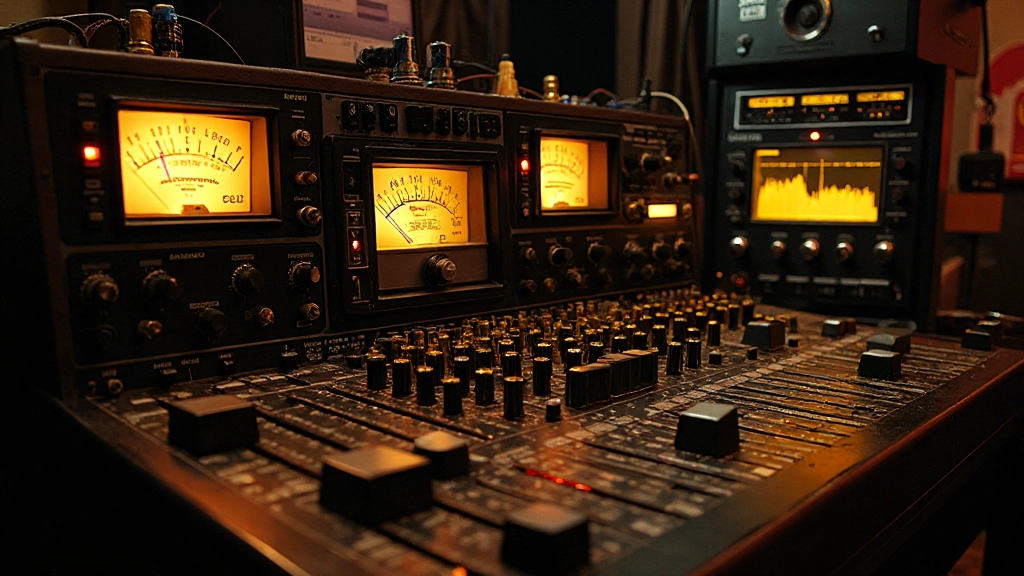
Mitchell Crawford was three hours into mixing a folk duo's latest track when he noticed something unsettling. The acoustic guitars sounded lush in isolation, but when he brought up both mics together, the low-end seemed to vanish into thin air. What should have been a warm, full-bodied foundation became hollow and distant. He was staring down the barrel of a classic phase problem, and no amount of EQ was going to fix what was broken at the source.
The Phantom Frequency Thief
Phase and polarity problems rank among the most insidious issues in modern recording. Unlike obvious distortion or unwanted noise, phase cancellation operates in the shadows, stealing frequencies and creating that elusive "something's not quite right" feeling that can drive you to the edge of madness. When multiple microphones capture the same source, or when DI and amp signals combine, tiny timing differences can cause certain frequencies to cancel each other out completely.
Mitchell's situation illustrates a common scenario: two condenser mics positioned at slightly different distances from an acoustic guitar. The sound waves arrive at each microphone at marginally different times, and when those signals combine in the mix, specific frequencies begin to disappear. It's not always dramatic - sometimes it's just a subtle thinning that makes your mix feel less impactful than it should.
Recognizing the Warning Signs
Developing an ear for phase issues requires deliberate practice and attention to specific sonic characteristics. The most obvious indicator is the "hollow" sound Mitchell encountered - a scooped-out quality that makes instruments feel distant despite adequate level. But phase problems manifest in more subtle ways too.
Christina Valdez, a session engineer who splits time between Nashville and Los Angeles, recalls a drum session where the kick and bass seemed to be fighting each other despite careful frequency separation. "I had carved out space at 60Hz for the kick and left the bass sitting nicely at 80-100Hz," she explains. "But something was still wrong. It turned out the bass DI and the room mics were creating a phase issue right in that crucial 50-70Hz range where punch lives."
Here are the primary warning signs to listen for:
- Instruments that sound full in solo but thin in the mix
- Low-end that lacks impact despite proper levels
- Stereo image that feels unstable or wandering
- Vocals that seem to duck behind the mix unexpectedly
- Inconsistent apparent loudness across different playback systems
Exercise One: The Polarity Flip Test
The fastest way to identify polarity problems is through systematic testing. This exercise works best with material you've recorded using multiple microphones or DI/mic combinations. Start by isolating the elements you suspect might be causing issues.
Load up a session with at least two sources that capture the same instrument - perhaps a bass DI and bass amp, or two guitar mics. Solo both channels and listen carefully to the combined sound. Now flip the polarity on one of the channels. Most DAWs have a polarity invert button (often marked with a φ symbol) on each channel strip.
Listen for these changes when you flip polarity:
- Low-frequency response: Does the bass suddenly become more or less present?
- Midrange clarity: Do the mids become clearer or more congested?
- Spatial positioning: Does the source seem to move forward or backward in the mix?
- Overall fullness: Does the instrument gain or lose body and weight?
If flipping polarity makes the sound fuller and more present, you've likely found your problem. Keep the polarity flipped and move on to the next potential issue.
Exercise Two: The Isolation Game
This diagnostic technique helps you pinpoint exactly which elements are causing phase problems in complex arrangements. Start with all your tracks playing, then systematically mute different combinations to hear how phase relationships change.
Begin by muting everything except your core rhythm section - typically drums, bass, and primary harmony instrument. Listen for any obvious thinness or hollowness. If the core sounds solid, start adding elements back one by one. Pay particular attention when adding:
- Additional microphones on the same source
- DI signals combined with miked amplifiers
- Room mics or ambient captures
- Doubled or layered parts
When you add a track and suddenly hear thinning or loss of impact, you've identified a potential phase conflict. Mark this combination and continue through your entire arrangement.
"Phase problems are like acoustic termites - they eat away at your mix foundation without making obvious noise. You have to hunt for them deliberately."
Exercise Three: Frequency-Specific Phase Detection
Sometimes phase issues only affect specific frequency ranges, making them harder to detect through simple polarity flips. This exercise uses your DAW's built-in EQ to isolate different frequency bands and check for phase relationships within each range.
Insert a parametric EQ on your mix bus and create a narrow, high-Q boost around 100Hz. Set the gain to about 6-8dB and slowly sweep the frequency from 20Hz up to 200Hz while your problem tracks play. Listen for sudden drops in level or dramatic tonal changes as you sweep. These frequency zones often indicate phase cancellation.
Repeat this process in different frequency ranges:
| Frequency Range | What to Listen For | Common Sources |
|---|---|---|
| 20-120Hz | Sudden bass loss or boom | Kick/bass conflicts, room mic issues |
| 120-500Hz | Midrange hollowness | Guitar mic spacing, vocal reflections |
| 500Hz-2kHz | Clarity and presence shifts | Snare phase, acoustic guitar mics |
| 2kHz-8kHz | Harshness or sudden dulling | Cymbal bleed, vocal doubles |
When you find a problematic frequency zone, solo the tracks you suspect are causing issues and repeat the EQ sweep. This helps you confirm which specific elements are out of phase in that range.
The Timing Offset Solution
Once you've identified phase problems, the most precise fix often involves minute timing adjustments rather than polarity flips. Most phase issues in multi-mic recordings stem from slightly different arrival times at each microphone. Moving one track forward or backward by just a few milliseconds can restore proper phase relationships.
Start with very small adjustments - often just 1-3 milliseconds makes a dramatic difference. If you're working with acoustic guitar mics placed 2 feet apart, for example, the sound takes roughly 2 milliseconds longer to reach the more distant microphone. Offsetting the closer mic by this amount can restore phase coherence.
Here's a practical approach to timing-based phase correction:
- Identify the problematic track combination through your diagnostic exercises
- Choose the track that represents the more distant capture (usually the one with more room sound)
- Nudge the closer, more direct track backward in 1-millisecond increments
- Listen for increased fullness, better low-end response, and improved clarity
- Stop when further adjustment begins to degrade the sound
Exercise Four: The Reference Mic Technique
This advanced exercise helps you establish phase relationships across multiple microphones using one mic as your reference point. It's particularly useful for drum recordings or any situation where you're blending several microphones on the same source.
Choose your primary microphone - typically the one with the most direct, clear sound. This becomes your reference. Solo this mic and one additional microphone. Use either polarity inversion or timing adjustments to get the best possible sound from this pair. Once you're satisfied, keep these settings locked.
Now add a third microphone to the soloed pair. Again, adjust polarity or timing until this three-mic combination sounds optimal. Continue this process, adding one microphone at a time and optimizing each addition against the established reference group.
This systematic approach prevents the common mistake of chasing your tail - making adjustments that fix one relationship but break another. By building your phase relationships incrementally from a solid reference, you create a coherent foundation that supports rather than fights itself.
When Phase Problems Become Creative Opportunities
Not every phase relationship needs to be "corrected." Sometimes controlled phase cancellation creates interesting tonal colors that serve the music. The key is making these choices deliberately rather than accidentally.
Producer David Chen describes using intentional phase cancellation on a recent indie rock project: "The lead vocal had this one problematic resonant frequency around 400Hz that made certain words jump out harshly. Instead of EQ, I used a carefully timed delay with inverted polarity to create a notch right at that frequency. It was surgical and musical at the same time."
Consider these creative applications of phase relationships:
- Controlled frequency notching for problem resonances
- Widening effects through subtle phase manipulation
- Creating movement in static sounds through phase modulation
- Tonal shaping that EQ alone cannot achieve
Prevention at the Source
While these exercises help you fix phase problems after recording, preventing them during tracking saves significant mixing time. Microphone placement remains your most powerful tool for avoiding phase issues entirely.
The 3:1 rule provides a good starting point: position microphones at least three times farther from each other than they are from their respective sources. If your vocal mic sits 6 inches from the singer, any additional mics should be at least 18 inches away from the vocal mic.
For stereo recording techniques, specific spacing relationships help maintain phase coherence:
| Technique | Spacing | Phase Characteristics |
|---|---|---|
| ORTF | 17cm, 110° angle | Natural, minimal issues |
| X-Y Coincident | Same point, 90° angle | Perfect phase, narrow image |
| Spaced Pair | 3-10 feet apart | Requires careful monitoring |
| Mid-Side | Coincident capsules | Phase-coherent by design |
Knowing When to Stop
The title of this piece points to a crucial decision: when to stop adjusting and accept your phase relationships as they are. Perfect phase coherence isn't always the goal, especially when it comes at the cost of natural sound or musical impact.
Mitchell's folk duo session reached this decision point after he'd optimized the obvious problems. "I had two guitar mics that sounded great together, but there was still a tiny bit of cancellation around 200Hz," he recalls. "I could have kept tweaking, but the natural resonance of the room was part of what made the recording special. Sometimes character matters more than clinical perfection."
Here are signs that you should stop adjusting phase relationships:
- Further changes make the sound less natural or musical
- You're spending more time on technical perfection than artistic decisions
- The remaining issues are only noticeable when you're specifically listening for them
- Your adjustments are solving problems that don't exist in the full mix context
Remember that phase relationships exist within the larger context of your mix. A slight phase issue between two mics might be completely masked by other arrangement elements, making further correction unnecessary.
Building Your Phase Intuition
Developing reliable instincts for phase problems takes deliberate practice and systematic listening. The exercises in this article provide a framework, but real expertise comes from applying these techniques across many different recording situations.
Keep a reference file of known phase problems and their solutions. When you encounter a classic guitar mic cancellation or a problematic bass DI/amp combination, save a before-and-after example. These references help train your ears and provide quick solutions for similar issues in future sessions.
Most importantly, trust your instincts when something sounds wrong, even if the meters look right. Phase problems often hide in the spaces between obvious technical issues, revealing themselves only through careful, critical listening. Your ears remain the ultimate diagnostic tool for identifying and fixing these invisible mix destroyers.
Hear what these choices do to your own song.
Upload stems or a finished track, choose a reference direction, and compare a private Moozix mix before you export anything.