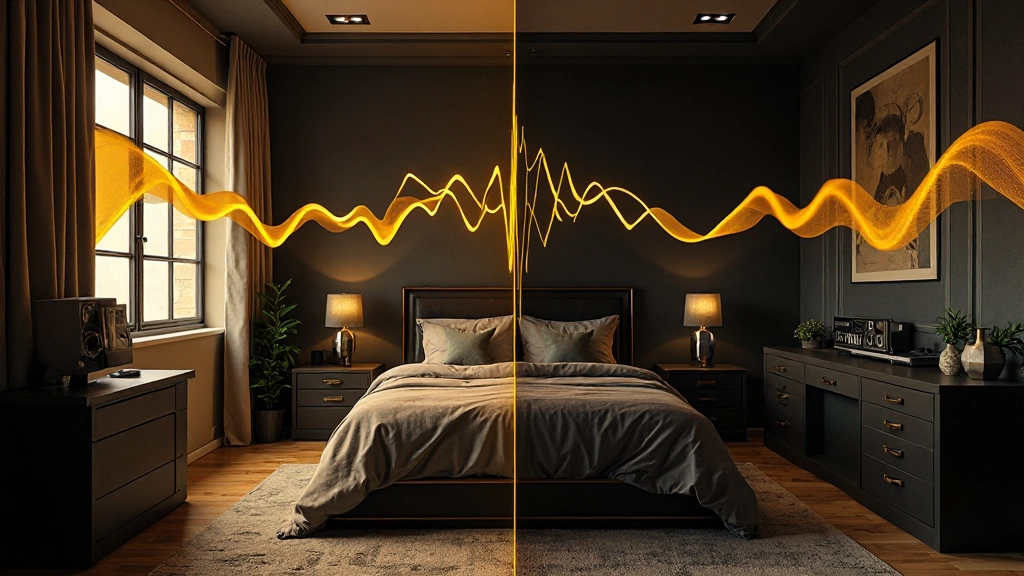
Trevor stared at his monitors, frustrated. His latest track sounded incredible on headphones but turned to mush the moment he switched to speakers. The low end vanished, the vocals felt distant, and everything seemed to fight for space. Sound familiar? After fifteen years of mixing in everything from world-class studios to converted closets, I've learned that most home studio struggles boil down to one critical question: is this a room problem or a mix problem?
The distinction matters more than you might think. Throwing acoustic treatment at a mixing issue won't help, just like perfect EQ technique can't overcome a room that's lying to you about what your mix actually sounds like. Today we'll break down seven persistent myths that keep bedroom producers spinning their wheels, plus the practical tests that reveal what you're really fighting.
The Great Deception: When Rooms Lie to Your Ears
Last month, I helped Rebecca, a singer-songwriter from Portland, troubleshoot her home setup. She'd been mixing in her spare bedroom for two years, constantly battling what she thought were bass management issues. Every mix came out either boomy or thin, with no middle ground.
The real culprit? Her untreated room was creating a massive null around 80Hz right at her listening position. She was cranking the low end to compensate for what she couldn't hear, then overcorrecting when the mix sounded muddy everywhere else. Once we identified this as a room acoustics issue rather than a mixing problem, the solution became clear.
Myth #1: Expensive Monitors Solve Everything
This myth costs home studio owners thousands of unnecessary dollars every year. Trevor had convinced himself that upgrading from his $300 monitors to $1,500 ones would magically fix his translation issues. Three weeks after the purchase, he was back to square one.
The truth? Even the best monitors in the world can't overcome poor room acoustics. If your room has a 15dB boost at 200Hz due to standing waves, those pristine monitors will faithfully reproduce that boost. You'll mix to compensate, creating tracks that sound thin and lifeless everywhere else.
Here's the test that reveals whether your monitors or room deserve blame:
- Play the same reference track on headphones and speakers
- Note specific frequency differences (not just "sounds different")
- Walk around your room while the track plays
- If the sound changes dramatically as you move, it's a room issue
- If it sounds consistent but wrong compared to headphones, suspect your monitors
The Standing Wave Detective Work
Standing waves create the most deceptive room problems because they're position-dependent. You might have perfect low end at your mix position but discover your bass completely disappears three feet to the left.
Marcus, a hip-hop producer in Chicago, spent months fighting what he thought was a compression problem. His kicks sounded perfectly punchy while mixing but felt weak and unfocused when he played tracks for friends. The issue wasn't his kick drum processing but a nasty standing wave that was boosting the fundamental frequency at his chair while canceling it everywhere else in the room.
| Frequency Range | Room Problem Signs | Mix Problem Signs |
|---|---|---|
| Sub Bass (20-60Hz) | Changes dramatically when you move | Consistent but wrong on all systems |
| Bass (60-200Hz) | Nulls or peaks at specific positions | Muddiness that follows your mix everywhere |
| Low Mids (200-500Hz) | Boxy sound varies by listening position | Consistent boxiness across playback systems |
| High Mids (2-5kHz) | Harshness appears/disappears as you move | Harsh regardless of room position |
Myth #2: Foam Panels Fix All Acoustic Problems
Walk into any guitar store and you'll see walls covered in pyramid foam. This has created a dangerous misconception that acoustic treatment means covering your walls in cheap foam. The reality? Most foam products marketed to home studios barely touch the frequencies where room problems actually live.
Thin foam might tame some high-frequency reflections, but it won't touch the 80-300Hz range where most small room problems occur. Worse, over-foaming your room can create a dead, unnatural sound that makes mixing even harder.
The Corner Bass Trap Revolution
Real acoustic treatment starts in the corners, where low-frequency energy naturally accumulates. Angela, a folk artist recording in her apartment, transformed her mixes by building just four corner bass traps from rockwool and fabric. Her investment? Under $150 and one weekend afternoon.
The difference was immediately audible. Instead of the muddy, boomy low end that had plagued her previous recordings, she could suddenly hear clear definition between her acoustic guitar's body resonance and her voice's chest register. The room stopped lying to her about the bass content in her mixes.
Myth #3: You Need Perfect Acoustics to Make Good Mixes
This perfectionist mindset paralyzes more home studio owners than bad gear ever could. Yes, great acoustics make mixing easier and more reliable. But some of the most beloved records in history were mixed in acoustically imperfect spaces by engineers who understood their room's quirks.
The key is learning your room's personality rather than fighting it. David, who mixes indie rock in his basement, has never achieved textbook acoustic perfection. Instead, he's memorized exactly how his room affects different frequency ranges and compensates accordingly. His mixes translate beautifully because he's learned to work with his limitations rather than against them.
The Reference Track Compass
Your most powerful tool for distinguishing room problems from mix problems costs nothing and fits in your pocket: reference tracks. But most people use them wrong, comparing their rough mixes to finished masters instead of using them to calibrate their room's response.
- Choose 3-5 professionally mixed tracks in your genre
- Play them in your room and note any obvious frequency imbalances
- If multiple professional tracks sound bass-heavy, your room has a low-end problem
- If they sound harsh or thin, look for mid and high-frequency issues
- Use this knowledge to mentally compensate while mixing
Myth #4: Small Rooms Can't Produce Professional Results
Size matters for acoustics, but not in the way most people think. While large rooms generally have fewer low-frequency problems, they introduce their own challenges like long decay times and complex reflection patterns. Some of my favorite mixes have come from tiny spaces where the engineer understood the acoustic trade-offs.
The secret lies in working within your room's sweet spot. Every small room has a frequency range where it behaves reasonably well. Finding and exploiting that range makes the difference between fighting your space and making it work for you.
The Headphone Cross-Reference Method
When room problems make monitor mixing unreliable, quality headphones become your reality check. But this doesn't mean abandoning speakers entirely. The most effective approach combines both, using each tool's strengths to overcome the other's weaknesses.
Lisa, a electronic music producer working in a problematic apartment, developed a hybrid workflow that's become her secret weapon. She does initial balancing on headphones to avoid room-induced frequency lies, then switches to monitors for spatial decisions like reverb placement and stereo imaging. Finally, she returns to headphones for detail work and final polish.
"I stopped fighting my room and started using it as one tool among many. Once I accepted that my monitors couldn't tell me everything, my mixes got dramatically better." - Lisa Chen, Electronic Producer
Myth #5: Acoustic Treatment Must Be Expensive
The acoustic treatment industry wants you to believe that effective solutions require four-figure budgets and professional installation. The reality? Many room problems respond well to creative, budget-conscious approaches that cost more time than money.
Moving blankets, properly placed bookshelves, and strategically positioned furniture can address many small room issues. The goal isn't perfection but improvement. Even modest acoustic changes can transform a problematic room into a workable space.
The Strategic Furniture Placement Game
Before buying any acoustic treatment, try rearranging what you already have. Dense bookshelves make excellent bass traps when placed in corners. Sofas and chairs can break up flutter echoes between parallel walls. Even changing your desk position by a few feet might move you out of a problematic null or peak.
Jeremy discovered this accidentally when he moved his setup to avoid afternoon sun glare. Suddenly, his bass response became much more even, and his mixes started translating better. A simple furniture shuffle had solved what he'd assumed was a mixing technique problem.
Myth #6: Mixing Louder Reveals More Detail
This dangerous habit masks room problems while creating new ones. Loud monitoring makes everything seem more exciting and detailed, but it's actually making your room's acoustic flaws worse while damaging your hearing.
Room resonances become more pronounced at higher volumes. That 150Hz standing wave that's barely noticeable at moderate levels can dominate your mix when you crank the speakers. Plus, your ears' frequency response changes with volume level, making loud monitoring even less reliable for mix decisions.
The Conversation Level Method
Professional mix engineers often work at surprisingly moderate levels, around 75-85dB SPL. At this "conversation level," you can hear someone talking from across the room without them needing to shout. This volume range minimizes room problems while preserving your hearing for the long haul.
Rachel adopted this approach after years of loud mixing sessions left her ears fatigued and her mixes inconsistent. Working at moderate levels forced her to make decisions based on balance and frequency relationships rather than excitement and impact. Her mixes became more controlled and translated better across different playback systems.
Myth #7: Room Correction Software Fixes Everything
Room correction plugins and hardware promise to mathematically solve acoustic problems, and they can help in certain situations. But they're not magic bullets, and they sometimes create new problems while solving old ones.
Room correction works best for steady-state frequency response issues. It can notch out a resonant peak or boost a problematic dip. But it can't fix timing-based problems like reflections and flutter echoes. It also can't distinguish between direct sound from your speakers and reflections from your walls, sometimes making spatial perception worse instead of better.
When Technology Helps (And When It Hurts)
Carlos invested in an expensive room correction system expecting it to transform his basement studio into Abbey Road. The software did flatten his frequency response on paper, but his mixes still didn't translate well. The problem? His room had severe reflection issues that no amount of EQ could address.
Room correction works best as the final polish on an already decent acoustic space. Use physical treatment first to control reflections and standing waves, then consider correction software to fine-tune what remains.
The Translation Test That Never Lies
The ultimate judge of whether you've solved room problems versus mix problems isn't measurements or theory but translation. Your mixes should sound balanced and clear on car stereos, phone speakers, earbuds, and other people's home systems.
Develop a regular testing routine that reveals how your mixes perform in the real world. Burn test CDs for your car, load tracks onto your phone, play them for friends with different sound systems. This feedback loop quickly reveals whether you're fighting room problems (your mixes sound good only in your space) or mix problems (they sound consistently wrong everywhere).
The path forward isn't about achieving acoustic perfection or buying better gear. It's about understanding your current situation clearly enough to make informed decisions. Some problems need acoustic solutions. Others need mixing technique improvements. The best home studio results come from accurately diagnosing which battle you're actually fighting, then choosing the right tools for that specific fight.
Hear what these choices do to your own song.
Upload stems or a finished track, choose a reference direction, and compare a private Moozix mix before you export anything.