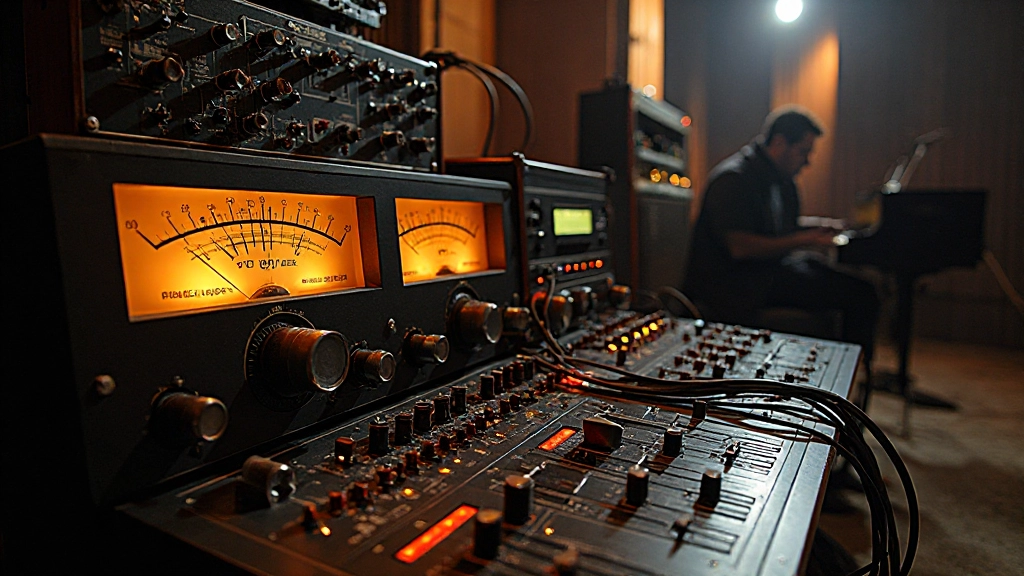
The clock read 3:47 AM when producer Blake finally hit stop on the drum edit he'd been perfecting for six hours. Every snare hit aligned to the grid with surgical precision. Every kick drum locked to the click. It was technically flawless - and completely lifeless.
This scenario plays out in home studios around the world every night. Armed with powerful editing tools and an endless supply of online tutorials preaching timing perfection, bedroom producers are quantizing the soul right out of their tracks. But the real question isn't whether you can make drums sound robotic - it's whether you should.
When Perfect Timing Kills the Vibe
The relationship between tightness and groove isn't binary. It's not about choosing between "sloppy" and "robotic" - it's about understanding when slight timing variations serve your music and when they sabotage it.
Producer Janet Rodriguez learned this the hard way during a folk-rock session last year. "I had this beautiful acoustic track with a drummer who played with incredible feel," she recalls. "But I got obsessed with tightening everything up. After two hours of editing, the drums sounded like a metronome. The artist listened once and said 'This doesn't sound like music anymore.'"
Modern DAWs make it temptingly easy to snap every hit to the nearest grid line. But consider this: some of the most revered drum performances in recording history - from John Bonham's thunderous fills to Questlove's pocket grooves - would be "corrected" into mediocrity by aggressive quantizing.
Reading the Musical Context
The genre and energy of your song should dictate your editing approach. Electronic dance music demands tight timing because the entire arrangement builds on rhythmic precision. But a blues shuffle or jazz swing relies on timing variations that create the characteristic feel.
Here's a practical framework for making editing decisions:
- Identify the song's rhythmic foundation: Is this built on machine-like precision or human feel?
- Listen to reference tracks: How tight or loose are the drums in similar successful songs?
- Consider the arrangement: Will other elements (programmed synths, samples) clash with loose timing?
- Evaluate the performance: Are timing variations musical or just mistakes?
The Anatomy of Musical Timing Choices
Not all timing deviations are created equal. Understanding the difference between musical timing variations and actual mistakes is crucial for maintaining groove while fixing problems.
| Musical Variation | Actual Mistake | Action |
|---|---|---|
| Consistent behind-the-beat feel | One random late hit | Keep the feel, fix the mistake |
| Drummer rushes into chorus | Drummer loses time mid-fill | Preserve the energy, fix the error |
| Subtle swing on eighth notes | Kick and snare don't align | Maintain swing, align the backbeat |
| Gradual tempo pushes | Sudden tempo jumps | Keep the push, smooth the jump |
Selective Editing Strategies That Preserve Life
The most effective drum editors don't quantize everything - they identify the critical elements that need alignment and leave everything else alone. This surgical approach maintains the human feel while ensuring the track doesn't fall apart.
Start with the foundational elements:
- Kick drum on beats 1 and 3: These anchor the groove and should align closely with the grid
- Snare backbeat: Beats 2 and 4 provide rhythmic reference for other instruments
- Major section transitions: Ensure clean entry into verses, choruses, and bridges
- Obvious timing mistakes: Hits that are clearly unintentional and disrupt the flow
Leave these elements alone:
- Hi-hat patterns that create swing or shuffle feels
- Ghost notes and subtle snare hits
- Cymbal crashes that naturally fall slightly behind the beat
- Fill variations that add character without disrupting the pocket
The Technology Trap
Audio engineer Marcus Chen sees this pattern repeatedly in his mixing work: "Producers get new editing software and immediately want to use every feature. They'll quantize to 32nd notes when the song doesn't even have 32nd note parts. The tool becomes the master instead of the servant."
Modern editing tools offer unprecedented precision, but that precision should serve musical goals, not technical ones. Consider these approaches:
Percentage-Based Quantizing
Instead of 100% quantization, try 60-80% correction. This pulls wayward hits closer to the grid while preserving some natural variation. Most DAWs allow you to set quantize strength as a percentage.
Audio-to-MIDI Reference
Extract timing information from well-played sections and apply it to problem areas. If the first verse has perfect feel, use its timing as a template for subsequent verses rather than the metronome grid.
Manual Micro-Adjustments
Sometimes moving a single hit by 10-20 milliseconds solves a timing issue without destroying the surrounding groove. This surgical approach requires more time but preserves musicality.
"The best drum edits are invisible. If a listener can tell you've been editing, you've probably gone too far. The goal is to enhance what's already there, not replace it with something artificial."
When Precision Serves the Song
Some musical contexts genuinely benefit from tight editing. Understanding when precision enhances rather than hinders your music is part of developing good editorial judgment.
Tight editing works well for:
Genre Considerations
- Pop productions with programmed elements
- Hip-hop tracks built on samples and loops
- Electronic music where drums integrate with synthesized parts
- Metal genres where precision creates power
Arrangement Factors
- Dense mixes where timing variations create mud
- Songs with complex polyrhythms
- Tracks with heavy use of delays and rhythmic effects
- Compositions where multiple drummers need to align
The key is matching your editing approach to the musical requirements, not applying the same technique to every song regardless of context.
A Balanced Workflow That Works
Develop a consistent approach that balances efficiency with musicality. This workflow has proven effective across hundreds of recording sessions:
- Listen first, edit second: Play through the entire song before touching any edits. Note timing issues but also identify what's working well.
- Edit in context: Make timing adjustments while listening to the full arrangement, not just the isolated drum tracks.
- Fix obvious problems first: Address clear mistakes before making subtle adjustments.
- Use reference points: Compare your editing to the original performance and to reference tracks in the same genre.
- Take breaks: Step away from detailed editing periodically to maintain perspective on the overall groove.
The 24-Hour Test
After completing your drum edits, bounce the entire song and listen the next day with fresh ears. If the drums sound natural and musical, your editing succeeded. If they sound mechanical or disconnected from the song, you may have overcorrected.
This cooling-off period is crucial because detailed editing can skew your perception of what sounds natural. What feels perfectly tight at 3 AM might sound robotic at 3 PM.
Building Editorial Judgment
Like any skill, drum editing improves with deliberate practice and critical listening. Spend time analyzing great drum sounds across different genres. Pay attention to how timing variations contribute to the overall feel.
Study records that are known for exceptional drum sounds and groove. Listen specifically for:
- How tightly the kick and snare align with each other
- Whether hi-hats rush or drag relative to the main beats
- How fills transition into new sections
- Whether the timing feels consistent or deliberately varied
The more you develop your ears for these subtleties, the better equipped you'll be to make intelligent editing decisions in your own work.
Serving the Song Above All
Ultimately, every editing decision should serve the song's emotional and musical goals. Sometimes that means tightening everything to create driving energy. Sometimes it means leaving imperfections that add character and humanity.
The most successful home studio producers learn to use editing as a musical tool rather than a technical crutch. They understand that their job isn't to demonstrate software mastery - it's to help songs connect with listeners on an emotional level.
Your drums should support that connection, whether they're locked to the grid or floating in their own musical time. The choice is always yours, but make it for musical reasons, not technical ones. Trust your ears, serve the song, and remember that sometimes the most powerful edit is the one you choose not to make.
Hear what these choices do to your own song.
Upload stems or a finished track, choose a reference direction, and compare a private Moozix mix before you export anything.