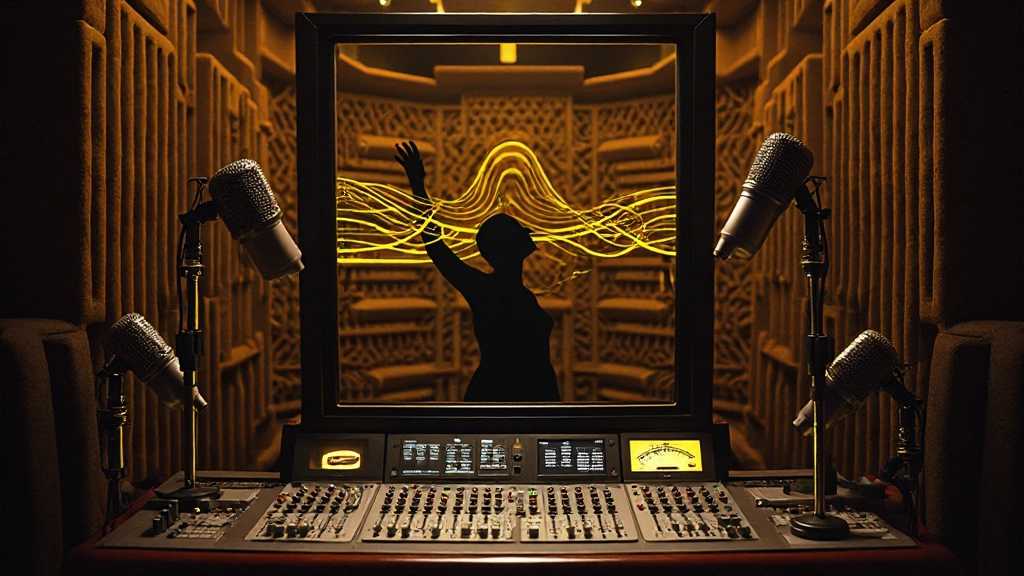
Three microphones, one voice, and the revelation that changed everything about how I approach vocal recordings.
The Breakthrough Session
Wesley sat in my control room, listening to his vocal take for the third time. "It sounds so... flat," he said, shaking his head. The recording was technically perfect -- no clipping, no noise, great tone from his usual Shure SM7B. But something was missing. That's when I remembered a technique I'd seen Grammy-winning engineer Tom Elmhirst demonstrate years earlier: intentional vocal layering for dimensional depth.
Instead of reaching for another plugin, we set up two additional microphones. A ribbon mic positioned three feet back, and a small diaphragm condenser angled slightly off-axis. Wesley sang the same take three more times, each mic capturing a different spatial relationship to his voice. When we blended all three recordings together, the transformation was immediate and undeniable.
That session taught me that vocal depth isn't about effects -- it's about capturing multiple perspectives of the same performance and weaving them into something larger than the sum of its parts.
The Science Behind Sonic Dimension
Our ears perceive depth through timing differences, frequency variations, and spatial cues. When you layer vocal recordings from different microphone positions, you're recreating the natural acoustics our brain expects to hear. The close mic captures detail and presence. The distant mic adds room tone and natural reverb. An off-axis mic introduces subtle frequency shifts that create width.
Think of it like photography. A single photo shows you what something looks like. Multiple angles reveal what something actually is.
Essential Microphone Positioning Strategies
The foundation of effective vocal layering starts with strategic microphone placement. Your primary mic should be positioned for the core sound you want -- typically 6-8 inches from the singer, slightly off-center to minimize plosives. This becomes your reference track.
Your secondary mic creates the magic. Position it 18-24 inches back and slightly to one side. This distance captures more room sound while maintaining vocal intelligibility. If you're working in an untreated space, move it closer and angle it to minimize wall reflections.
The third mic -- if you have one -- should capture either extreme detail (very close, perhaps a small diaphragm condenser) or spatial information (further back, potentially a stereo pair if you have the mics and inputs).
| Mic Position | Distance | Purpose | Mix Level |
|---|---|---|---|
| Primary | 6-8 inches | Core vocal sound | 100% |
| Secondary | 18-24 inches | Spatial depth | 15-30% |
| Tertiary | 3+ feet | Room ambience | 5-15% |
Recording Techniques That Preserve the Magic
Consistency between takes becomes critical when layering. Set up a clear sight line between all microphones and your singer. Mark the floor with tape so they can maintain the same position relative to each mic. Small movements create big changes in the stereo image.
Record each mic to its own track, but monitor the blend while recording. This helps the singer hear what you're building and perform accordingly. Some singers naturally adjust their dynamics when they hear the spatial effect developing.
Pay attention to timing. Even tiny differences in when each mic picks up consonants can create comb filtering or smearing. If you're recording all mics simultaneously (recommended), these timing relationships stay intact. If you're overdubbing, use the primary mic as a reference for the additional passes.
"The goal isn't to make it sound like three different vocals. It's to make one vocal sound impossibly rich."
Mixing the Layers for Maximum Impact
Start with your primary mic at unity gain and add the others gradually. The secondary mic typically sits 15-30% of the primary level -- enough to add dimension without becoming obvious. The distant mic might only need 5-15% to contribute its spatial character.
EQ each layer differently. High-pass the distant mics more aggressively to remove low-end buildup. The close mic might need some air (12kHz+) while the room mic contributes midrange warmth. Avoid identical EQ settings across all layers -- that defeats the purpose of capturing different perspectives.
Pan positioning creates width without losing center focus. Keep the primary mic dead center. Pan the secondary mic 10-15% left or right. If you have a distant stereo pair, spread them wider but keep levels low so they support rather than distract.
- Start with primary mic at 0dB
- Add secondary mic at -6 to -10dB
- Blend distant mic at -12 to -18dB
- EQ each layer independently
- Check mono compatibility frequently
Creative Applications Beyond Basic Layering
Once you master the fundamentals, experiment with intentional variations. Record the distant mic with a different microphone type entirely -- perhaps a dynamic if your close mic is a condenser, or vice versa. The tonal differences add character rather than just space.
Try recording one layer through a guitar amp at very low volume. This adds harmonic saturation that blends beautifully with clean vocal layers. Keep it subtle -- you want texture, not obvious distortion.
Consider tempo-synced delays instead of static positioning. Record your vocal layers, then add very short delays (10-30ms) to the secondary mics. This mimics natural room reflections while giving you precise control over the timing.
Troubleshooting Common Layering Issues
Phase problems are the biggest enemy of vocal layering. When multiple mics capture the same source, phase cancellation can hollow out your sound instead of enriching it. Always check your layers in mono -- if the vocal disappears or sounds thin, you have phase issues.
The solution isn't always flipping polarity. Sometimes it's adjusting the delay time on one of the layers by a few milliseconds, or EQing differently to minimize frequency overlap in problematic ranges.
Mud in the low-mids comes from accumulating room tone across multiple mics. High-pass your secondary and tertiary mics more aggressively than you think you need. The primary mic carries the fundamental frequencies -- the others just need to contribute presence and space.
If layers sound disconnected rather than cohesive, check your compression settings. Light compression on each individual layer, followed by gentle compression on the vocal bus, helps glue everything together while maintaining dynamics.
The Practical Path Forward
Start simple. If you only have two mics, use them. Record your vocal with one close, one distant. Learn to balance those two layers before adding complexity. The technique scales down as effectively as it scales up.
Document what works. Keep notes on mic positions, blend levels, and EQ settings that create the depth you're after. Every room sounds different, every singer projects differently, but successful combinations become starting points for future sessions.
Building vocal depth through layering transforms recordings from documentation into art. It's the difference between capturing a performance and creating an experience. When done well, listeners don't notice the technique -- they just feel more connected to the voice they're hearing.
Hear what these choices do to your own song.
Upload stems or a finished track, choose a reference direction, and compare a private Moozix mix before you export anything.