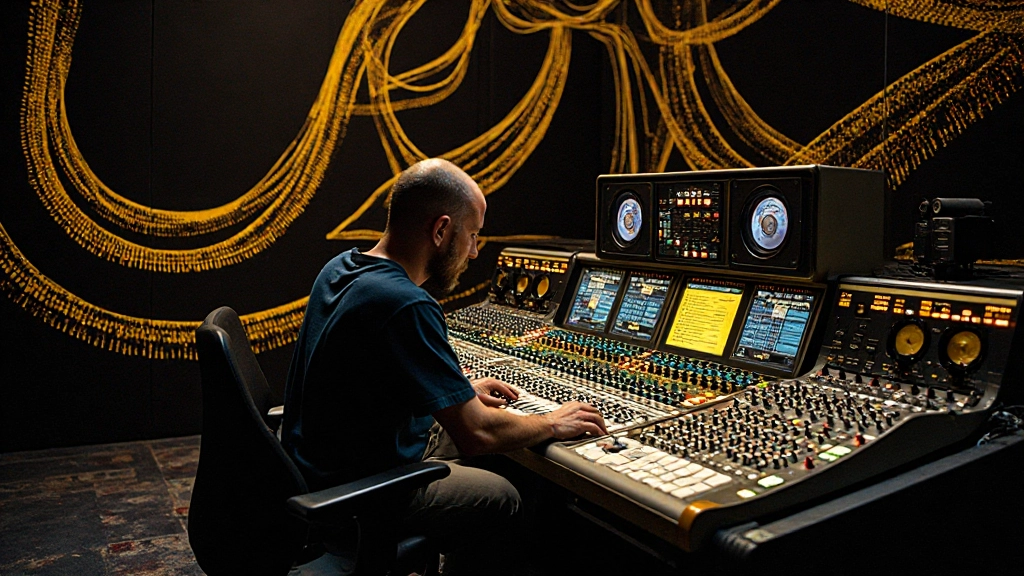
At three in the morning, Whitney stared at her laptop screen, watching the VU meters slam into red every time the kick drum hit. Her bass line sounded perfect in isolation, but the moment she brought up the low end with the drums, everything turned to mush. She'd been fighting this same battle for hours, riding faders manually like some kind of deranged DJ, when her mentor Carlos walked into the studio.
"Stop fighting the mix," he said, watching her frantic mouse movements. "Make the elements talk to each other instead."
That conversation changed everything Whitney understood about sidechain compression. It wasn't just about EDM pumping effects or clearing space for kicks. It was about creating intentional relationships between sounds, building rhythmic movement that felt musical rather than mechanical, and solving mix problems before they became mix disasters.
The Architecture of Musical Ducking
Sidechain compression gets misunderstood more than any other mixing technique. Most home studio producers either avoid it entirely or use it as a blunt instrument, creating obvious pumping that screams "I learned this from a YouTube tutorial." The reality sits somewhere more subtle.
When Carlos showed Whitney the fundamentals that night, he started with a simple premise: every element in a mix occupies both frequency space and dynamic space. Traditional EQ and volume automation handle the frequency relationships. Sidechain compression manages the dynamic conversations.
"Think of it as polite musical manners," Carlos explained, pulling up a simple drum and bass pattern. "The bass doesn't disappear when the kick hits. It just steps aside for a moment, then comes back."
Building the Signal Chain
The technical setup matters more than most producers realize. Whitney learned this the hard way when her first attempts at sidechaining created more problems than they solved. The compressor placement, the detection frequency filtering, and the routing all contribute to whether the effect enhances or destroys the musical flow.
Start with your compressor inserted on the element that needs to duck - typically bass, pads, or sustained sounds. Route the trigger signal (usually kick drum, but sometimes snare or other rhythmic elements) to the compressor's sidechain input. This creates the basic relationship, but the real work happens in the parameter settings.
Most DAWs make this routing straightforward, but the setup varies enough between platforms that you need to understand the underlying concept rather than memorizing button clicks. Pro Tools uses sends, Logic has dedicated sidechain menus, and Ableton Live treats it like any other audio routing. The principle remains constant: signal A triggers compression on signal B.
The Gentle Art of Attack and Release
Here's where most sidechain attempts fall apart. Producers grab the nearest compressor, slam the threshold down until something happens, then wonder why their mix sounds like it's breathing through a snorkel. The attack and release times determine whether your sidechain compression feels musical or mechanical.
Whitney's breakthrough came when Carlos had her close her eyes and just listen to the rhythm of the kick drum. "Feel the space between the transient and the sustain," he said. "That's where your attack time lives. Feel the space until the next kick. That's your release time's playground."
Fast attack times (0.1 to 1 millisecond) catch the kick's initial transient, creating immediate space for the drum's punch. Slower attacks (5 to 20 milliseconds) let some of the kick's body through before the ducking happens, which can create interesting layering effects but might not solve frequency masking issues.
Release times require more musical judgment. Too fast, and the ducked element snaps back unnaturally. Too slow, and the effect creates a sluggish, lifeless feel. Start around 100 to 300 milliseconds and adjust based on your song's tempo and groove. Faster songs generally need quicker releases to maintain energy between hits.
| Tempo Range | Suggested Attack | Suggested Release | Musical Effect |
|---|---|---|---|
| 60-80 BPM | 1-5ms | 300-600ms | Spacious, breathing |
| 80-120 BPM | 0.5-3ms | 150-400ms | Natural pocket |
| 120-140 BPM | 0.1-2ms | 100-250ms | Tight, punchy |
| 140+ BPM | 0.1-1ms | 50-150ms | Aggressive, driving |
Beyond the Kick Drum: Creative Routing Scenarios
Most sidechain tutorials stop at kick-and-bass relationships, but the technique opens up entire worlds of creative mixing once you understand the principles. Whitney discovered this months later when working on a folk-rock project that had no electronic elements whatsoever.
The acoustic guitar fingerpicking pattern was beautiful, but it competed with the vocal melody in the midrange. Traditional EQ created holes in the guitar tone. Volume automation felt choppy and obvious. Instead, Whitney used the vocal track itself as the sidechain trigger, creating gentle ducking that only occurred when the singer was actually singing.
"It was like the guitar was listening to the vocal and respectfully stepping back during the important phrases," she explained later. "But in the instrumental breaks, the guitar came back full strength."
Snare-Triggered Pad Ducking
Dense pad sounds and atmospheric textures can overwhelm snare drums, especially in the 200Hz to 2kHz range where snares live. Rather than carving EQ holes that remain static throughout the song, try sidechaining your pads to the snare drum with a medium-fast attack and a release timed to the song's groove.
This technique works particularly well in ambient and post-rock contexts, where maintaining the pad's full frequency spectrum is crucial for the atmospheric effect. The gentle ducking on snare hits creates rhythmic definition without sacrificing the ethereal quality.
Hi-Hat Triggered Reverb Control
Here's one most engineers never consider: using hi-hat patterns to control reverb returns. Set up a sidechain compressor on your reverb bus, triggered by the hi-hat track. Use a fast attack and a release that matches the hi-hat's decay time.
The result is reverb that naturally contracts during busy hi-hat sections and expands during open spaces. This creates automatic depth control that responds to the song's rhythmic intensity, keeping intimate verses dry and letting choruses bloom with ambiance.
Frequency-Conscious Sidechain Processing
Advanced sidechain work involves frequency-specific triggering and ducking. Not every kick drum hit needs to affect the entire frequency spectrum of your bass sound. Sometimes you only need to duck the low frequencies while leaving the bass's midrange character untouched.
Most modern compressors include sidechain EQ or filtering options. This lets you filter the trigger signal so only specific frequency ranges cause compression. If your kick drum's fundamental frequency sits around 60Hz, high-pass filter your sidechain trigger to 40Hz and low-pass it to 100Hz. Now the compressor only responds to the kick's low-end thump, ignoring the high-frequency click and midrange punch.
Similarly, you can use multiband compressors for frequency-specific ducking on the receiving end. Duck only the bass frequencies of your bass sound while leaving the upper harmonics untouched. This maintains the bass's presence and character while creating space for the kick's low-end impact.
- Analyze your trigger source's dominant frequency content
- Filter the sidechain detection to focus on the problematic frequency range
- Test with multiband compression for surgical ducking
- A/B the filtered vs. unfiltered sidechain to hear the difference
The Art of Transparent Pumping
Sometimes you want the sidechain effect to be obvious and rhythmic - think modern pop and EDM. Other times, you need it completely invisible, just solving technical problems without calling attention to itself. The difference lies in your ratio, threshold, and makeup gain relationships.
For transparent ducking, use lower ratios (2:1 to 4:1) with higher thresholds. You want gentle gain reduction that only occurs during the strongest kick hits. Apply makeup gain conservatively, if at all. The goal is natural-sounding space creation that listeners feel rather than hear.
For obvious, rhythmic pumping, push the ratio higher (6:1 to 10:1) with lower thresholds that trigger compression on every kick hit. Use faster release times and apply makeup gain to emphasize the pumping effect. This creates the characteristic breathing sound that drives dance music forward.
Whitney learned to think of it as a spectrum rather than a binary choice. "Every song finds its own balance point between transparent and obvious," she discovered. "The music tells you how much sidechain it wants."
Parallel Processing and Wet/Dry Balance
One of the most powerful sidechain techniques involves parallel processing - splitting your signal and only compressing part of it. This preserves the natural dynamic character while adding the rhythmic ducking effect.
Send your bass sound to two channels: one with heavy sidechain compression and one completely dry. Blend them to taste. The dry signal maintains the bass's natural punch and sustain, while the compressed signal adds the rhythmic breathing. This approach gives you the best of both worlds: clear space for the kick drum and preserved musical dynamics.
For even more control, try parallel processing with different attack and release times on each compressed channel. One fast-attacking compressor catches the immediate transients, while another slower compressor handles the sustain and body. Blend all three signals - two compressed versions plus the dry signal - for complex, musical ducking that responds naturally to different intensity levels in the kick drum performance.
Common Sidechain Mistakes and Recovery Strategies
Every engineer falls into predictable sidechain traps, especially when learning the technique. The most common mistake involves over-compression that sucks the life out of sustained sounds. If your bass disappears entirely on kick hits, you've gone too far.
Another frequent error is mismatched timing that creates rhythmic confusion rather than clarity. If your sidechain release is too slow for your song's tempo, the ducked element won't recover in time for the next hit, creating a constant gain reduction that defeats the purpose.
"The best sidechain compression is like good bass playing - you feel it more than you hear it. It should enhance the pocket, not announce its presence."
Carlos Martinez, mixing engineer
Phase cancellation between the trigger and ducked signals can create weird filtering effects, especially if both signals share similar frequency content. This often happens when sidechaining kick drums against bass sounds that include kick drum bleed. Use high-pass filtering on your sidechain trigger to focus on the kick's fundamental frequency and avoid midrange interactions.
Gain Staging and Headroom Management
Sidechain compression affects your overall gain structure, especially when using makeup gain to compensate for the ducking. Monitor your output levels carefully and leave enough headroom for the natural dynamics of the effect. A ducked bass line that's gain-compensated too aggressively can actually become louder overall, defeating the space-clearing purpose.
Consider your entire signal chain when setting up sidechain routing. If you're already running close to digital zero, the additional gain makeup might push you into clipping territory. Plan your gain staging with sidechain compression in mind from the beginning of your mix process.
Integration with Modern Mixing Workflows
Sidechain compression works best when integrated thoughtfully with your other mixing decisions rather than applied as an afterthought. Consider it during arrangement and tracking phases, not just mixing. Sometimes the solution to frequency conflicts is better arrangement, not more aggressive sidechaining.
Modern AI-assisted mixing tools increasingly include automatic sidechain suggestions based on frequency analysis and conflict detection. While these can provide useful starting points, they often miss the musical context that makes sidechain compression effective. Use them for ideas, but trust your ears for the final implementation.
The technique also plays well with other dynamic processors. Try sidechaining into parallel compression chains, or use sidechain compression before tape saturation plugins to create more natural-sounding vintage compression effects. The key is maintaining musical flow while solving technical problems.
- Set up your signal routing before adjusting any parameters
- Start with moderate settings and adjust incrementally
- A/B your sidechain settings against the dry signal regularly
- Consider parallel processing for more natural results
- Filter your sidechain trigger for frequency-specific ducking
- Match your attack and release times to the song's groove
- Test on multiple playback systems to ensure translation
Months after that late-night breakthrough session, Whitney has developed an intuitive feel for when and how to apply sidechain compression. She no longer thinks of it as a special effect or a problem-solving tool, but as a natural part of creating space and movement in her mixes.
"Every element in a mix is having a conversation," she explains to her own students now. "Sidechain compression is just teaching them better manners - when to speak up, when to step back, and how to make room for each other without losing their individual voices."
The technique has become second nature, applied with the same musical instinct she brings to EQ choices and reverb selection. Because in the end, that's what sidechain compression really is: another tool for musical expression, for creating the pocket and the groove that makes people want to move. When done right, listeners never notice the technique itself - they just feel the music breathe and pulse with life.
Hear what these choices do to your own song.
Upload stems or a finished track, choose a reference direction, and compare a private Moozix mix before you export anything.