Wesley Hammond watched his latest mix collapse in real-time as the ping-pong delay he'd spent three hours perfecting turned his driving rock anthem into a rhythmic disaster. The delay that sounded so cool in isolation was now stepping all over the pocket, creating a timing train wreck that made the drummer sound drunk.
This scenario plays out in studios worldwide every day. We fall in love with the sonic character of a delay or echo effect without considering its most critical function: how it interacts with the musical pulse. The result? Gorgeous-sounding delays that destroy the very groove they're meant to enhance.
When Delay Timing Becomes the Enemy
The problem Wesley faced isn't uncommon. He'd dialed in a beautiful 1/8 note ping-pong delay on his lead guitar, alternating cleanly between left and right speakers with just enough feedback to create excitement. In solo, it sounded like magic. But when he brought the drums back up, the delay hits landed awkwardly between the snare and hi-hat, creating a polyrhythmic mess that pulled focus away from the actual performance.
This is where most home studio engineers go wrong with delay design. We focus on the sonic character, the stereo field, the feedback amount, and the filtering, but we forget that delay is fundamentally about time. And time, in music, is everything.
Core Timing Principle
Every delay repeat either reinforces your song's rhythmic foundation or fights against it. There's no neutral ground. A delay that doesn't actively support your groove will actively undermine it.
The mathematics of musical timing become critical when working with echo effects. A song at 120 BPM has a quarter note duration of 500 milliseconds. An eighth note sits at 250ms, a sixteenth at 125ms. But here's where it gets tricky: a delay set to 200ms doesn't land on any of these natural subdivisions. Instead, it creates a timing that exists between your song's rhythmic grid, pulling the listener's ear away from the intended pulse.
The Subdivision Trap
Bethany Chen, a session guitarist I work with regularly, discovered this the hard way during a country rock session. She'd set her amp's built-in delay to what sounded like a classic slapback, somewhere around 180ms. The tone was perfect, warm and vintage with just enough presence to add dimension without cluttering the mix.
But when we played the full arrangement, something felt off. The vocal felt rushed, the bass seemed to drag, and the whole track lost its swagger. The culprit wasn't the delay tone or level, it was the timing. That 180ms delay was landing roughly halfway between an eighth note (166ms at that tempo) and a dotted eighth (250ms), creating a subtle but persistent push-pull that threw off everyone's sense of time.
We recalculated the delay to exactly 166ms to match the eighth note subdivision, and suddenly the track locked into the pocket. The delay went from fighting the groove to reinforcing it, adding rhythmic emphasis instead of confusion.
Building Delays That Dance With Your Music
Creating delay effects that enhance rather than compete with your musical foundation requires a systematic approach to timing calculation and musical context. The goal isn't to eliminate creative timing choices, but to make them intentional rather than accidental.
The Mathematical Foundation
Start by calculating your song's basic subdivisions in milliseconds. The formula is simple: 60,000 divided by your tempo gives you the quarter note duration. From there, you can calculate all the common rhythmic subdivisions:
| Subdivision | Calculation | 120 BPM Example | 140 BPM Example |
|---|---|---|---|
| Quarter Note | Quarter Note × 1 | 500ms | 429ms |
| Eighth Note | Quarter Note ÷ 2 | 250ms | 214ms |
| Sixteenth Note | Quarter Note ÷ 4 | 125ms | 107ms |
| Dotted Eighth | Quarter Note × 0.75 | 375ms | 321ms |
| Triplet Eighth | Quarter Note ÷ 3 | 167ms | 143ms |
These calculated values become your starting points for delay timing. But remember, they're guides, not rigid rules. Musical feel often requires slight adjustments to these mathematical subdivisions.
The Feel Factor
Real drummers don't play to a metronome's mathematical precision, and your delays don't always need to either. A slightly rushed delay can create forward momentum, while a laid-back delay can add groove and swing. The key is understanding when you're deviating from the grid and why.
During a blues session last year, producer Rita Vega deliberately set her vocal delay about 15ms behind the calculated eighth note timing. This subtle lag created a relaxed, behind-the-beat feel that perfectly matched the drummer's laid-back pocket. The delay wasn't fighting the groove because it was consciously designed to mirror the drummer's natural timing variations.
- Start with the math: Calculate your precise rhythmic subdivisions based on tempo
- Consider the feel: Listen to how your rhythm section naturally sits relative to the metronome
- Match the pocket: Adjust your delay timing to complement, not compete with, the natural feel
- Test in context: Always audition delay settings with the full arrangement, not in isolation
Slapback That Serves the Song
Slapback delay, that quick single repeat typically between 80-180ms, is one of the most musical echo effects when properly timed. Its short duration keeps it from creating obvious rhythmic patterns, but it still needs to land in the right place relative to your song's pulse.
The classic slapback sound comes from analog tape machines where the distance between record and playback heads created a natural delay. These machines typically produced delays between 100-150ms, which happens to work beautifully with most mid-tempo songs. But blindly copying these settings without considering your specific tempo and musical context misses the point entirely.
Context-Aware Slapback Design
Kevin Rosales learned this lesson during a rockabilly revival session. He'd set up what he thought was perfect vintage slapback on the lead vocal, dialing in 120ms of delay with warm analog-modeled saturation and gentle high-frequency roll-off. The tone was gorgeous, but something felt wrong.
The issue became clear when we analyzed the song's tempo: 95 BPM, significantly slower than typical rockabilly. At this tempo, a sixteenth note lasted about 158ms, making Kevin's 120ms delay feel uncomfortably rushed, like it was stepping on the vocal performance instead of enhancing it.
We recalculated and tried 158ms for sixteenth note timing, but that felt too obvious and mechanical. The sweet spot turned out to be 140ms, roughly halfway between the sixteenth and eighth note subdivisions. This created a slapback that felt natural and supportive without drawing attention to itself.
Slapback Timing Guidelines
- For uptempo songs (140+ BPM): Try 80-120ms for tight, punchy slapback
- For mid-tempo songs (100-140 BPM): Experiment with 120-160ms for classic feel
- For slow songs (under 100 BPM): Consider 160-200ms or longer for spacious slapback
- Always test timing against your specific song tempo and feel
Ping-Pong Delays That Groove
Ping-pong delay, where repeats alternate between left and right speakers, creates exciting stereo movement but introduces additional timing complexity. Each repeat needs to land musically, but you're also creating a rhythmic pattern that can either lock in with your song or fight against it.
The most common mistake with ping-pong delays is setting them up as stereo effects without considering the rhythmic implications of the left-right alternation. Each repeat becomes a distinct rhythmic event, essentially adding a percussion pattern to your arrangement.
Rhythmic Pattern Design
During a synthpop production, engineer Diana Park faced this exact challenge. She wanted to create an aggressive ping-pong delay on the lead synth that would drive the energy without cluttering the mix. Her first attempt used eighth note timing with four repeats, alternating left-right-left-right at 125ms intervals.
The result was rhythmically chaotic. The delay pattern created its own polyrhythm that competed with the drum programming, turning the focused energy of the track into scattered confusion. The problem wasn't the delay concept, but the rhythmic relationship between the original signal and its repeats.
Diana's solution was elegant: she adjusted the ping-pong timing to create a triplet pattern that complemented the straight eighth note drum pattern. By setting the delay to 167ms (triplet eighth notes at 120 BPM) and using only three repeats, she created left-center-right movement that added complexity without creating rhythmic conflict.
"The best delay effects don't just add space, they add musical information that serves the song's emotional goal."
Stereo Field Considerations
Ping-pong delays also interact with your overall stereo image in ways that can either enhance or compromise your mix balance. Wide ping-pong delays can create exciting movement, but they can also push important mix elements out of focus if not carefully managed.
- Start with narrow ping-pong (30-50% left/right) to maintain center focus
- Gradually increase width while monitoring mix balance
- Use high-pass filtering on delay repeats to prevent low-end spreading
- Consider how ping-pong movement interacts with other stereo elements
- Test mix translation to mono to ensure ping-pong delays don't disappear
Tape Echo Character vs Musical Function
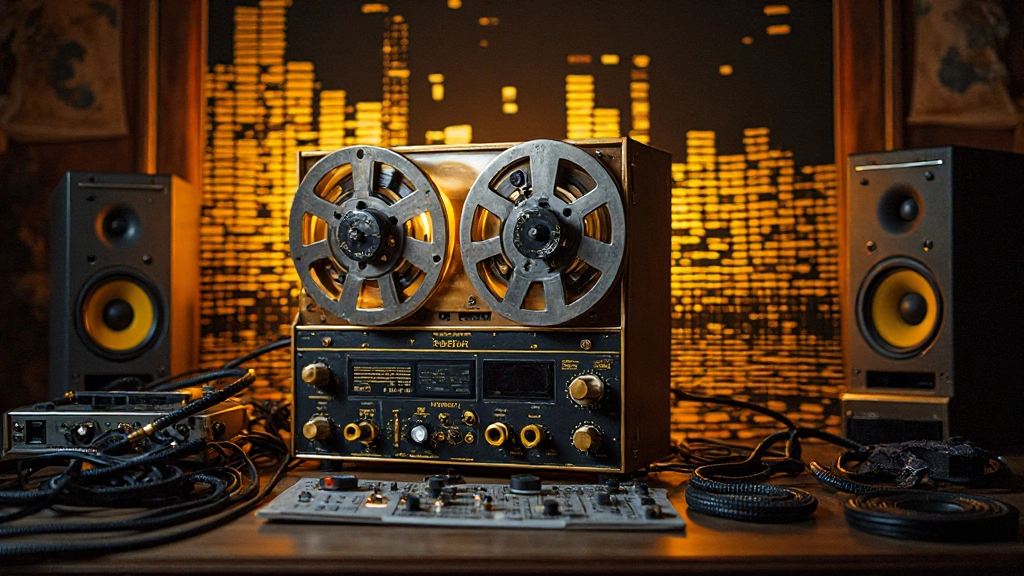
Vintage tape echo machines like the Echoplex and Space Echo have become legendary for their warm, musical character. But their appeal goes beyond just tone, it's about how their inherent limitations created naturally musical timing relationships.
These machines had fixed tape loop lengths and motor speeds, which meant their delay times were quantized to specific values that often aligned beautifully with musical subdivisions. The slight wow and flutter from mechanical imperfections added organic movement that made the delays feel alive rather than static.
Modern Tape Echo Emulation
Today's tape echo plugins and hardware recreate the sonic character beautifully, but they often miss the timing constraints that made the originals so musical. We have infinite control over delay time, which paradoxically makes it easier to choose unmusical timing.
Audio engineer Marcus Thompson discovered this while mixing a psychedelic rock album. He was using a high-end tape echo plugin, carefully dialing in the wow, flutter, and saturation characteristics. But despite the authentic vintage tone, something felt disconnected about how the echo sat in the mix.
The breakthrough came when Marcus researched the original Echoplex delay times and locked his plugin to those specific values rather than freely adjusting the timing control. Suddenly, the echo felt musical and integrated, supporting the song's groove instead of floating above it.
Vintage Timing Values
Classic tape echo machines had these approximate delay ranges: Echoplex EP-3 (80-400ms), Roland Space Echo RE-201 (50-600ms), Maestro Echoplex EP-1 (100-300ms). Using these as starting points often yields more musical results than arbitrary timing choices.
Feedback and Regeneration Control
The feedback or regeneration control determines how many delay repeats you hear and how they decay over time. This isn't just a creative choice, it directly impacts how your delay effect interacts with the song's rhythmic structure over time.
High feedback settings create long delay tails that can blur the rhythmic boundaries between different sections of your song. Low feedback settings keep the effect tight and controlled but might not provide enough presence to serve the arrangement effectively.
Musical Feedback Management
The key insight is that feedback amount should serve your song's arrangement, not just your aesthetic preferences. A verse might benefit from minimal feedback to maintain intimacy and clarity, while a chorus could support longer delay tails for added excitement and energy.
Producer Sam Chen uses a systematic approach to feedback control that ties directly to song structure. During verse sections, he keeps feedback low enough that delay repeats finish before the next vocal phrase begins. This maintains lyrical clarity while adding spatial dimension.
For choruses, Sam increases feedback to create overlapping delay patterns that build energy and excitement. The longer delay tails fill space between vocal lines and add momentum during instrumental breaks.
Integration Techniques for Musical Delays
The final piece of creating musical delay effects is integration: how the delay sits in your mix relative to other elements, how it's filtered and processed, and how it responds to the dynamics of your source material.
Frequency Shaping for Clarity
Raw delay repeats often contain frequency content that conflicts with other mix elements. High-pass filtering delay returns prevents low-end buildup that can muddy your mix, while gentle high-frequency roll-off helps repeats sit behind the original signal without competing for attention.
Engineer Lisa Rodriguez has developed a standard delay processing chain that starts with a 200Hz high-pass filter to remove unnecessary low frequencies, followed by a gentle 6dB high-shelf cut around 8kHz to create separation between the original signal and its echoes.
| Frequency Range | Processing Approach | Musical Purpose |
|---|---|---|
| Below 200Hz | High-pass filter | Prevent low-end buildup and muddiness |
| 200Hz - 2kHz | Minimal processing | Maintain delay character and presence |
| 2kHz - 8kHz | Gentle reduction if needed | Prevent harshness, maintain clarity |
| Above 8kHz | High-shelf cut | Create depth, separate from dry signal |
Dynamic Response and Musicality
Static delay effects can feel mechanical and lifeless, regardless of how perfectly timed they are. Adding dynamic response through ducking, gating, or modulation helps delays feel like natural extensions of your musical performance rather than obvious studio effects.
Ducking, where delay level reduces when the source signal is present, keeps delays from competing with the original performance while allowing them to bloom during gaps and sustained notes. This creates a more musical relationship between the dry signal and its processed repeats.
Practical Delay Design Workflow
Creating musical delays requires a systematic approach that balances technical precision with creative intuition. This workflow ensures your delay effects serve the song rather than just sounding impressive in isolation.
- Calculate timing options: Use your song tempo to determine exact millisecond values for common rhythmic subdivisions
- Consider musical context: Analyze how your rhythm section sits relative to the click track and adjust delay timing to match this feel
- Start simple: Begin with single delay repeats before adding complexity through feedback or stereo effects
- Test in arrangement: Always audition delay settings with the full musical arrangement, not just the soloed source
- Shape for integration: Use filtering and level automation to help delays support rather than compete with other mix elements
- Verify translation: Check how your delay effects work on different playback systems and in mono
The goal isn't to eliminate creative delay choices, but to make them intentional and musical. When your delays lock into your song's rhythmic foundation and support its emotional arc, they transform from studio effects into integral musical elements that serve the larger artistic vision.
Remember Wesley Hammond's ping-pong delay disaster? After understanding these principles, he redesigned the effect using calculated sixteenth note timing with careful feedback control and frequency shaping. The new delay enhanced the guitar's energy without competing with the rhythm section, creating the driving momentum he'd originally envisioned. The technical precision enabled the creative vision rather than constraining it.
Hear what these choices do to your own song.
Upload stems or a finished track, choose a reference direction, and compare a private Moozix mix before you export anything.