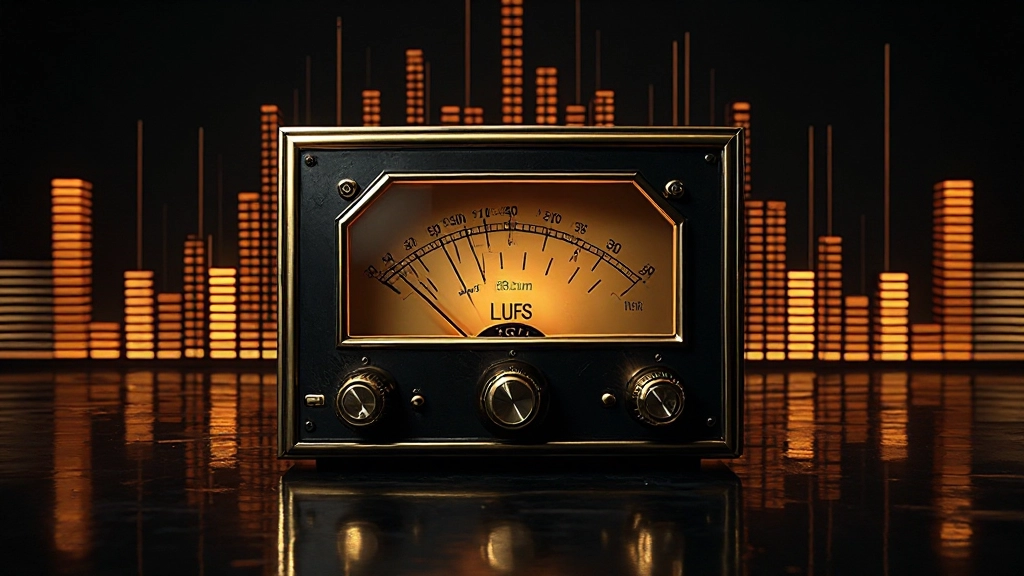
Troy stared at his DAW's loudness meter, watching the numbers climb past -14 LUFS. His latest track was hitting the streaming targets, but something felt wrong. Next to his reference track, his mix sounded compressed, lifeless, and somehow quieter despite showing identical measurements on the meter.
That moment taught Troy what countless producers learn the hard way: LUFS numbers tell you about average loudness over time, but they reveal almost nothing about why some tracks sound powerful and others sound squashed. The streaming loudness wars haven't disappeared – they've just gotten more sophisticated.
The Metrics Behind the Music
When streaming platforms adopted LUFS (Loudness Units relative to Full Scale) measurements, many engineers breathed a sigh of relief. Finally, we had objective standards that would end the volume wars. Spotify targets -14 LUFS integrated, Apple Music aims for -16 LUFS, and most platforms normalize content to these levels automatically.
But Wesley, a mastering engineer who's worked on over 500 streaming releases, discovered the limitations during a particularly challenging project. "I had two versions of the same song," he recalls. "Both measured exactly -14 LUFS integrated. One sounded punchy and exciting. The other felt flat and compressed. The LUFS meter couldn't explain the difference."
The problem lies in what LUFS doesn't measure. Integrated loudness tells you the average perceived volume over time, but it ignores short-term dynamics, frequency balance, and the psychoacoustic factors that make music feel energetic or lifeless.
Beyond the Numbers: What Actually Matters
Donna spent months analyzing why her electronic productions felt weak compared to commercial references, even when the LUFS measurements matched perfectly. Her breakthrough came when she started measuring short-term LUFS alongside integrated values.
"I realized my references had huge dynamic swings within individual sections," she explains. "The kick drum would spike to -8 LUFS momentarily, then the track would settle back down. My heavily limited masters stayed locked around -14 LUFS constantly. Same average, completely different impact."
| Measurement Type | What It Reveals | Why It Matters |
|---|---|---|
| LUFS Integrated | Average loudness over entire track | Streaming platform normalization |
| LUFS Short-term | Loudness in 3-second windows | Impact and punch of individual elements |
| LUFS Momentary | Instant loudness measurements | Transient impact and dynamic peaks |
| LRA (Loudness Range) | Dynamic variation throughout track | Musical expressiveness and movement |
The most revealing measurement often gets ignored: LRA (Loudness Range). This value shows how much dynamic variation exists in your track. Commercial pop might have an LRA of 6-8 LU, while heavily compressed EDM might measure only 2-3 LU. Both could hit the same integrated LUFS target, but the listening experience differs dramatically.
The Frequency Weighting Factor
LUFS measurements use frequency weighting that mimics human hearing sensitivity, but this creates blind spots that experienced engineers learn to navigate. Patricia discovered this while mastering a jazz album that kept measuring too quiet despite sounding perfectly balanced in her studio.
"The LUFS algorithm weights midrange frequencies more heavily than extreme highs and lows," she learned. "My jazz masters had beautiful low-end and sparkling highs, but less midrange density than pop productions. They measured quiet but sounded full and rich."
This frequency weighting means that:
- Midrange-heavy pop and rock naturally measure louder
- Bass-heavy electronic music may need more low-end to feel powerful
- Acoustic productions with natural dynamics might measure quiet but sound perfectly balanced
- Heavily filtered or creative frequency content can fool LUFS meters entirely
Understanding these weighting quirks helps explain why some -14 LUFS masters sound explosive while others feel restrained, even on the same playback system.
Practical Loudness Strategies That Work
Rather than chasing specific LUFS numbers, successful engineers focus on creating powerful-sounding masters that happen to meet streaming targets. Here's the workflow that consistently delivers results:
Start with Dynamic Structure
Before touching any limiting or loudness processing, establish the dynamic architecture of your mix. Clarence, who masters for several major labels, always begins by identifying the loudest moments in the track.
"I'll find the biggest chorus, the most intense bridge, whatever hits hardest," he explains. "That becomes my reference point. Everything else gets balanced relative to those peak moments. The dynamics tell the story."
- Identify your track's loudest section
- Set initial levels so this section feels powerful but not strained
- Balance other sections relative to this peak intensity
- Preserve contrast between verse, chorus, and bridge energy levels
Shape Before You Limit
The most powerful masters use surgical EQ and multiband dynamics before any final limiting stage. This allows you to control how different frequency ranges contribute to the overall loudness perception.
"I can make a kick drum feel twice as powerful without adding any actual level, just by cleaning up the low-mids that were clouding its impact."
Key frequency moves that enhance loudness perception:
- Clear 200-500 Hz mud that makes mixes feel congested
- Add controlled presence around 2-5 kHz for vocal intelligibility
- Manage harsh frequencies (6-8 kHz) that force you to turn down overall levels
- Use high-pass filtering on non-bass elements to create clean low-end impact
Smart Limiting Techniques
Modern limiting isn't about maximum gain reduction – it's about transparent loudness that preserves musical character. The most effective approach uses multiple stages of gentle processing rather than a single aggressive limiter.
Advanced limiting strategies:
- Use bus compression before limiting to control peak-to-average ratio
- Apply gentle saturation to add harmonic density without peaks
- Set limiter release times to complement your track's rhythmic pulse
- Monitor both LUFS integrated and short-term values during processing
Genre-Specific Loudness Approaches
Different musical styles require completely different loudness strategies, even when targeting the same streaming specifications. What works for dense electronic music will destroy an acoustic ballad, and vice versa.
Rock and Pop Productions
Guitar-driven music benefits from careful midrange management and controlled transient shaping. The goal is consistent energy that doesn't sacrifice the impact of drums and vocals.
"With rock, I'm usually fighting frequency buildup in the 400-800 Hz range," notes Isabella, who specializes in alternative and indie productions. "Clear that out, and suddenly you can achieve much more apparent loudness without the masters feeling crushed."
Electronic and Hip-Hop
Bass-heavy genres require special attention to low-frequency dynamics. The LUFS weighting doesn't heavily penalize sub-bass content, allowing for powerful low-end that doesn't interfere with loudness targets.
Successful electronic masters often feature:
- Controlled but impactful kick drum transients
- Sub-bass content that adds weight without muddiness
- Strategic use of sidechain compression to create rhythmic pump
- Careful high-frequency balance to prevent harshness at loud playback levels
Acoustic and Jazz
Naturally dynamic music presents unique challenges when meeting streaming loudness standards. The key lies in preserving musical expression while achieving sufficient loudness for modern playback environments.
Vincent, who works extensively with classical and jazz recordings, has developed techniques that honor the music while meeting technical requirements:
"I use very gentle multiband compression to even out the overall frequency balance, then apply minimal limiting – maybe 1-2 dB of gain reduction maximum. The LRA might be higher than pop music, but the musical integrity stays intact."
Checking Your Work
The most reliable way to evaluate loudness effectiveness isn't through meters alone – it's through systematic listening tests that reveal how your master translates across different playback scenarios.
The Reference Test
Load your master and three commercial references in the same genre into your DAW. Match their integrated LUFS values exactly using simple gain adjustment, then compare:
- Which track feels most powerful during the loudest sections?
- Which maintains clarity in busy arrangements?
- Which preserves low-end impact without muddiness?
- Which sounds most natural at various playback volumes?
Platform-Specific Testing
Since different streaming services use different normalization algorithms, test your masters on actual platforms rather than relying solely on plugin simulations.
| Platform | Target Level | Normalization Method |
|---|---|---|
| Spotify | -14 LUFS | Reduces loud tracks, minimal boost for quiet ones |
| Apple Music | -16 LUFS | Sound Check can both reduce and boost |
| YouTube | -14 LUFS | Aggressive normalization, often reduces peaks |
| Tidal | -14 LUFS | Similar to Spotify with slight algorithmic differences |
When Numbers Don't Matter
Sometimes the most powerful creative choice is intentionally ignoring loudness standards. Rachel learned this while working on an ambient album that measured far below streaming targets but sounded perfect for its intended listening context.
"The client wanted something for meditation and focused work," she recalls. "Pushing it to -14 LUFS would have completely destroyed the peaceful, spacious character. We delivered at -20 LUFS integrated, and it was exactly right for the application."
Consider departing from standard loudness targets when:
- The musical style demands preserved dynamics
- The intended listening context favors subtlety
- Creative expression outweighs technical conformity
- The track works better as part of an album's dynamic flow
Remember that streaming platforms won't boost tracks significantly above their normalization targets, but they will reduce loud content. A slightly quieter master often translates better than one pushed to maximum loudness.
Building Loudness Intuition
Developing reliable instincts about loudness requires training your ears to recognize the difference between measured and perceived volume. The most effective exercise involves systematic comparison listening that builds pattern recognition over time.
Start by collecting 10-15 commercial references across your preferred genres. Analyze each track's LUFS integrated, short-term range, and LRA values. Then spend time listening to understand how these measurements correlate with your subjective impressions of power, impact, and musical effectiveness.
Pay attention to:
- How dynamic sections feel compared to their measured values
- Which frequency ranges contribute most to perceived loudness
- How limiting artifacts become audible at different gain reduction levels
- How your playback system and room acoustics influence loudness perception
"The goal isn't to hit specific numbers. It's to make music that sounds powerful, clear, and emotionally engaging at the volumes people actually use for listening."
Understanding loudness measurement limitations frees you to focus on what actually matters: creating masters that translate well across all playback scenarios while preserving the musical intent of your productions. The numbers provide useful guidelines, but your ears make the final creative decisions that turn technical specifications into compelling listening experiences.
Hear what these choices do to your own song.
Upload stems or a finished track, choose a reference direction, and compare a private Moozix mix before you export anything.