The mastering session was going nowhere fast. Fletcher had been tweaking the same track for three hours, riding levels up and down while his client sat behind him, occasionally muttering "needs more punch" or "sounds too quiet compared to Spotify." Every adjustment felt like a shot in the dark.
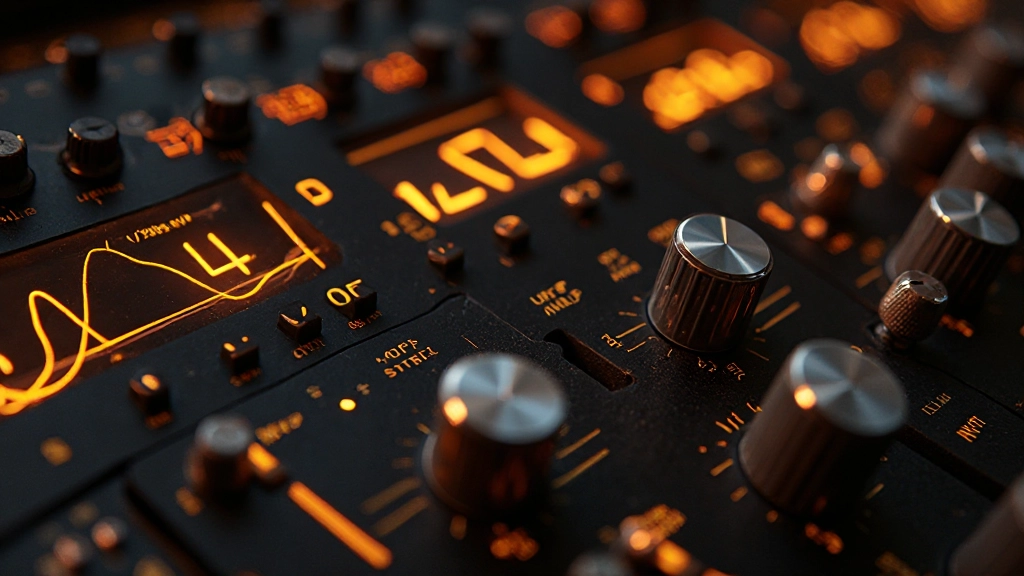
Then Fletcher did something that changed everything: he stopped looking at the waveform and started reading the meters properly. Not just peak levels, but the LUFS readout, the RMS values, and that often-ignored crest factor display in the corner. Suddenly, the guesswork disappeared.
Understanding loudness measurements transforms mastering from an anxious game of trial-and-error into confident decision-making. When you know how to read LUFS, RMS, and crest factor meters, you stop second-guessing every move and start making choices based on measurable, predictable outcomes.
The Loudness Landscape: Why Your Ears Aren't Enough
Peak meters only tell you when something's about to clip. They say nothing about how loud your track actually feels to human ears. That disconnect has frustrated engineers for decades, leading to the loudness wars and countless masters that measured "hot" but sounded lifeless.
LUFS (Loudness Units relative to Full Scale) changed the conversation entirely. Instead of measuring instantaneous peaks, LUFS approximates human loudness perception by analyzing frequency content, dynamics, and temporal patterns. A track measuring -14 LUFS integrated will sound roughly as loud as another track at -14 LUFS, regardless of genre, arrangement, or peak levels.
RMS (Root Mean Square) provides a different perspective on the same problem. While LUFS incorporates psychoacoustic modeling, RMS gives you a straightforward average of signal energy over time. Think of RMS as the "body weight" of your audio, while peaks are like measuring the tallest person in a crowd.
Crest factor reveals the relationship between peaks and average levels. High crest factor means lots of dynamic range with punchy transients. Low crest factor suggests heavy compression or limiting. Neither is inherently good or bad, but understanding the number helps you make intentional choices about dynamics.
Reading the Room: What Each Meter Actually Tells You
Fletcher's breakthrough moment came when he realized each meter answered a different question. LUFS told him how the track would compete with streaming standards. RMS revealed whether his compression choices were working. Crest factor showed him if the track still had life and breathing room.
LUFS measurements come in three flavors: momentary (400ms), short-term (3 seconds), and integrated (entire track). Momentary LUFS help you spot problem sections that might trigger streaming limiters. Short-term readings reveal how your dynamics play out phrase by phrase. Integrated LUFS give you the final competitive loudness number.
For most streaming-focused material, integrated LUFS between -16 and -12 hit the sweet spot. Quieter than -16 and you're leaving impact on the table. Louder than -12 and you're probably crushing dynamics without gaining perceived volume.
RMS works best as a comparative tool. A rock track with RMS around -12 dBFS might have appropriate energy, while the same RMS on an acoustic ballad would sound squashed. The genre sets the context, but RMS gives you the objective measurement.
| Measurement | What It Shows | Typical Range | When to Watch It |
|---|---|---|---|
| LUFS Integrated | Overall loudness perception | -16 to -8 LUFS | Final master evaluation |
| LUFS Short-term | Section-by-section dynamics | Varies widely | Balancing verses/choruses |
| RMS | Average signal energy | -18 to -6 dBFS | Compression effectiveness |
| Crest Factor | Peak-to-average ratio | 6-20 dB | Dynamic range decisions |
The Three-Meter Approach: Building Confidence Through Measurement
When Diane first started mastering her own indie rock releases, she made every decision by comparing her tracks to commercial references, constantly A/B switching and adjusting by ear. The process took forever and left her constantly uncertain about the results.
Everything changed when she adopted what she now calls the "three-meter approach." Before touching any processing, she analyzes the track through LUFS, RMS, and crest factor readings. These numbers become her roadmap for the entire mastering session.
First, she checks integrated LUFS to understand the track's current loudness position. If it's measuring -20 LUFS and needs to compete with modern pop at -10 LUFS, she knows exactly how much gain she needs to add through limiting and compression.
Next, she examines RMS values during different song sections. If the verses sit at -15 dBFS RMS but the choruses only jump to -14 dBFS, she knows the arrangement might need dynamics enhancement before any loudness processing.
Finally, crest factor tells her how much dynamic range she's working with. A track with 15 dB crest factor has room for transparent limiting. Something already down to 8 dB crest factor might be over-compressed at the mix stage.
- Establish baseline measurements for LUFS, RMS, and crest factor before processing
- Set target values based on genre and distribution platform requirements
- Process incrementally while monitoring how each adjustment affects all three meters
- Compare final measurements against reference tracks in the same style
Genre Context: When Numbers Mean Different Things
The same LUFS reading can represent completely different aesthetic choices depending on musical style. A jazz trio recording at -18 LUFS might sound perfectly natural and engaging, while a metal track at the same level would feel anemic and undersold.
Electronic dance music commonly pushes -8 to -6 LUFS with crest factors around 6-8 dB. The heavily limited, consistent energy serves the dancefloor context where dynamic range would actually work against the music's purpose.
Acoustic folk recordings often work best around -16 to -14 LUFS with crest factors maintaining 12-15 dB. The preserved dynamics let instruments breathe and create the intimate listening experience the genre demands.
Rock and pop occupy the middle ground, typically landing between -12 and -10 LUFS with crest factors around 8-12 dB. There's enough loudness for car stereos and casual listening, but sufficient dynamics to maintain punch and excitement.
"Understanding these measurements doesn't replace your ears, but it gives your ears a framework for making consistent decisions across different projects and listening environments."
Streaming Platforms: The New Loudness Referees
When streaming services started implementing loudness normalization, many engineers initially panicked. Suddenly, the loud masters that dominated radio seemed pointless if Spotify was just going to turn them down anyway.
But understanding LUFS measurements revealed the real opportunity. Platforms like Spotify target -14 LUFS, Apple Music aims for -16 LUFS, and YouTube normalizes around -14 LUFS. Masters that hit these targets play at full volume without additional limiting or gain reduction.
More importantly, tracks that exceed these targets don't just get turned down, they often get processed through additional limiting that can degrade the sound quality. A master hitting -8 LUFS might get reduced by 6 dB and put through Spotify's limiter, potentially introducing artifacts that weren't in your original master.
The strategic advantage comes from mastering specifically for these targets. A track optimized for -14 LUFS can maintain more dynamic range and transient clarity than something crushed to -8 LUFS and then turned down by the platform.
- Check target LUFS for your primary distribution platform
- Leave 1-2 LUFS headroom below the target to avoid platform limiting
- Test how your master sounds when gain-reduced to simulate platform normalization
- Consider creating platform-specific masters for critical releases
Common Measurement Mistakes That Sabotage Masters
The most frequent error engineers make is chasing a specific LUFS number without considering crest factor and RMS context. Jerome learned this lesson the hard way when mastering his band's debut EP. Every track hit exactly -12 LUFS, but some sounded powerful while others felt flat and lifeless.
The difference wasn't in the LUFS measurement but in how he reached that target. Tracks where he achieved loudness through careful EQ and gentle compression maintained 10-12 dB crest factors and sounded punchy. Songs where he relied heavily on limiting dropped to 6-8 dB crest factors and lost their dynamic character.
Another common trap is using momentary LUFS readings to make master-level decisions. Momentary measurements swing wildly throughout a song and don't represent the overall loudness experience. Chasing momentary peaks leads to over-processing and unpredictable results.
RMS-only mastering creates different problems. While RMS gives useful information about average energy, it doesn't account for frequency-dependent loudness perception. A track with heavy sub-bass might show high RMS values but still sound quiet compared to a mid-range-focused pop song with lower RMS readings.
Practical Metering Setup for Home Studios
You don't need expensive hardware meters to make informed loudness decisions. Most modern DAWs include basic LUFS metering, and several excellent plugin options provide comprehensive analysis without breaking the budget.
Position your meters where you can see them without interrupting your workflow. Many engineers prefer a second monitor dedicated to metering, but floating plugin windows work fine for smaller setups. The key is having constant visual feedback without constantly switching between windows.
Set up templates with your preferred meters already loaded and positioned. Include LUFS (integrated and short-term), RMS, peak, and crest factor displays. Having consistent metering across all projects helps build intuitive understanding of what different numbers mean for different styles.
Calibrate your monitoring level so you can trust both your meters and your ears. If you're mixing at 85 dB SPL, your loudness judgments will align better with LUFS measurements than if you're working at random volumes.
Beyond the Numbers: When Meters Guide Creative Decisions
Understanding loudness measurements doesn't mean becoming a slave to numbers. Instead, it provides objective feedback that supports creative decisions and helps you achieve artistic goals more efficiently.
When Rashad wanted his latest single to feel "explosive" compared to his previous releases, LUFS measurements showed him that perceived impact came more from arrangement and frequency balance than absolute loudness. His earlier track at -10 LUFS felt bigger than the new song at -8 LUFS because of better low-end weight distribution.
Crest factor analysis revealed that his "explosive" feeling actually required more dynamics, not less. By backing off the limiter and letting transients punch through, he achieved the impact he wanted while maintaining a reasonable -12 LUFS target.
This is where measurements become creative tools rather than technical constraints. They tell you whether your artistic instincts are translating into measurable sonic characteristics, and they help you adjust processing to match your vision.
"The meters don't tell you what to do artistically, but they tell you whether what you're doing is working technically. That feedback loop is what turns good engineers into consistent ones."
Your Measurement Action Plan
Start by establishing baseline measurements for tracks in your preferred genres. Load up five reference songs and note their LUFS, RMS, and crest factor readings. These numbers become your initial targets for similar projects.
During your next mastering session, take measurements before applying any processing. Note where the track currently sits, then set realistic targets based on your reference tracks and distribution requirements.
Process gradually while monitoring all three measurement types. If your LUFS are climbing but your crest factor is dropping rapidly, you might be over-limiting. If RMS values aren't increasing proportionally with LUFS, your frequency balance might need attention.
Most importantly, develop the habit of measuring first, processing second. Let the numbers inform your decisions rather than chasing arbitrary targets. Your ears remain the final judge, but measurements provide the roadmap for getting where your ears want to go.
The confidence that comes from understanding LUFS, RMS, and crest factor measurements transforms the entire mastering experience. Instead of endlessly second-guessing your decisions, you make informed choices based on measurable, predictable outcomes. That's the difference between hoping your masters will work and knowing they will.
Hear what these choices do to your own song.
Upload stems or a finished track, choose a reference direction, and compare a private Moozix mix before you export anything.