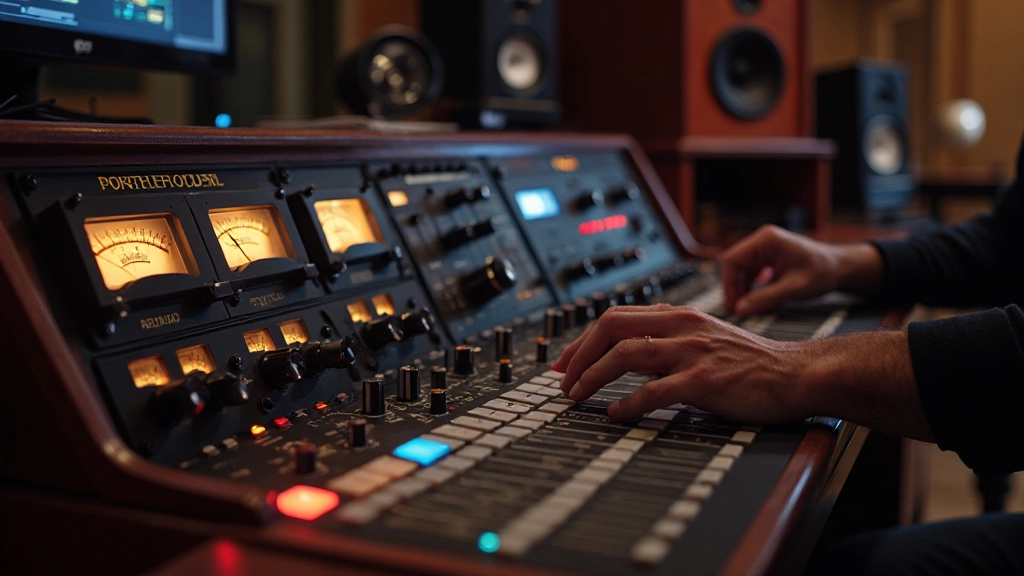
Marcus sat in his cramped bedroom studio at 2 AM, staring at his DAW's stereo analyzer. His latest track sounded massive in headphones but completely fell apart on his car speakers. The mid/side processor he'd been wrestling with for hours promised stereo magic, but instead delivered a confusing mess of phase issues and disappearing lead vocals.
If you've ever found yourself in Marcus's shoes, you're not alone. Mid/side processing represents one of the most powerful yet misunderstood tools in modern mixing. The technique, originally developed for FM radio broadcasting, has become a cornerstone of professional mixing workflows. Yet myths and misconceptions about M/S processing continue to trip up home studio engineers, leading to mixes that sound impressive in isolation but fail to translate across different playback systems.
Let's examine six persistent myths about mid/side processing that might be sabotaging your stereo image, and uncover the practical truths that will help you use this technique effectively.
Myth #1: Mid/Side Processing Always Makes Everything Sound Wider
The most dangerous myth surrounding M/S processing is that it automatically creates width. Sarah, a singer-songwriter I worked with last year, had applied mid/side enhancement to every element in her mix, convinced that more stereo width meant a more professional sound. The result was a swirling mess where nothing had a defined position in the stereo field.
The reality is more nuanced. Mid/side processing separates your audio into two components: the mid channel (what's identical in both left and right speakers) and the side channel (what's different between them). Simply boosting the side channel doesn't create width from thin air; it only emphasizes existing stereo information.
Effective width creation starts at the recording stage. Use techniques like spaced pair microphones for drums, double-tracking guitars to opposite sides, or recording vocals with subtle room reflections. M/S processing then becomes a tool for refining and controlling that existing width rather than manufacturing it from nothing.
When you do use M/S enhancement, apply it selectively. Drums often benefit from side channel compression to control cymbal spread without affecting the kick and snare punch in the center. Acoustic guitars recorded in stereo can have their side information gently enhanced with EQ to add shimmer without making them sound disconnected from the mix.
Myth #2: You Should Always Keep Vocals Purely Mono
Walk into most home studios, and you'll hear this rule repeated like gospel: "Keep vocals in the center." While there's wisdom in maintaining vocal focus, the rigid interpretation of this advice often leads to lifeless, narrow vocal presentations that fight for space with other centered elements.
Professional mixers routinely use subtle side channel processing on lead vocals. The trick lies in understanding what information to place where. The fundamental vocal tone and intelligibility live in the mid channel, but the air, space, and emotional width can be carefully crafted in the sides.
Consider a vocal recorded in a beautiful room. The direct vocal signal anchors the performance in the center, but the room reflections and reverb tails contain stereo information that adds dimension. Using M/S EQ, you might roll off low frequencies in the side channel to prevent muddiness while gently lifting the high frequencies to add presence and air.
"The vocal needs to be the star, but even stars need a stage. Mid/side processing helps you build that stage without upstaging the performance."
Veteran mixing engineer Tom Elmhirst
Try this technique: Route your lead vocal to an M/S processor and apply a gentle high-shelf boost (around 8-12kHz) to the side channel, maybe 1-2dB at most. This adds subtle width to the vocal's air and breath sounds without displacing the core performance from the center. Be conservative; the effect should be felt more than heard.
Myth #3: Mid/Side EQ Is Just Regular EQ With Extra Steps
This misconception reveals a fundamental misunderstanding of how M/S processing affects your mix. When Jake, a hip-hop producer, first encountered M/S EQ, he dismissed it as "just another way to do the same thing." Six months later, after struggling with muddy low-end and harsh cymbals, he reluctantly tried it and discovered capabilities that standard stereo EQ simply couldn't provide.
Standard EQ affects the entire stereo image uniformly. When you boost 3kHz on a stereo drum bus, you're boosting that frequency in both channels equally. M/S EQ allows you to target specific spatial areas of your mix. You can tame harsh cymbals without dulling the snare, or clean up muddy bass without affecting the focused kick drum.
The real power emerges when dealing with complex stereo sources. Take a piano recording captured with spaced microphones. The fundamental notes and attack transients appear in both the mid and side channels, but the room tone and sustain decay exist primarily in the sides. Traditional EQ forces you to treat both elements together, but M/S EQ lets you separately sculpt the piano's core tone and its ambient character.
- Use mid channel EQ to control fundamental frequencies and clarity
- Apply side channel EQ for ambient characteristics and width
- High-pass the sides more aggressively than you would with standard EQ
- Use side channel cuts to reduce muddiness without losing impact
Myth #4: Phase Issues Don't Matter in Mid/Side Processing
Perhaps no myth causes more mix translation problems than ignoring phase relationships in M/S processing. Alex learned this lesson the hard way when his beautifully wide studio mix completely collapsed on mono club systems, leaving dancers confused by a hollow, phasey mess where the bass line used to be.
Mid/side processing inherently involves matrix encoding and decoding, which can introduce phase relationships that weren't present in your original stereo source. When you boost side information, you're emphasizing the differences between left and right channels. If those differences include phase-shifted versions of the same signal, you create constructive interference in stereo and destructive interference in mono.
The solution isn't to avoid M/S processing but to check your work constantly. Professional mixing workflows include regular mono compatibility checks, especially after applying any mid/side treatment. Most DAWs include correlation meters that display the phase relationship between your left and right channels. Values close to +1 indicate good mono compatibility, while values approaching -1 suggest phase issues.
Consider using M/S processing with built-in correlation limiting. Some processors include controls that automatically reduce side enhancement when phase relationships approach problematic territory. While this limits the maximum width you can achieve, it ensures your mix remains solid across all playback systems.
Myth #5: More Side Channel Means Better Stereo Separation
The loudness wars taught us that more isn't always better, but somehow this lesson gets forgotten when dealing with stereo width. Carmen, an electronic music producer, spent months pushing her side channels harder and harder, convinced that aggressive width enhancement would make her tracks stand out. Instead, she created mixes that sounded impressive on high-end monitors but exhausting on earbuds.
Excessive side channel enhancement creates several problems that become apparent across different listening situations. First, it can make your mix sound unstable, as if elements are floating rather than sitting solidly in the stereo field. Second, it often emphasizes noise, room tone, and other unwanted artifacts that exist in the stereo differences. Third, many consumer playback systems and streaming platforms apply processing that can exaggerate or distort heavily enhanced stereo content.
True stereo separation comes from careful arrangement and placement decisions, not from aggressive M/S processing. Elements separated by frequency content, rhythmic placement, and spatial positioning create more effective separation than artificially widened sources competing for the same spectral space.
| Side Enhancement Level | Best Use Cases | Potential Issues |
|---|---|---|
| Subtle (1-2dB) | Vocals, lead instruments | May be barely audible |
| Moderate (3-5dB) | Drums, guitars, pads | Phase issues on some systems |
| Aggressive (6dB+) | Special effects, breakdowns | Translation problems, fatigue |
Start with subtle enhancements and increase only when you can articulate exactly what you're trying to achieve. The best M/S processing often works below the threshold of conscious perception, adding dimension without calling attention to itself.
Myth #6: Mid/Side Processing Should Be Applied to the Master Bus
The final myth we'll address might be the most seductive: that M/S processing works best as a master bus treatment. This approach appeals to home studio engineers because it seems to instantly improve any mix with a single plugin. David, a rock mixer, relied on master bus M/S enhancement for years before realizing it was masking fundamental balance issues in his individual tracks.
Master bus M/S processing affects everything in your mix simultaneously, which can create more problems than it solves. When you boost the side information on your entire mix, you're emphasizing the stereo content of every element, including noise, bleed, and unwanted ambient information. You're also making broad decisions about the stereo character of elements that might benefit from individual treatment.
More effective workflows apply M/S processing selectively to individual sources or submixes. Your drum bus might benefit from side channel compression to control cymbal spread. Your guitar bus could use side channel EQ to add shimmer without brightening the centered lead vocal. Your reverb returns might use M/S processing to place different spatial characteristics in different parts of the stereo field.
- Identify specific problems: What exactly needs wider stereo presentation?
- Choose appropriate sources: Apply M/S processing to tracks or buses, not the master
- Set clear goals: Define what you want to achieve before twisting knobs
- Check translation: Test your decisions across multiple playback systems
- Compare bypassed: Regularly check that your processing improves rather than just changes the sound
When you do use master bus M/S processing, treat it as a subtle finishing touch rather than a corrective tool. Gentle side channel limiting can help control excessive width from individual track processing, while subtle mid channel EQ can add final polish to your mix's focus and clarity.
Building Width That Translates
Understanding these myths points toward a more nuanced approach to stereo enhancement. Effective width creation starts with arrangement and recording decisions, gets refined through careful individual track processing, and receives final polish through subtle bus treatments. Mid/side processing becomes a precision tool rather than a magic wand.
The most successful mixers use M/S processing like a sculptor uses different chisels for different parts of the work. Broad moves shape the overall form, while detailed work brings out specific characteristics. Your kick drum might need mid channel compression to maintain punch while the snare gets side channel EQ to sit properly with overhead microphones.
Marcus, whom we met at the beginning, eventually learned to use M/S processing judiciously. Instead of applying it everywhere, he targeted specific problems: tightening the low-end focus with mid channel EQ while adding subtle air to his acoustic guitar's side information. His mixes began translating consistently across playback systems because he addressed spatial issues with surgical precision rather than broad enhancement.
The next time you reach for an M/S processor, pause and ask yourself what specific problem you're trying to solve. Your stereo image will thank you for the consideration, and your mixes will translate with the kind of professional consistency that separates amateur enthusiasm from genuine craft.
Hear what these choices do to your own song.
Upload stems or a finished track, choose a reference direction, and compare a private Moozix mix before you export anything.