Sarah stared at her DAW screen, watching the meters dance as the full band arrangement played back. Somewhere in that wall of sound was her carefully recorded acoustic guitar part, but you'd never know it was there. Three hours of tracking, multiple takes, perfect tuning, and still her Martin D-28 had vanished into the sonic soup the moment she brought up the drums and bass.
This scenario plays out in home studios everywhere, and it's not about the guitar or the player. It's about understanding that acoustic guitar recording isn't just about capturing a beautiful sound in isolation—it's about capturing a beautiful sound that serves the song when everything else joins the party.
Why Most Acoustic Guitar Recordings Disappear in the Mix
The fundamental issue isn't technical incompetence. Most home recordists can capture a lovely acoustic guitar tone when it's soloed. The problem emerges from recording acoustic guitar as if it exists in a vacuum, without considering its eventual role in a full arrangement.
I learned this lesson the hard way during a session with indie folk artist Marcus Chen three years ago. We spent an entire afternoon perfecting his fingerpicked guitar tone—rich, woody, every harmonic singing. When we built the rest of the song around it, that gorgeous guitar track became sonic wallpaper. The low-mids that sounded warm and full by themselves were occupying the exact same frequency space as his vocal and the bass guitar.
Professional engineers don't just think about making acoustic guitar sound good—they think about making it sound good in context. This means considering frequency placement, dynamic range, and stereo positioning before the first note is recorded.
The Five-Step Recipe for Mix-Ready Acoustic Guitar
After working with hundreds of singer-songwriters and full bands, I've developed a systematic approach that consistently delivers acoustic guitar tracks that maintain their presence and character, even in dense arrangements.
Step One: Define the Guitar's Role Before Recording
Before placing a single microphone, ask yourself: what job is this acoustic guitar doing in the song? Is it providing rhythmic drive? Harmonic foundation? Melodic counterpoint? Textural atmosphere?
Different roles require different recording approaches. A percussive strumming pattern needs attack and presence in the midrange. A fingerpicked melody needs clarity in the upper mids and treble. An ambient texture can afford to be warmer and more diffuse.
- Rhythmic driver: Focus on the attack and upper mids (2-5kHz)
- Harmonic foundation: Capture body resonance while avoiding low-mid buildup
- Melodic element: Emphasize string clarity and note separation
- Textural layer: Allow for fuller frequency content with controlled dynamics
Step Two: Choose Your Microphone Position Based on Mix Goals
The classic "12th fret, 6-12 inches back" advice works for solo guitar, but it might not serve your mix. Each position emphasizes different frequency content and plays differently with other instruments.
| Position | Frequency Emphasis | Best for Mix Role |
|---|---|---|
| Sound hole (4-6 inches) | Low-mids, body resonance | Solo sections, sparse arrangements |
| 12th fret area | Balanced, natural tone | Harmonic foundation, general use |
| Bridge area | String attack, clarity | Rhythmic parts, dense mixes |
| Upper bout | Warmth with reduced boom | Fingerpicking, vocal accompaniment |
I discovered the bridge position technique during a particularly challenging session with a folk-rock quartet. The acoustic guitar kept getting buried under the electric rhythm section until we moved the microphone closer to the bridge. Suddenly, the guitar's percussive attack cut through without competing with the bass guitar's low-end or the vocals' midrange warmth.
Step Three: Control the Room Sound Strategically
Room acoustics matter enormously for acoustic guitar, but not always in the way you might expect. A little room sound adds life and dimension, but too much creates frequency masking and phase issues when combined with other tracks.
For mix-ready acoustic guitar recording:
- Use a closer mic position (6-12 inches) to capture more direct sound
- Add a room mic 3-6 feet back if you want ambiance you can control
- Record in a space with controlled reflections, not a completely dead room
- Consider using a small amount of acoustic treatment behind the microphone
The goal isn't to eliminate room character, but to capture it in a way that enhances rather than competes with other elements in your mix.
Step Four: Record with Compression in Mind
Acoustic guitar has enormous dynamic range, which sounds beautiful when soloed but creates mixing challenges in full arrangements. Rather than trying to fix this entirely in post, consider how you'll shape the dynamics during tracking.
Some engineers prefer to compress while recording, using gentle 2:1 or 3:1 ratios to tame peaks while maintaining natural feel. Others prefer to capture the full dynamic range and compress during mixing. Both approaches work, but the key is consistency with your workflow.
"I learned to think of acoustic guitar recording as 70% performance capture and 30% mix preparation. That mindset shift changed everything about how I approach the session."
If you're recording without compression, pay extra attention to pick attack and fretting noise. These details become more prominent when the track is compressed later during mixing.
Step Five: Create Frequency Space During Tracking
This is where many home studio recordings fall short. Professional acoustic guitar tracks often receive subtle EQ during recording to carve out frequency space for other instruments.
A gentle high-pass filter around 80-100Hz removes unnecessary low-end rumble that would compete with bass instruments. A slight boost around 3-5kHz can help the guitar maintain presence when other instruments are added. A small cut around 200-400Hz often prevents the muddy buildup that occurs in this range when multiple instruments occupy the same space.
Common Frequency Conflicts and How to Avoid Them
Understanding where acoustic guitar typically conflicts with other instruments helps you make better recording decisions from the start.
The most problematic frequency ranges for acoustic guitar in a mix are:
- 80-200Hz: Conflicts with bass guitar and kick drum
- 200-500Hz: Can muddy up the vocal range and create box-like sounds
- 1-3kHz: Competes with vocal presence and snare drum
By being aware of these potential conflicts during recording, you can choose microphone positions and techniques that naturally avoid problems rather than trying to fix them later with corrective EQ.
The Two-Microphone Approach for Maximum Flexibility
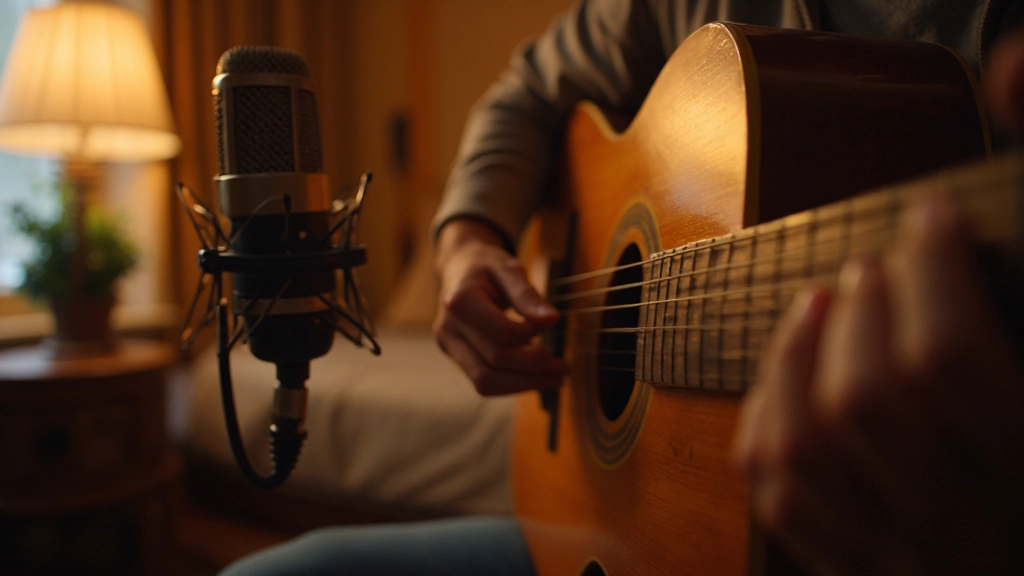
When your home studio setup allows, recording acoustic guitar with two microphones gives you enormous flexibility during mixing. This isn't about creating a stereo image—it's about capturing different aspects of the guitar's sound that you can blend to serve the song.
A typical two-mic setup might use:
- A large-diaphragm condenser near the 12th fret for body and warmth
- A small-diaphragm condenser near the bridge for attack and clarity
During mixing, you can blend these signals to emphasize whatever the song needs most. Dense arrangements might favor more of the bridge mic for clarity. Sparse, intimate sections might use more of the body mic for warmth.
Timing and Performance: The Often-Overlooked Elements
All the microphone technique in the world won't save a performance that doesn't serve the song rhythmically and harmonically. The most mixable acoustic guitar recordings come from players who understand their role in the arrangement and play accordingly.
This means:
- Tighter timing when the guitar provides rhythmic foundation
- Dynamic control that supports the vocal rather than competing with it
- Chord voicings that leave space for other instruments
- Picking attack that cuts through without being aggressive
I've worked with technically proficient guitarists whose recordings were impossible to mix because they played as if they were the only instrument in the song. Conversely, I've worked with simpler players whose parts sat perfectly in complex arrangements because they understood their musical role.
Testing Your Recording in Context
The final step in creating mix-ready acoustic guitar recordings is testing them in context before calling the tracking session complete. This means quickly laying down basic tracks for the other key elements—even if they're just scratch recordings—and hearing how your acoustic guitar sits in the arrangement.
If the guitar disappears when you add drums and bass, you know you need to adjust your approach. If it fights with the vocal, you might need a different microphone position or performance approach. This real-time feedback during tracking saves hours of frustration during mixing.
Professional studios do this instinctively—they're constantly A/B testing new recordings against existing tracks to ensure everything works together. Home studio recordists can adopt this same approach with just a few minutes of preparation.
Moving Forward with Confidence
Recording acoustic guitar that cuts through dense mixes isn't about expensive gear or perfect rooms. It's about understanding the instrument's role in your specific song and capturing it with that role in mind. Every microphone position, every performance choice, every subtle EQ adjustment should serve the larger musical picture.
The next time you're setting up to record acoustic guitar, spend five minutes listening to your arrangement and asking yourself what job this guitar needs to do. Then set up your microphones, choose your room position, and capture the performance with that specific goal in mind. Your future mixing self will thank you when that beautiful acoustic guitar tone actually makes it into the final mix where listeners can hear it.
Hear what these choices do to your own song.
Upload stems or a finished track, choose a reference direction, and compare a private Moozix mix before you export anything.