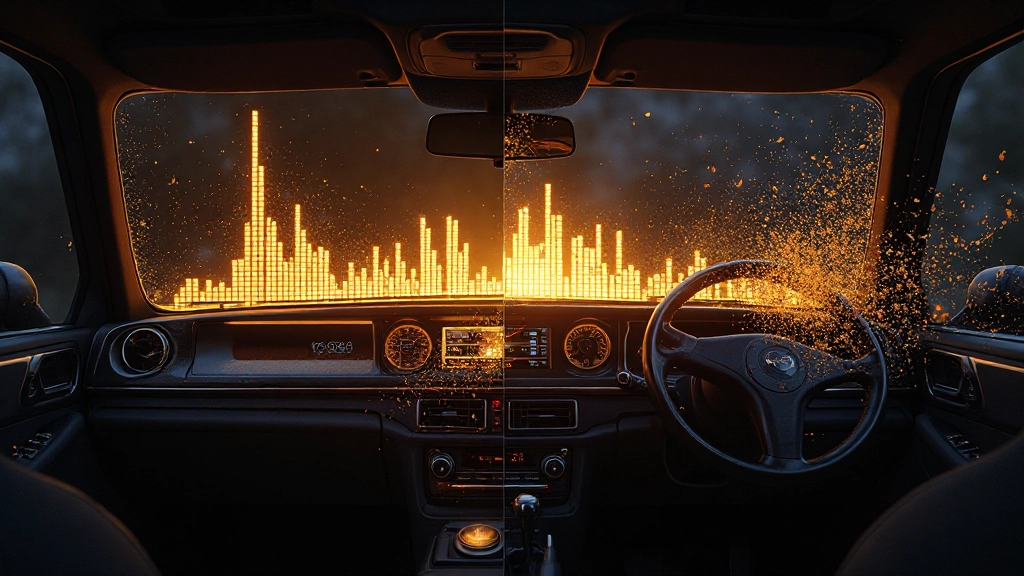
The playback button clicked, and Chester watched his client's face drop. Three months of meticulous mixing, countless late nights tweaking every frequency, and now their masterpiece sounded like it was playing through a tin can in Janet's Honda Civic. The kick drum vanished, vocals turned harsh, and that carefully crafted low-end warmth became a muddy mess.
This scenario plays out in studios everywhere, from bedroom setups to professional facilities. You create what sounds like the perfect mix on your monitors, only to discover it falls apart the moment it leaves your controlled environment. The culprit isn't your skills or your gear – it's translation, and it's the difference between mixes that work and mixes that work everywhere.
When Studio Gold Becomes Car Audio Lead
Chester had spent weeks on this particular track, a melodic pop song with layered vocals and a punchy rhythm section. In his treated room through his studio monitors, everything sat perfectly. The bass felt full but controlled, the vocals cut through with clarity, and the stereo image felt wide and engaging.
But car audio systems don't care about your acoustic treatment or your expensive monitors. They reveal the harsh truth about frequency balance, dynamic range, and how your mix decisions translate to the real world where people actually listen to music.
The problem often starts with low-end buildup that sounds warm and full in your studio but turns to mud everywhere else. Chester's mix suffered from this exact issue – he'd been compensating for his room's bass response without realizing it, creating a bottom-heavy mix that collapsed in translation.
The Three-System Translation Test
Professional mix engineers don't guess about translation – they test systematically. The most effective approach involves three distinct playback systems that reveal different aspects of how your mix will perform in the wild.
Your primary studio monitors show you the detailed picture, but they're just the starting point. The real work happens when you move beyond your comfort zone.
- Near-field monitors or quality headphones – Your detailed work environment where surgical decisions happen
- Small desktop speakers or earbuds – Reveals how your mix performs with limited frequency response
- Car stereo or boom box – Tests real-world scenarios where most listening occurs
Each system reveals different problems. Desktop speakers expose harsh midrange frequencies and show whether your vocal sits properly in the mix. Car stereos test your low-end decisions and reveal whether your track has enough energy to compete with road noise.
Reading the Signs: What Each System Tells You
When Janet played Chester's mix through her car speakers, specific problems emerged that hadn't been audible in his studio. The kick drum disappeared entirely – a classic sign of low-end that's too focused in the sub-bass region without enough presence in the 60-80 Hz range where car systems can reproduce it.
The vocals, which sounded smooth and polished in the studio, became harsh and fatiguing. This pointed to a buildup somewhere in the 2-4 kHz range, probably from layered harmonies that weren't properly carved out in the frequency spectrum.
| System | What It Reveals | Common Problems |
|---|---|---|
| Studio Monitors | Detail and accuracy | Over-processing, phase issues |
| Earbuds/Small Speakers | Midrange balance | Harsh vocals, buried instruments |
| Car Stereo | Real-world energy | Weak bass, fatigue, poor dynamics |
| Phone Speaker | Mono compatibility | Phase cancellation, missing elements |
Each playback system acts like a different lens, showing you how your frequency choices, dynamic processing, and stereo decisions hold up under various conditions. The goal isn't to make your mix sound identical on every system – that's impossible. Instead, you want it to maintain its character and impact regardless of where it's played.
The Translation Checklist That Actually Works
Rather than randomly checking your mix on different speakers and hoping for the best, successful engineers follow a systematic approach that catches problems before they become disasters.
- Bass Definition Test: Can you hear the kick drum and bass line clearly on small speakers?
- Vocal Presence Check: Do vocals cut through without sounding harsh or thin?
- Mono Compatibility: Does the mix maintain impact when summed to mono?
- Dynamic Range Test: Can you hear quiet details over ambient noise (car, street)?
- Frequency Balance: No single element dominates inappropriately on any system
When Chester applied this checklist to his problematic mix, the issues became obvious. His bass definition test failed immediately – the low end vanished on Janet's desktop speakers. The vocal presence check revealed harshness that his treated room had masked. Most telling, the dynamic range test showed that subtle elements like reverb tails and background vocals disappeared entirely in a noisy environment.
Fixing Translation Issues Without Starting Over
The beauty of systematic translation testing is that it points you toward specific solutions rather than vague adjustments. When your bass disappears on small speakers, you don't need to rebuild your entire low end – you need to add presence in the 80-120 Hz range while cleaning up sub-bass buildup.
Chester's vocal harshness pointed to a specific problem: multiple harmony layers competing in the same frequency range. Rather than reaching for a de-esser or cutting high frequencies globally, he used surgical EQ to carve out space for each vocal layer, ensuring they supported rather than fought each other.
"I used to think translation was about compromise – making my mix worse in the studio so it would sound better elsewhere. The real breakthrough was understanding that good translation comes from clarity and intention in every frequency range."
The mono compatibility test revealed phase issues between his stereo guitars that were canceling important midrange frequencies. A simple polarity check and slight timing adjustment brought back the missing energy without affecting the stereo image on systems that could reproduce it properly.
Building Translation Into Your Mix Process
Rather than treating translation as an afterthought, experienced engineers build it into their workflow from the beginning. This doesn't mean constantly jumping between speakers – it means making informed decisions that consider how they'll translate.
Start with your detailed monitors for surgical work, but make major balance decisions on your least flattering playback system. If your mix sounds good on cheap desktop speakers, it'll likely translate well everywhere. If it only sounds good on expensive monitors, you're heading for translation problems.
Use your car stereo or boom box for energy and impact decisions. These systems show you whether your track has the presence and excitement it needs to engage listeners in real-world environments. They're also excellent for catching frequency buildups that create fatigue over time.
The Volume Game: Why Loud Isn't Always Right
One crucial aspect of translation testing involves listening at different volumes. Your studio monitors might sound balanced at your preferred mixing level, but translation problems often emerge when the volume changes.
Car stereos typically play louder than home listening environments, which can expose harshness in the upper midrange that wasn't apparent at moderate studio levels. Conversely, background listening through phone speakers requires your mix to maintain intelligibility at very low volumes.
Chester discovered that his mix worked well at his preferred studio volume but became fatiguing when played loud in the car. The solution wasn't to change his overall mix balance, but to address specific frequency buildups in the 2-5 kHz range that became aggressive at higher playback levels.
Making Peace With Imperfection
Perfect translation across every possible playback system is impossible, but that's not the goal. The objective is creating a mix that maintains its essential character and emotional impact regardless of where it's heard.
Some elements will always sound different on various systems. The key is ensuring that the important elements – usually vocals, kick, snare, and bass – translate consistently while supporting elements adapt gracefully to each system's limitations.
Janet's car stereo would never reproduce the subtle reverb tails and ambient details that sounded beautiful on Chester's monitors. But those elements weren't essential to the song's impact. What mattered was that the vocal remained clear and engaging, the rhythm section provided appropriate energy, and the overall balance felt musical rather than fatiguing.
When Chester finally delivered a mix that translated well across all test systems, it wasn't because he'd compromised his artistic vision. Instead, he'd learned to make more intentional decisions about frequency balance, dynamic processing, and stereo placement that served the song in any listening environment.
The best mixes don't just sound good in the studio – they connect with listeners wherever music happens, from morning commutes to late-night headphone sessions. Translation testing isn't about perfection; it's about ensuring your creative choices reach your audience with their intended impact intact.
Hear what these choices do to your own song.
Upload stems or a finished track, choose a reference direction, and compare a private Moozix mix before you export anything.