When producer Janet Kellerman first heard about AI stem separation, she rolled her eyes. Another tech gimmick promising to replace years of hard-earned mixing skills. But after a particularly challenging session where a client's rough demo held buried gold, she discovered something unexpected: AI tools weren't replacing her analog workflow—they were enhancing it in ways she never imagined.
The Session That Changed Everything
It was 2 AM on a Tuesday when Janet got the call. Tyler Brennan, a singer-songwriter from Portland, had recorded what he swore was his best vocal performance ever. The problem? He'd tracked it over a rough instrumental mix with no stems, no MIDI, just a stereo bounce from his laptop speakers. Most engineers would have asked him to re-record everything.
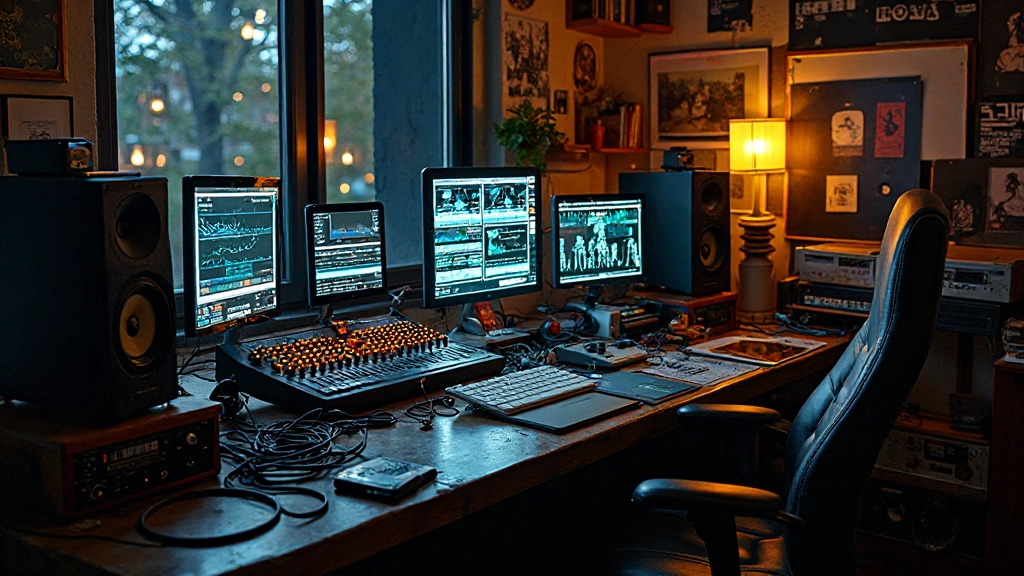
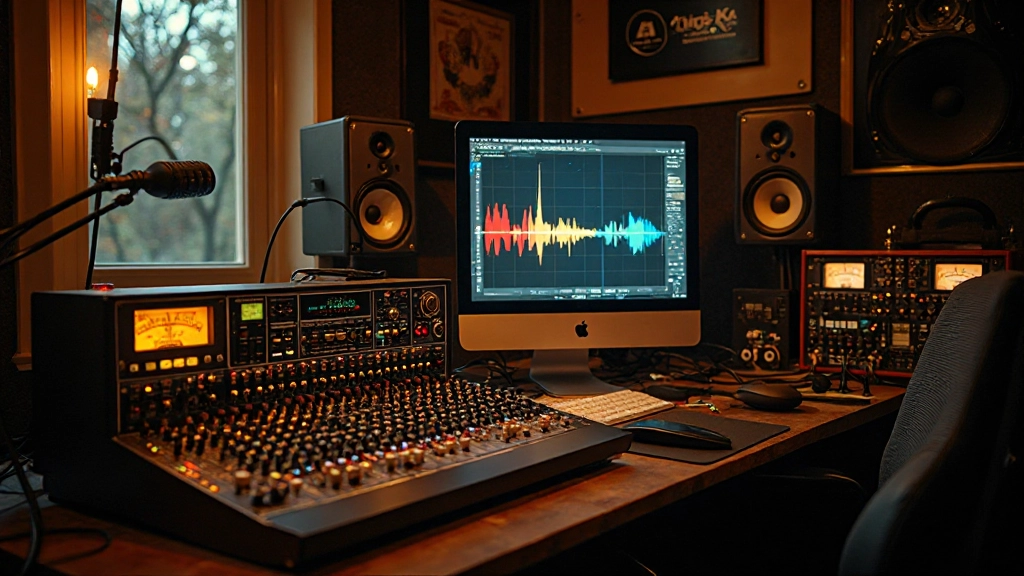
"I almost said no," Janet recalls, adjusting the gain on her vintage Neve 1073 preamp. "But something in his voice on that phone call made me curious. Plus, I'd just installed some new AI separation software that I hadn't really put through its paces."
What followed was a 12-hour journey that would fundamentally change how Janet approaches problem-solving in her bedroom studio. The AI didn't just separate the stems—it revealed production possibilities that traditional methods would have buried forever.
Setting Up the Hybrid Signal Chain
Janet's approach combines the surgical precision of modern AI with the musical character of analog processing. Her signal flow starts digital, moves through analog summing, and ends up back in the digital domain for final tweaks and delivery.
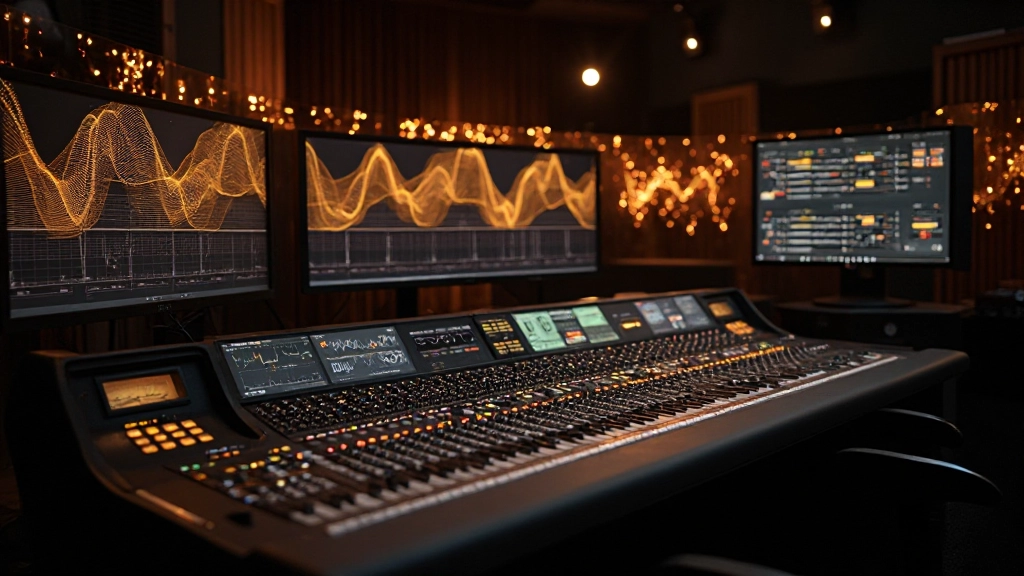
Her primary AI workflow runs through iZotope RX and a newer machine learning plugin called Spleeter Pro, but the real innovation comes in how she routes the separated elements. Instead of keeping everything in the box, Janet sends each AI-generated stem to individual outputs on her audio interface, then routes them through her analog summing mixer—a custom-built unit based on classic API 2520 op-amps.
"The AI gives me clean separation, but it's clinically perfect," Janet explains while patching cables on her summing mixer. "Running those stems through analog circuitry adds back the harmonic content and phase relationships that make a mix feel alive."
The Stem Separation Strategy
Not all AI separation is created equal, and Janet has developed specific techniques for different source material. For Tyler's track, she used a multi-pass approach that treated different frequency ranges with different algorithms.
- Initial Full-Spectrum Pass: Run the complete mix through AI separation to identify the cleanest elements first
- Frequency-Focused Extraction: Use EQ to isolate problematic frequency ranges before running targeted separation
- Transient-Based Separation: Process percussive elements separately from sustained tones
- Vocal Isolation Refinement: Multiple passes focusing specifically on vocal clarity and sibilant preservation
The key breakthrough came when Janet realized she could use AI separation not just to fix problems, but to create new arrangement possibilities. Tyler's original demo had a simple acoustic guitar part, but the AI separation revealed subtle pick attack details and string resonances that had been masked in the original mix.
Analog Processing for Digital Stems
Once the AI had done its work, Janet's analog processing chain brought musical coherence back to the separated elements. Her approach focuses on three critical stages: harmonic enhancement, spatial processing, and dynamic control.
| Processing Stage | Analog Gear | Purpose |
|---|---|---|
| Harmonic Enhancement | Vintage API 550A EQ | Add musical coloration to clinical AI stems |
| Spatial Processing | EMT 140 Plate Reverb | Create cohesive ambiance across separated elements |
| Dynamic Control | DBX 160X Compressor | Glue AI-separated parts back together musically |
| Final Summing | Custom API 2520 Mixer | Analog summation for depth and dimension |
"The analog gear doesn't just process the sound," Janet notes while adjusting the plate reverb send. "It processes the relationships between sounds. That's something AI still struggles with—understanding how one element affects the musical context of another."
The Vocal Chain Revelation
Tyler's vocal, once extracted and processed through Janet's hybrid chain, revealed qualities that surprised both of them. The AI had preserved subtle breath details and room tone that traditional recording would have either captured too prominently or lost entirely.
Janet's vocal processing chain for the AI-separated vocal involved running it through her 1176 compressor with a slow attack to preserve the natural dynamics, then into the API EQ to enhance the midrange presence that the separation process had slightly dulled. The final touch was a subtle pass through her Lexicon 224 reverb to place the vocal in the same acoustic space as the newly processed instruments.
Workflow Integration and Time Management
One concern Janet had about incorporating AI into her workflow was time management. Would the added processing steps slow down her creative momentum? The answer surprised her: the hybrid approach actually sped up certain aspects of the mixing process.
- AI Processing Time: 15-20 minutes for complex stem separation
- Analog Setup: 10 minutes for cable routing and gain staging
- Creative Decision Time: Reduced by 40% due to cleaner source material
- Overall Session Efficiency: 25% improvement in complex problem-solving scenarios
"The AI does the tedious detective work," Janet explains. "Instead of spending an hour trying to notch out specific frequency problems, I can focus on the musical decisions that actually matter."
Quality Control and Artifact Management
AI stem separation isn't perfect, and Janet has developed specific listening techniques to identify and address common artifacts. The most frequent issues include phase smearing on transients, frequency-dependent isolation errors, and subtle timing inconsistencies between separated elements.
"The trick is knowing when the AI has done enough and when to stop pushing it. Sometimes a 95% separation with musical artifacts beats a 99% separation that sounds sterile."
Janet Kellerman on balancing technical precision with musical feel
Her quality control process involves A/B testing each separated element against the original mix, but more importantly, testing how the separated elements work together in the new musical context. This often reveals that perfect technical separation isn't always the goal—sometimes leaving subtle bleed between instruments creates a more musical result.
The Analog Safety Net
Janet's analog processing chain serves as more than just character enhancement—it's also her safety net for AI artifacts. The harmonic distortion and phase relationships introduced by analog circuitry can mask or even correct minor separation errors in musically pleasing ways.
"When the AI gets confused about where one instrument ends and another begins, the analog gear often smooths out those boundaries in ways that sound intentional," she notes. "It's like having a musical autocorrect system."
Creative Applications Beyond Problem Solving
While Janet first used AI separation for problem-solving, she quickly discovered creative applications that go far beyond fixing bad recordings. By separating elements from reference tracks, she could study mixing techniques from records she admired, creating educational opportunities that would have been impossible before.
For Tyler's project, this meant analyzing how his favorite indie rock albums achieved their particular drum sounds. By separating drums from finished mixes, Janet could study the compression, EQ, and spatial processing techniques, then adapt those approaches to Tyler's separated elements.
The Mixing Decision Framework
Janet has developed a decision-making framework that helps her determine when to use AI separation versus traditional mixing approaches. The framework considers source quality, creative goals, time constraints, and client expectations.
For sessions where the source material is already well-recorded and properly separated, Janet sticks with traditional mixing approaches. But for problem-solving, creative experimentation, or educational purposes, the AI-analog hybrid workflow has become invaluable.
"It's not about replacing traditional skills," Janet emphasizes. "It's about having more tools available when the music demands creative solutions."
Client Communication and Expectations
One unexpected aspect of incorporating AI into her workflow was managing client expectations. Some clients were excited about the technology, while others were skeptical about "artificial" processing. Janet learned to focus the conversation on musical results rather than technical methods.
"I don't lead with 'I'm going to use AI on your track,'" she explains. "I lead with 'I think we can bring out the best in your performance.' The tools are just tools—what matters is the music."
Technical Setup and Equipment Integration
Janet's hybrid setup requires careful attention to signal routing and gain staging. The AI processing happens at 32-bit float resolution to preserve maximum headroom, while the analog processing introduces its own gain structure considerations.
Her audio interface, a vintage Apogee Symphony, handles the conversion between digital and analog domains. She's found that higher-end converters make a significant difference when working with AI-processed material, as the additional resolution helps preserve subtle details that cheaper interfaces might blur.
The monitoring setup involves three reference points: near-field monitors for detailed AI processing work, mid-field monitors for analog processing decisions, and a mono speaker for final coherence checks. This multi-perspective approach helps ensure that the hybrid processing translates well across different playback systems.
Lessons from Six Months of Hybrid Mixing
After six months of integrating AI separation into her workflow, Janet has identified both the strengths and limitations of the hybrid approach. The technology excels at technical problem-solving but requires human musical judgment to guide its application.
"The AI is incredibly powerful, but it doesn't understand musical intention," Janet reflects. "It can separate a drum hit from a bass note, but it doesn't know whether that separation serves the song's emotional arc."
Her biggest revelation has been that AI separation works best when combined with traditional mixing skills rather than replacing them. The technology amplifies good musical judgment while exposing poor decision-making with ruthless clarity.
Tyler's track, which started as an impossible mixing challenge, ended up becoming one of Janet's most successful releases. The song caught the attention of a major indie label, leading to a record deal that Tyler credits to the unique sound achieved through the AI-analog hybrid process.
"We never would have gotten that clarity and separation with traditional mixing alone," Tyler says. "But we also wouldn't have gotten that warmth and musicality from AI alone. Janet found the sweet spot where technology serves creativity."
As AI tools continue to evolve, Janet sees the hybrid approach becoming an essential skill for mixing engineers. The future isn't about choosing between AI and analog—it's about understanding how these different technologies can work together to serve the music. For bedroom studio producers willing to invest time in learning both domains, the creative possibilities are just beginning to unfold.
Hear what these choices do to your own song.
Upload stems or a finished track, choose a reference direction, and compare a private Moozix mix before you export anything.