What a reference can guide
Vocal heightForward
Low endSolid
BrightnessOpen
PunchStrong
WidthWide
A reference track isn't a shortcut to copying someone else. It's a way to stop describing sound with slippery words. Instead of saying "warm" or "punchy" and hoping that means the same thing to everyone, use a finished song to point at tone, low end, width, loudness, and energy.
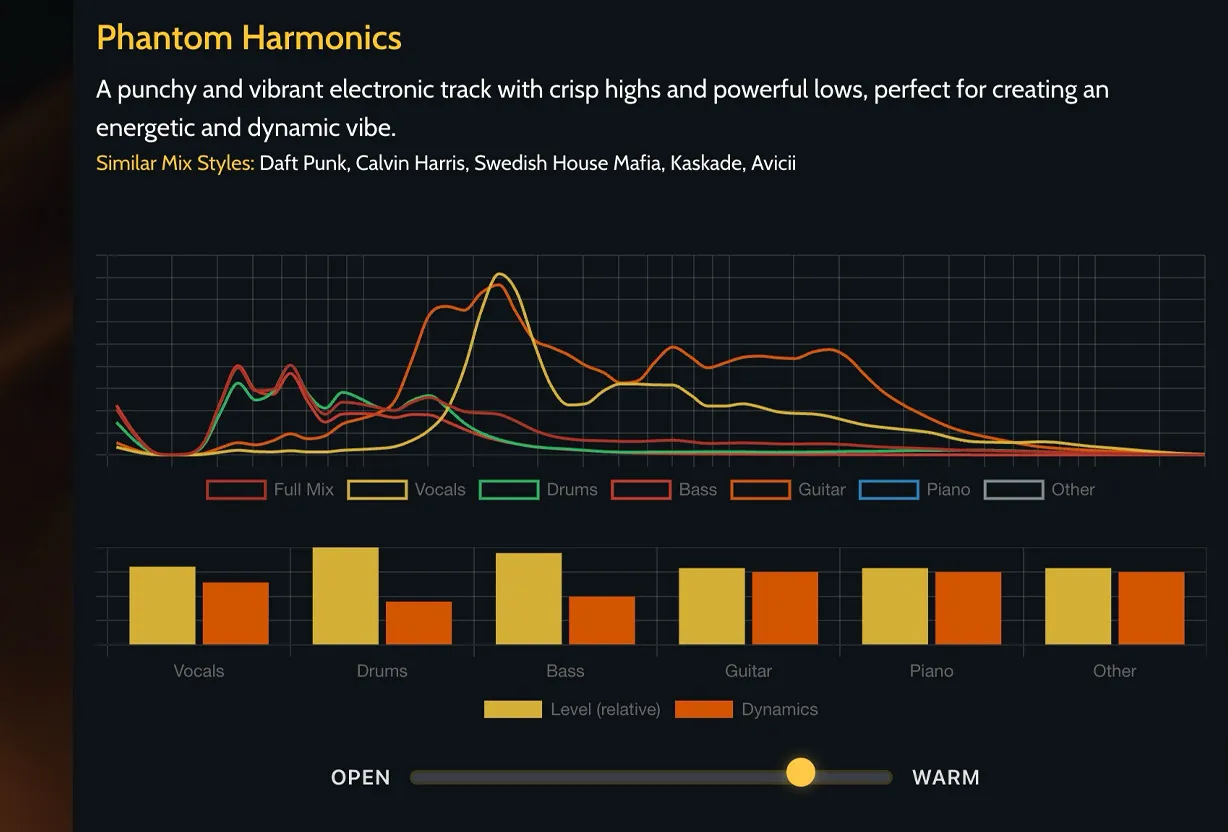
A song in the same lane, with a similar role for the vocal, bass, drums, and overall energy.
A completely different arrangement that your recording, tempo, or production can't reasonably support.
Compare at matched playback volume. Louder almost always feels better until the levels are equal.
Move toward the sound direction. Do not expect a clone of someone else's recording and mix.
The same word can mean three different things depending on who says it. A reference lets the song answer more concrete questions.
Is it in front of the track, tucked into the beat, intimate, aggressive, glossy, dry, or spacious?
Does the bass fill the room, stay tight under the kick, or leave more room for vocal and drums?
Open top end can feel expensive. Too much presence can turn into fatigue.
Finished music often has a stable center and supportive width, not every part stretched to the sides.
A chorus can feel bigger without becoming a wall of competing layers.
Loudness depends on genre, arrangement, low-end control, and how much punch the song can keep.
If your mix is already close, reference-based mastering may be enough. If the reference exposes a buried vocal or messy low end, stems give Moozix more control before mastering.
The wrong comparison will send you chasing the wrong fix. A reference should clarify the finish, not make you punish your song for being a different recording.
Turn the reference down until it feels close to your song. Once the level is fair, listen for tone, low-end control, vocal height, punch, and width instead of being impressed by loudness alone.
A vocal-heavy rap song, a dense guitar mix, and a wide electronic track all solve different problems. Your reference should have a similar center of gravity, or it will point Moozix in a direction your song cannot support.
The master can move toward the reference's brightness, weight, punch, and finish. It cannot turn a different vocal, room, arrangement, or performance into the same record.
A reference is most useful when it tells you what to stop guessing about.
A reference is useful because it replaces vague taste words with something your ears can argue with.
Instead of saying "make it warmer," you can compare whether the vocal is too low, the low end is too soft, the top is too sharp, the chorus is too narrow, or the whole song needs a clearer target.The goal is direction, not imitation.
Reference track mastering uses another finished song as a guide for tone, loudness, punch, low end, width, and overall direction. It should guide the finish, not copy the song.
Moozix can use reference-style direction to move your song toward a similar finish, but the result still depends on your recording, arrangement, mix, and stems.
Use stems when the reference shows that your vocal, drums, bass, beat, or instruments need balance changes before mastering.
Choose one song in a similar lane: genre, tempo, vocal role, low-end shape, energy, and release quality should be close enough to make the comparison useful.
A reference can reveal what is wrong, but it does not fix the mix by itself. If the reference exposes a balance problem, stems are the way to move the parts before mastering.
One strong reference is usually clearer than five conflicting ones. Use more than one only when each has a clear job, such as vocal level, low-end weight, or overall brightness.
Avoid references with a totally different arrangement, vocal role, tempo, or production style. A reference that cannot apply to your song will create bad decisions.
Yes. A reference can reveal mix problems before mastering, such as a vocal sitting too low, bass being too loose, drums lacking punch, or the chorus feeling too narrow.
Lower the reference before judging. If you compare at different volumes, you will usually chase loudness instead of hearing the real differences in balance, tone, punch, and width.
Yes. Stems let the finish move closer to the reference in more specific ways, especially when vocals, bass, drums, or instruments need balance changes before mastering.
Use the reference to find the gap, then decide whether the gap is mastering or mixing. If the vocal, drums, bass, or width are fundamentally different, stems may need to move first.
Use a reference when you know the sound, then use stems if the song needs more than broad mastering moves.